

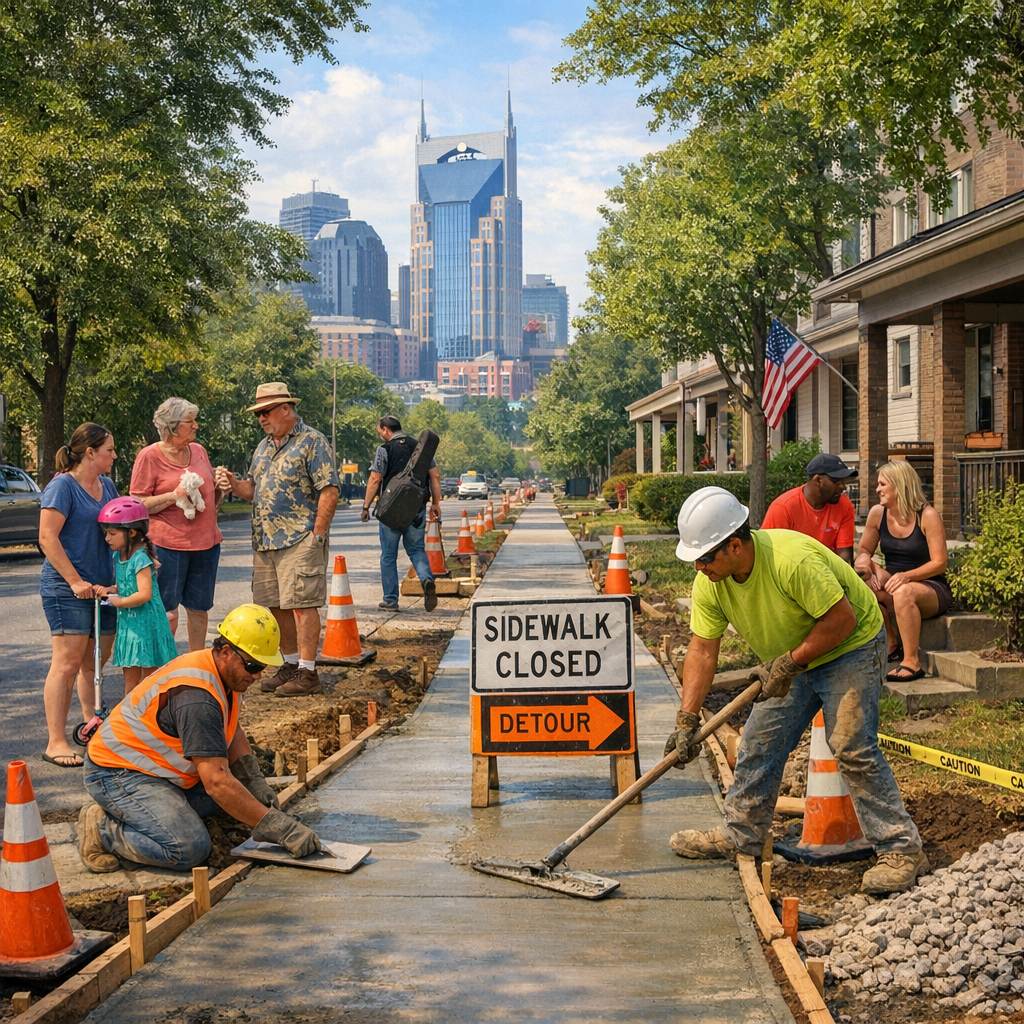
By now, many Nashvillians have noticed the changes: heavier traffic, more high-rise developments, and a sense that getting from A to B requires more planning. But amid all the city-building, there’s something else rising in importance—how we move through our neighborhoods, especially on foot or bike. The Choose How You Move plan, voter-approved in 2024, is turning our long-standing calls for safer, more reliable mobility into real projects across town.
What’s changing — and why it matters
A key part of the plan is closing gaps in our sidewalks. Metro is working on adding or upgrading 86 miles of sidewalks inside Davidson County to make everyday trips—walking children to school, strolling to a bus stop, or catching dinner nearby—feel safer and more accessible. These aren’t just nice ideas: they address physical barriers that for many residents make movement difficult or risky.
Then there’s the issue of safety. Through projects developed under WalknBike 2022 and Vision Zero principles, places like Edgehill Avenue and Chestnut Street are being redesigned with protected bike lanes, smoother traffic flow, and features that slow cars and prioritize human-scale travel. These changes matter especially to people who often don’t drive—kids, seniors, those with disabilities.
Personal stories and the ripple effect
I remember living in a neighborhood where a broken sidewalk meant having to walk out in the street—to get mail, to pick up groceries. It felt unsafe, especially at dusk. It taught me just how essential good sidewalks are to daily life. They aren’t glamour—they’re infrastructure that protects dignity.
When we add safe crossings near schools, enhanced transit service, and more reliable bikeways, it reshapes what city life means. Suddenly, a teenager can ride the bus to their first job without worry. A parent can push a stroller without dodging cracked concrete. An older neighbor who doesn’t/can’t drive can still get essential errands done. These are things many take for granted in more walkable cities; here, we’re working to catch up.
Challenges we still need to meet
Of course, building safer streets isn’t just about pouring concrete. It involves navigating zoning, funding, political priorities, and ensuring neighborhoods most impacted by past neglect aren’t left behind. The Housing & Infrastructure Study shows how often good infrastructure stacks up without adequate funding or planning for connected transit, water, power, sidewalks—full systems, not patchwork fixes.
The cost also weighs on decisions. Take transit service: one key promise of Choose How You Move is 24/7 transit availability. That’s transformative—but maintaining reliable, frequent service all night long takes money and coordination. There’s optimism, but also real concern about consistency.
How we—residents—can help
- Speak up through Engage Nashville. Attend community meetings, submit sidewalk or bikeway requests through hubNashville, especially if your area has gaps.
- Support neighborhood-scale infrastructure projects—protected crossings near schools, bike lanes, better lighting. These often make a big difference for quality of life.
- Create visibility for pedestrian and bike needs: report hazards, engage business owners, organize local cleanups. If neighbors see a problem together, it gets more attention—and solutions often follow.
Looking ahead
Nashville will continue growing. The question isn’t whether we’ll add more people, but whether we’ll build something that feels like home—where distance doesn’t isolate, and safety doesn’t depend on owning a car.
Safe, walkable streets connect us not just to places—but to each other. They shape who we are. And with every sidewalk laid, every crosswalk improved, every corner made safer, we preserve more of what makes Nashville more than just a booming city—but a community.