

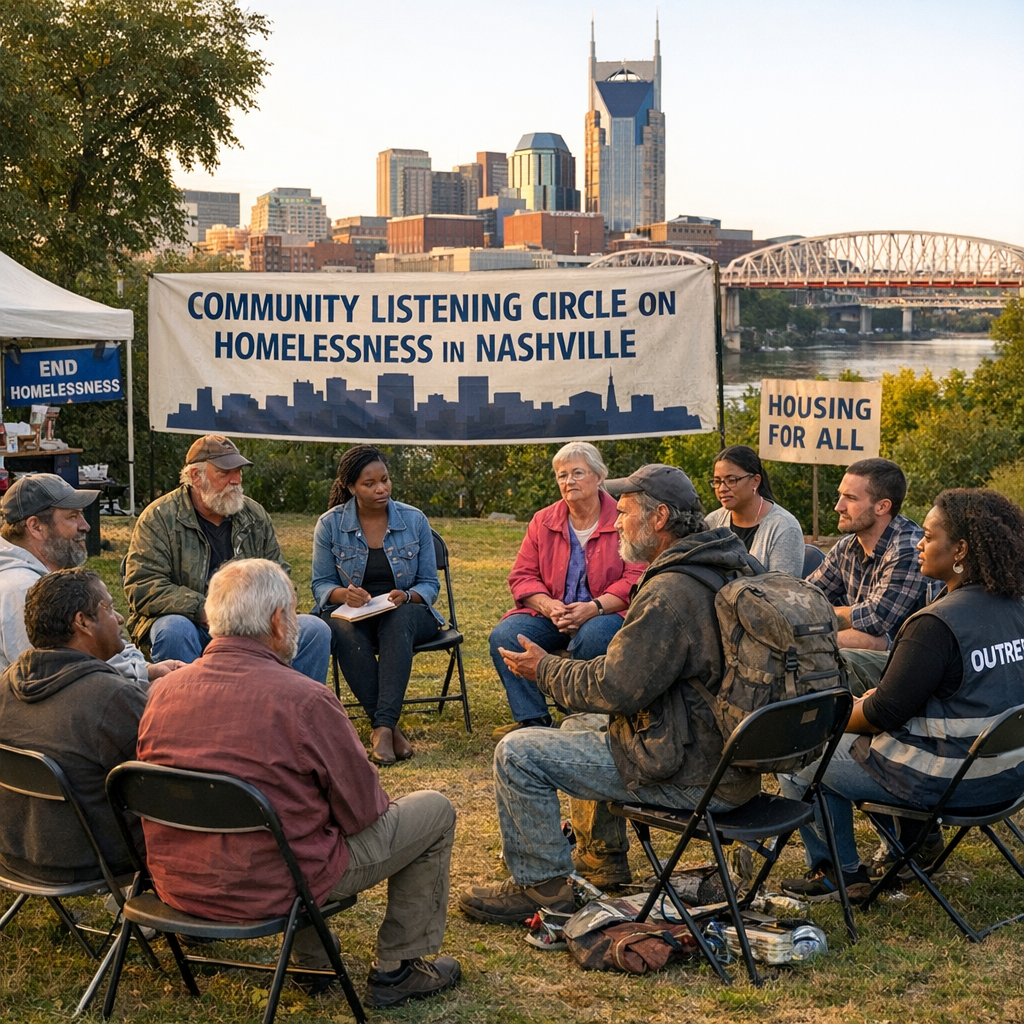
My name is William Lopez. I’ve walked downtown, volunteered with outreach teams, and sat in listening circles. I’ve heard stories that are often invisible—of neighbors without stable housing whose lives reflect more than tragedy. These are experiences that teach, challenge, and call for change.
The Power of Being Heard
Nashville’s Continuum of Care Homelessness Planning Council includes people with lived experience among its members—at least five current or former residents who have experienced homelessness. Their presence ensures policy doesn’t become detached from the reality it aims to address. When we allow our neighbors to share their stories, interventions become more humane and more effective.
Office of Homeless Services: Collaboration, Not Charity
The city’s Office of Homeless Services leads Nashville’s efforts to end homelessness through innovation, community collaboration and compassion. It runs multiple programs: data management, asset oversight, funding oversight, and partnerships among faith-based nonprofits, property owners, and Metro agencies. And it has adopted statements emphasizing “elevating the voice of the community in line with our person-centered values.”
What “Listening” Looks Like in Practice
- Street outreach: Organizations like Open Table Nashville practice relational outreach. They don’t frame people as cases—they recognize “our friends,” treat them with dignity, and base work on what people say they need.
- Choirs, art, and expression: The Voices of Resilience Homeless Choir is more than a performance group—it’s a space where those with homelessness experience build connection, raise awareness, and regain voice.
- Consumer Advisory Boards (CABs): Nashville’s Continuum of Care includes people who’ve experienced homelessness in advisory roles to help shape programs, improve experiences, and ensure that systems make sense for those who use them.
The Cost of Silence
When we ignore or dismiss those without homes, we miss crucial information. We repeat ineffective policies: shelters without wrap-around services, closures of encampments without housing alternatives, funding that doesn’t reach those who need it most. These outcomes aren’t just statistics; they are lives untransformed.
How Neighbors Can Help
There are ways all Nashvillians can help ensure voices are heard:
- Attend a Homelessness Planning Council meeting (public and open) and listen before offering solutions.
- Support organizations that center people with lived experience—whether through donations, volunteering, or amplifying their work.
- Vote for leaders who commit to inclusive policy and resource allocation that respects both data and dignity. Join feedback opportunities with the Continuum of Care or Consumer Advisory Boards.
- Change language: “people experiencing homelessness” rather than labels. It shifts the narrative from blame to possibility.
I believe Nashville has the heart, the creativity, and the civic space to be better in how we treat our unhoused neighbors. When we listen—truly—when we ground policy and community in lived experience—we don’t just help individuals. We build a more compassionate city. And that’s something all of us can be proud of.