

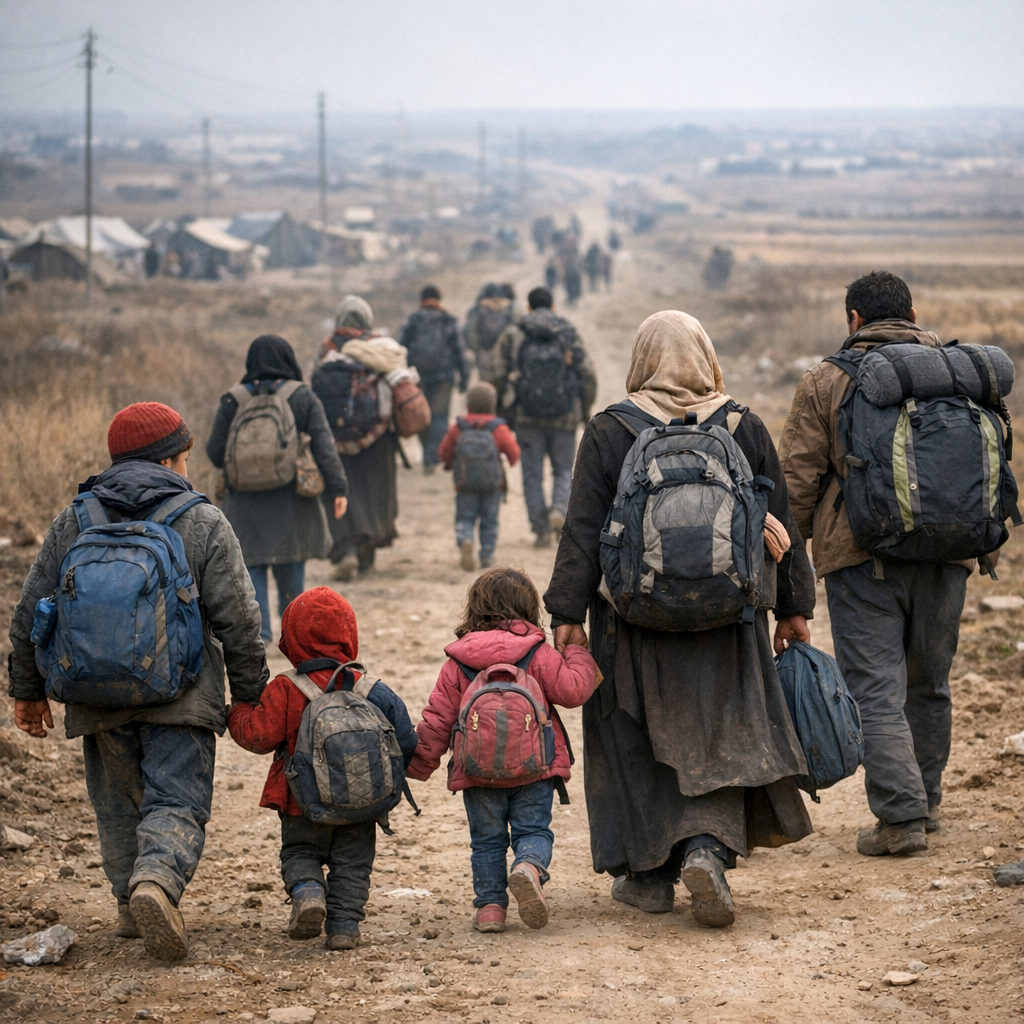
For those of us watching from our corner of Nashville, the numbers out of international displacement are staggering — and they grow more so on reflection. Even when violence seems distant, its ripple effects touch all corners of the world. Here’s what the latest reports are telling us about global displacement, why gains we thought were secure are slipping away, and what the challenges are for forward movement.
Displacement figures that can’t be ignored
By the end of 2025, around 117.8 million people globally were forcibly displaced due to conflict, persecution, or events seriously disturbing public order. That includes refugees, asylum seekers, internally displaced persons (IDPs), and stateless people. Over 41 million have fled across borders, with nearly 69 million displaced within their own countries. These aren’t just statistics — they represent individuals and families who are vulnerable in profound, life-altering ways.
Drivers behind the displacement surge
There are several overlapping reasons this crisis continues to worsen:
- Conflict and persecution: Wars in places like Sudan, Afghanistan, Syria and more are top causes of displacement.
- Climate-related disasters: Droughts, floods and storms, often worsened by climate change, are displacing people even in areas already under stress.
- Fragile political systems and economic hardship: Many displaced people either flee economic collapse, lack of basic services, or return home under conditions that make rebuilding difficult or dangerous.
Gains are under threat
It’s not all gloom — there have been progress markers, like declines in global refugee numbers in certain regions, and some returns. But returns are often under duress or into unsafe conditions, and reintegration rarely comes with sufficient support. What feels like progress on paper doesn’t always translate to safety or sustainability for many of those displaced.
Why many global responses are falling short
From a distance, it’s easy to assume international efforts match these growing needs. In truth, funding and capacity are stretched thin:
- Funding shortfalls: Some UN and humanitarian aid agencies saw sharp drops in available funding even as needs doubled in certain areas. Operations had to be scaled back, staff reduced, and aid delivery curtailed.
- Protection gaps: As more people move across borders — seeking asylum — host countries often lack mechanisms to provide adequate legal protection, healthcare, or safe passage. Internally displaced people may stay nearby but lack resources.
- Uneven progress on health and services: Global health gains — like declines in HIV infection or access to clean water — are real, but uneven across regions. Many countries are not meeting basic targets due to fragile health systems, under-investment, environmental risks, and crises overlapping.
What needs to be done — turning awareness into action
There are no easy or short-term fixes, but there are paths forward that matter deeply:
- Strengthen global solidarity and funding: Donors must recommit funding, stabilizing budgets of agencies that support displaced people. It costs lives when operations close or are cut.
- Focus on protection and dignity: Legal protections, safe returns, and support for long-term reintegration need to go hand in hand. Being forced to return because there’s “no option” isn’t a real solution.
- Bolster local health and infrastructure systems: Displacement often overwhelms whatever systems exist. Investing in accessible healthcare, clean water, education, and mental health services helps in crises and in long-term recovery.
- Address root causes: Conflict resolution, disaster risk reduction, and climate adaptation need emphasis. Preventing displacement is far cheaper — and more humane — than responding to it after the fact.
Why Nashville readers should care
When displacement surges, ripple effects reach far: migration patterns can shift globally, pressing demands for asylum and refugee policy. Public health threats—whether due to infectious disease, malnutrition, or weakened systems—recognize no borders. Philanthropic and civic solidarity from cities like ours can help through support for aid organizations, awareness raising, and, where possible, backing policies that advocate for global protection and fair treatment of displaced people.
In a world growing more interconnected, standing with those pushed from their homes isn’t just a moral choice—it’s part of shaping global stability. We don’t all have to fix every crisis, but none of us can afford to look away.