

By Sophia Anderson
Price Trends and Market Balance
Median home prices in the Nashville area have edged up, with recent data placing single-family homes around $537,000 in June, up just slightly from a year before. Condominiums are similarly creeping upwards, landing near $350,000. At the same time, inventory is growing slowly, and homes are spending more time on the market—averaging about 51–63 days depending on type and location. These shifts suggest Nashville is seeing a move toward a more balanced real estate market.
Rental Market Snapshot
Rent remains relatively stable—Nashville averages near $1,834/month for typical units, with year-over-year change and month-to-month change both hovering close to zero. In other words, renters are seeing minor shifts rather than dramatic jumps.
Homebuying Tips for Nashvillians
Here are smart steps to consider whether you’re buying your first place or moving up:
- Get pre-approved before you seriously hunt; knowing your budget helps make stronger offers without overextending.
- Think long term: look beyond trendier neighborhoods if price-per-square-foot or lot size matters. Sometimes fringe areas offer more value unless daily commute or amenities become costlier later.
- Factor in all costs—not just sticker price. Inspections, taxes, insurance, maintenance and closing costs can shift what it takes to comfortably own. Many buyers overwhelm themselves by underestimating those totals.
- Don’t skip the walk-throughs or appraisals. Especially in neighborhoods with older housing stock, those checks can uncover surprises that affect both price negotiations and long-term satisfaction.
Noteworthy Local Developments & Policy Moves
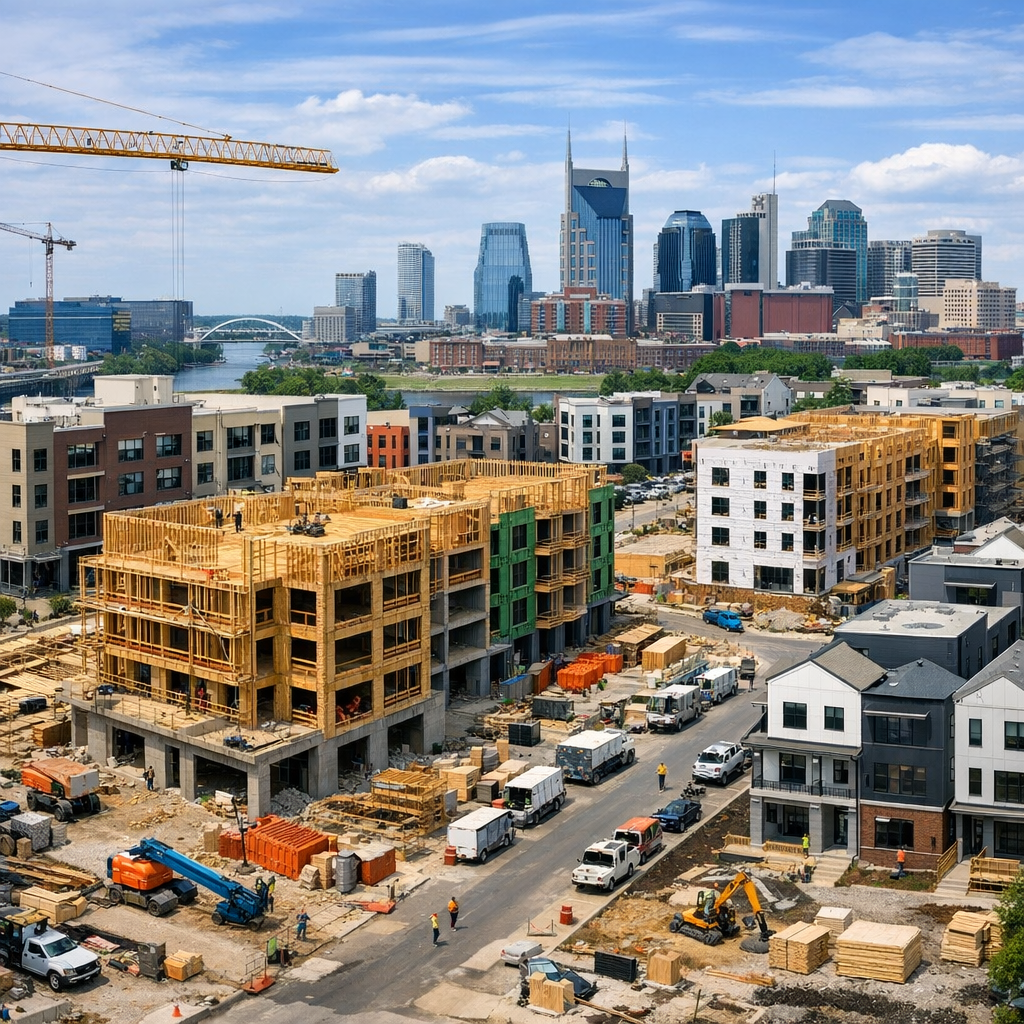
Several major projects are aiming to add affordable housing and mixed-use spaces, especially along the East Bank. Among them:
- Eastpoint Flats: A new 323-unit building that will be 100% affordable, with a childcare center and retail built in. Its 99-year ground lease helps guard against future price hikes.
- East Bank redevelopment: Alongside the stadium and arts center projects, Metro is investing hundreds of millions from former convention-center funds toward neighborhood infrastructure, transit hubs, and affordable housing.
- Residential approvals county-wide: A wide range of projects—from infill housing to townhomes to conversions of existing buildings into workforce housing—are in the pipeline, offering hope for more supply in mid-price and affordable tiers.
What It Means for Buyers and Renters
If you’re buying: flight toward higher inventory means you may have more negotiation power than in recent years, but don’t expect large discounts—prices still reflect strong demand. If you’re renting, stability in pricing gives space to plan, but areas closer to transit or new development may see sharper rent increases as desirability grows.
Bottom Line
Nashville’s real estate market finds itself in a phase of steady recalibration: home price rises are more modest, sellers are competing a bit more, and builders plus city policy are pushing in towards long-term affordability. For those looking to plant roots here, understanding both what has changed and what remains will go a long way toward making informed choices in this evolving landscape.