

By William Lopez
Nashville’s promise—and the growing question
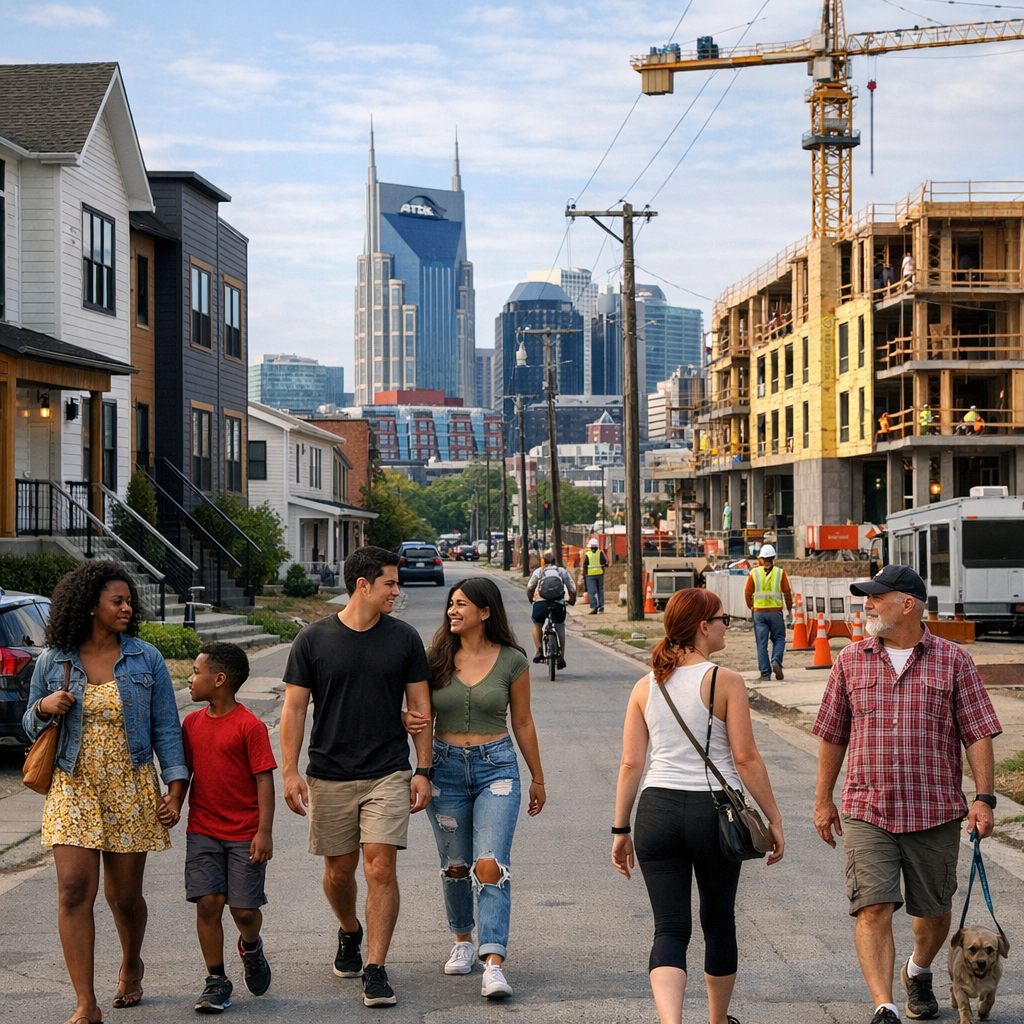
It’s easy to be proud of Nashville these days. Our music, coffee shops, parks, and job opportunities draw people in from across the region and beyond. But for many longtime residents, that pride is tinged with worry. As the city expands fast, questions that once felt distant now hit the dinner table: Will we still be able to afford to live here? Will this place feel like home for all of us?
The strain of rapid growth
Recent surveys show what many of us already feel. Over four in five residents say buying a home in Davidson County is beyond their reach. Most believe the city’s population is swelling too fast. Traffic congestion, long commutes, and crowded public transit have become daily stressors—not just inconveniences. And while there’s been a surge in housing development, much of it is outside neighborhoods many Nashvillians still want to call home. A lot of build-out has concentrated in the suburbs, leaving inner neighborhoods hotly contested and often too expensive. These patterns create tension between preserving what makes communities special and being inclusive to those just trying to make ends meet.
Voices pushed to the edge
Growth isn’t just about numbers—it’s about people. In African American communities across Nashville, economic gains haven’t always landed equally. Some neighborhoods continue to face low incomes, less job access, and fewer chances to build wealth through real estate. Generations who helped shape places like Edgehill or Jefferson Street now watch while rising rents and property values make it harder to stay. The social fabric—the shared memory and sense of neighborhood—can come loose when change rushes in without care.
Can planning build bridges?
Nashville’s leaders have taken steps. Big plans like NashvilleNext, the Unified Housing Strategy, and recent zoning reforms are working to make growth more equitable. Efforts include encouraging development near transit corridors, giving developers incentives for affordable housing, and rethinking zoning rules to allow more housing types in traditionally single-family areas. These plans aim not only to build homes but to build neighborhoods—places where people can walk to parks, connect with schools, and feel rooted.
Hope in local action
The real heartbeat of this city emerges in its neighborhoods. Community gardens that preserve green space. Church leaders helping neighbors navigate rising utility bills. Parent groups advocating for school resources. These smaller stories may not dominate headlines, but they add up. They remind us what people want most: to feel they belong. That their voices matter. That Nashville isn’t just a place where people pass through, but a place where people stay.
What we need to do
- Support policies that expand housing options—duplexes, smaller homes, affordable rentals—especially near transit.
- Push decision-makers to be transparent and accountable when it comes to displacement and cost-burdened households.
- Show up: attend community meetings, zone hearings, school board sessions.
- Lift up stories from the edges—families struggling, neighborhoods resisting erasure, longtime residents seeking stability.
Closing thoughts
Growth is not the enemy. Change can be vibrant, necessary, even inspiring. But when growth feels like it belongs to someone else, when home feels out of reach, that’s when a city loses its way. Nashville still has moments that feel like hope. If we lean into the work—of policies and people—toward belonging, toward fairness, toward hands that build up instead of ones that push aside, then maybe Nashville can be a place home still means something real for everyone.