

By Sophia Anderson
Nashville’s housing market is moving beyond the fast-paced boom that dominated early post-pandemic years. Buyers, renters, and developers are entering a phase where strategy, quality, and affordability are becoming more important than rapid growth. Here’s what Nashvillians need to know about where the market stands today and where it seems headed.
Stabilizing Home Prices, More Options for Buyers
The median residential home price in Metro Nashville (Greater Nashville’s nine counties) is now around $507,000. Listings are beginning to stay on the market longer than in the overheated peak years. Recent trends suggest a more balanced situation—less frenzied competition, more bargaining room for buyers who are well-prepared. While prices aren’t dropping sharply overall, per-unit values in multifamily projects remain just under past peaks. Sellers aiming to succeed are focusing on competitive pricing and making their properties stand out.
Renters Gaining a Bit of Ground
Average asking rents in Nashville have held steady or dipped slightly, with a median close to $1,980/month across all unit types. Year-over-year declines are modest but welcome, especially for those budgeting for rent. In the multifamily sector, rents are still strong, though softness shows in certain neighborhoods where vacancies or overdevelopment have pushed prices down. For renters, patience and a willingness to explore different neighborhoods may lead to better deals.
Affordable Housing and Policy Moves
Affordability remains one of the most pressing challenges. Nearly half of renter households live with cost burdens—spending more than one-third of income on housing. The government and nonprofits are working to address this gap. One of the big efforts: a decade-old program (PILOT) that offers property tax relief to developments with affordable units. That has helped support over 11,000 such units so far, with several hundred new units underway. The city has also committed funding to preserve existing affordable homes and launched a fund to help mission-driven developers deepen affordability across neighborhoods.
Where Development Is Focused
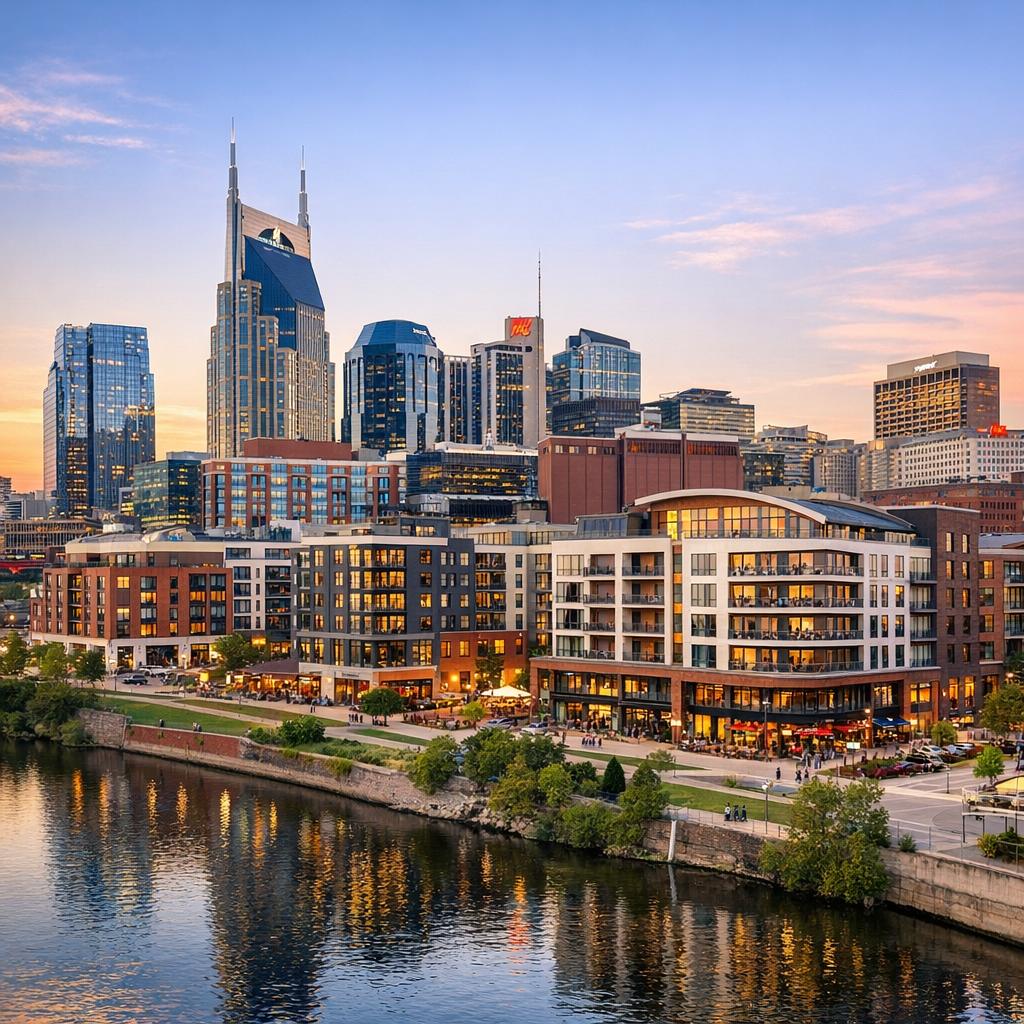
Mixed-use growth is reshaping key corridors. Major projects like the East Bank, Nashville Yards, and redevelopment of Neuhoff in Germantown are creating new residential, retail, and public spaces. Downtown continues seeing towers with apartments and condos, integrating office or retail bases. Meanwhile, in neighborhoods like The Nations or outer suburbs, there’s more infill—townhouses, smaller single-family lots, and stacked flats replacing industrial or underused parcels.
What Buyers and Renters Should Watch
Buyers
- Get pre-qualified and work with agents attuned to local neighborhoods—small shifts in price or condition now make big difference.
- Watch new construction vs resale; newer units can offer efficiency (and sometimes lower maintenance), but may come at a premium.
- Pay attention to planned infrastructure: transit, roads, parks—these will affect value over time.
Renters
- Be flexible on location—rent‐to-square-foot value varies a lot by neighborhood.
- Negotiate lease terms where possible; fixed rates, shorter leases, or improved amenities may yield savings.
- Look for affordable housing programs and nonprofit developments—these don’t show up in typical listings but can make a big difference.
Nashville’s real estate is entering a new phase—not skyrocketing toward the unknown, but edging toward balance. For locals, that means more opportunity to make smart decisions. Whether renting or buying, staying informed and realistic will pay dividends.