

By Sophia Anderson
Where Pricing Stands
Nashville’s median home sale price recently hovered around $475,500, a slight drop of about 0.5% compared to last year. Homes are spending more time on the market — roughly 64 days on average, up slightly from one year prior. The number of homes sold has edged down too, indicating a softening in the pace of sales. These shifts suggest a transition from rapid seller’s momentum toward a more balanced market.
More Rentals & Vacancies in Some Areas
Rental development has remained strong, especially in downtown and near transit corridors, pushing up vacancy rates in certain neighborhoods. Observers note that some apartments now stay vacant longer than before, which is easing rental pressure in those sections. However, more affordable options are still in high demand, and rent levels remain steep in many locations.
Big Development Projects To Watch
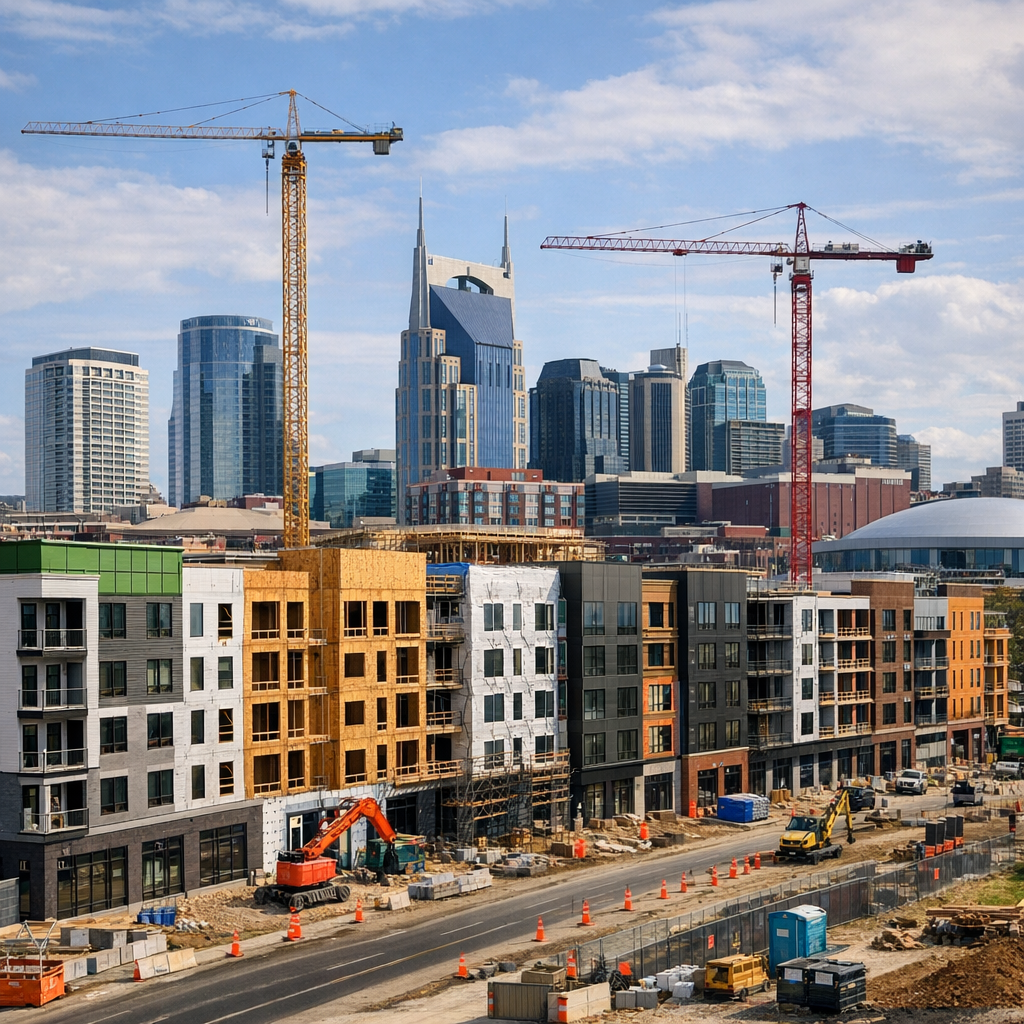
Nashville’s East Bank is becoming a focal point for mixed-use development. A landmark building called Eastpoint Flats just broke ground: 323 units that are completely income-restricted, plus plans for childcare and retail space. Thanks to a 99-year ground lease, this project aims for long-term affordability.
Other plans in East Bank call for a minimum of 1,550 housing units with mixed affordability requirements, ground-floor retail, and new infrastructure—street grids, utilities, transit hubs—to improve connectivity across the area.
Policy Moves & Affordable Housing Tools
The city’s Unified Housing Strategy aims to align regulations, resources, and stakeholders to ensure access to safe and stable housing for all Nashvillians. It builds on earlier task force reports and integrates recent findings from infrastructure and zoning studies.
To support affordable housing production, Nashville established the Catalyst Fund, a public-private initiative with $75 million initially committed. It’s designed to help mission-driven developers acquire or preserve income-restricted rental units more quickly. The goal: add thousands of affordable homes in coming years.
Meanwhile, the Metropolitan Development and Housing Agency continues to fund projects offering rental assistance, especially for households earning up to 60% of the Area Median Income. Nonprofit developers are given special consideration to boost supplies of income-restricted housing.
Buyers, Sellers, & What It Means For You
- For buyers: There’s some breathing room. Slightly lower prices and longer listing times mean more negotiation potential, especially outside the hottest zip codes.
- For sellers: You may need to adjust expectations, ensuring your listing stands out on price, condition, or location.
- For renters: Affordability programs are growing, but availability remains uneven.
- For developers: The demand for affordable units is strong, supported by policy and funding—but regulatory hurdles like zoning and infrastructure capacity need ongoing attention.
Nashville’s real estate landscape is shifting steadily. Prices are cooling in many places; huge projects are sprouting with affordability baked in; policy tools are moving toward accountability. If you’re navigating these changes—whether buying, renting, or building—staying informed means staying ahead.