

By Sophia Anderson
Home Prices and Market Pace
Nashville’s housing market is showing modest but consistent growth. Across nine Middle Tennessee counties, the median single-family home price reached about $537,000 in June, up over 1% from a year earlier. Condominiums saw a slower gain, with a median price around $350,000. Homes are spending roughly 50–60 days on the market before selling—longer than during peak pandemic periods but still brisk by long-term local standards. Homes for sale are becoming more plentiful, offering buyers slightly more breathing room.
Rental Costs and Buyer Considerations
Rent in Nashville averages around $1,834 per month, marginally below the national average. Year-over-year changes show rent leveling off, with very modest increases or even occasional dips. For buyers, rising mortgage rates and home prices mean that affordability challenges persist, particularly for first-time buyers how haven’t seen wage growth keep pace. However, increased inventory has made certain housing negotiations more balanced than in recent years.
What’s Under Construction & Incoming
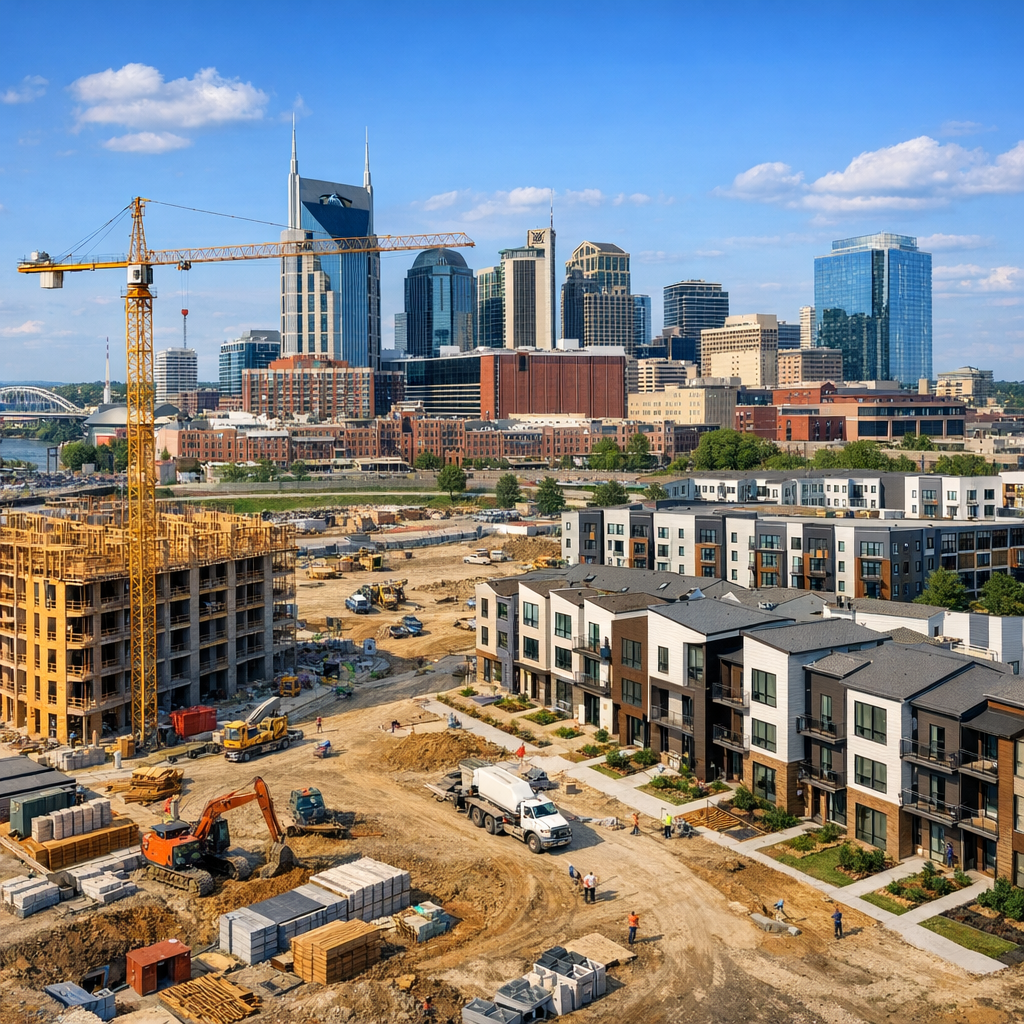
There are dozens of large-scale development projects underway or in planning. In West Nashville, the NOVEL Richland Creek mixed-use development is under construction, with about 277 apartments and ground-floor retail.
The massive East Bank Development is transforming 550 acres along the Cumberland River. With downtown connections, new public spaces, and mixed land uses, this project includes the Eastpoint Flats—a newly broken ground building with 323 affordable units, childcare facilities, and retail, supported by a 99-year ground lease to ensure long-term affordability.
Policy, Zoning & Affordability Efforts
Nashville is not just building; it’s also rethinking how it builds. The Metro’s Housing and Infrastructure Study seeks to update zoning rules to encourage a broader mix of housing types—smaller scale units, infill development, and housing that better aligns with what residents can afford.
The transformation of MDHA’s Napier and Sudekum properties through a co-development agreement aims to deliver new affordable housing with improved amenities to long-time residents. These projects illustrate efforts to combine housing equity with urban development.
Tips for Buyers and Renters
- Explore neighborhoods outside central zones where new projects and infill development may offer better value.
- Get pre-approved and understand financing—as interest rates still impact monthly costs heavily.
- For renters, monitor lease terms carefully—retail and mixed-use projects bring both opportunity and competition.
- Watch for developments tied to public land or long leases; they often carry affordability protections.
Overall, Nashville’s real estate market is in a phase of stabilization and adjustment. Home values continue to climb, but more slowly. New development and policy are responding to demand—and pockets of affordability are emerging. For many local residents, that offers cautious optimism built on solid change.