

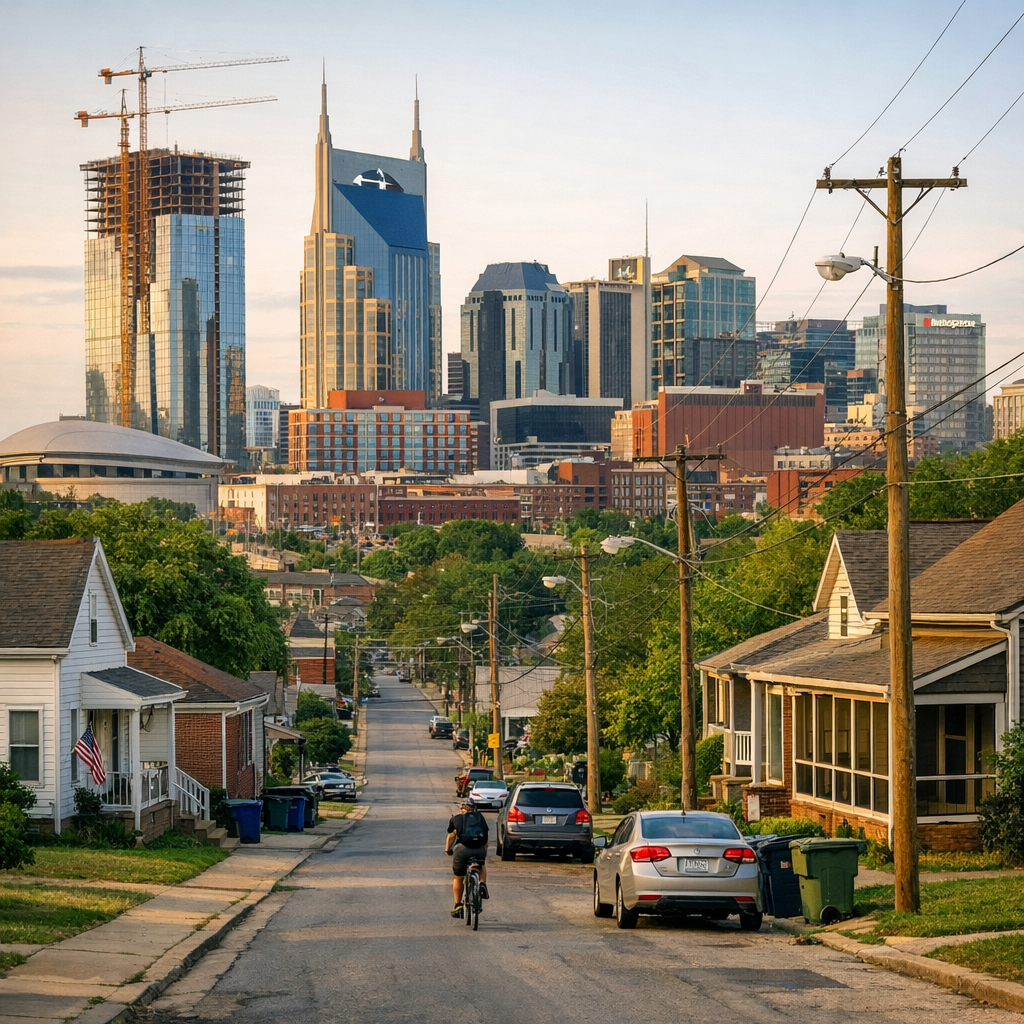
My name is William Lopez, and I’ve called Nashville home for nearly a decade. I moved here chasing opportunity, the promise of creative energy, the draw of live music, and the sense that this city could one day be mine too. But lately, that sense has shifted. What once seemed possible now feels far away—for me, for friends, for neighbors.
What “Affordable” Actually Means
Across Davidson County, 82 percent of residents report they can’t afford to buy a house where they live. Their income? It’s not keeping pace with what home prices demand. A recent poll revealed this is true even for those who’ve been working here for years. Meanwhile, definitions of “affordable housing”—built around benchmarks like 80 percent of the area median income—often use numbers that stretch past what most people earn. That disconnect breeds frustration: when “affordable” housing still costs more than you make.
Affordable housing is supposed to mean you spend no more than 30 percent of your income on shelter. But for many renters, that number slides past 50 percent, and what feels like a dream home feels more like a luxury.
Stories from Our Streets
I’ve talked with people across Nashville—bus drivers, baristas, school aides—who are still doing the work that makes this city hum, yet who can’t imagine staying much longer. One friend, after years in affordable housing, finally saved enough for a down payment only to be priced out of his neighborhood when property values soared. Another is considering moving to an edge county just to afford rent, even though it means adding two hours to the commute each day.
There’s also generational weight: elders who lived through segregated housing policies point out how decisions made decades ago still limit their children’s ability to build wealth where they grew up. New neighbors arriving find themselves competing with real estate investors buying multiple properties. Historic homes are renovated—if they survive at all—and turned into income-generating short-term rentals.
What Nashville Is Trying
Efforts are underway. The city’s Unified Housing Strategy (launched in 2025) aims to guide development toward affordability, and Metro’s Housing Division partners with nonprofits and private investors to preserve existing housing, support homeownership, and build new units that are meant to stay affordable. There are renewed conversations about zoning reform and encouraging transit-oriented development—letting density grow near bus lines and routes to reduce both housing and transportation costs.
Yet the work is incomplete—and often slow. Temporary rent subsidies and tax incentives help, but without stricter protections, the threat of displacement remains. Local voices say they want more: guarantees that affordable housing doesn’t just exist—but stays affordable, close to community and opportunity.
What People Like Me Are Hoping For
- A fairer way to calculate what “affordable” means—something rooted in local incomes and cost of living, not inflated median values.
- More housing near transit, so people can live without hours-long commutes and without spending half their income on rent alone.
- Stronger preservation of existing homes—so long-time neighborhoods don’t vanish under new development, and families can age in place.
- Ownership paths that feel possible—not the mythic American Dream sold by glossy ads, but real steps: counseling, down-payment support, and legal protections.
Because this city—my city—should feel like it’s ours. Not for some, or for this generation, but for all, across incomes, backgrounds, dreams.