

By Emma Johnson
As someone in Nashville, it might feel like we’re far from some of the biggest international developments—but global currents affect us all. Below is a clear-eyed guide to major worldwide trends shaping the years ahead.
Top Concerns for People Around the World
Recent surveys show the economy is the most frequently cited concern for people in over 100 countries. Issues like rising costs of living, wage stagnation, and food affordability consistently top lists. Beyond that, concerns about work—both job quality and availability—and dissatisfaction with government institutions are also widespread. In regions affected by violence, safety and security become the dominant worry. These worries are deeply interwoven, with instability in one sector often intensifying stress in others.
Where Global Risk is Growing
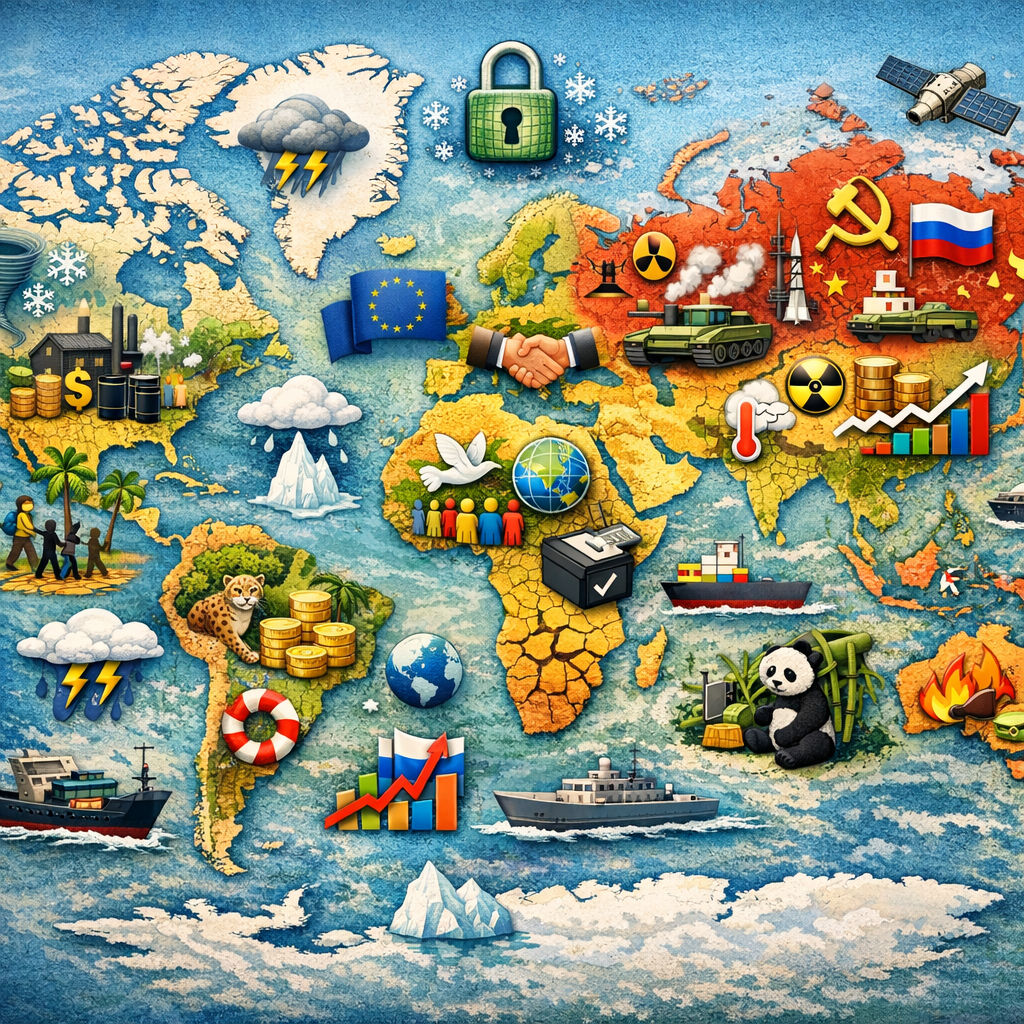
Geopolitical Friction and Multilateral Strains
We’re entering an era of shifting global power. Nations are increasingly pursuing independent paths, and long-standing international institutions are under stress. Rising competition over trade, resources, and technology is reshaping alliances and increasing economic friction. The rules that once governed peaceful trade and cooperation are being tested as countries react more on their own terms.
Climate Stress and Aging Infrastructure
Extreme weather events—heat waves, flooding, storms—are growing more frequent and intense. Yet many countries’ infrastructure systems weren’t built for these challenges. Roads, energy grids, water systems and communication networks are particularly vulnerable. When they fail, the social and economic damage is massive.
Humanitarian Crises and Conflicts Beyond the Headlines
There are dozens of ongoing regional conflicts that get little international media attention—even though they cause mass displacement, food shortages and deep suffering for civilians. Aid systems are increasingly strained, while donor fatigue means urgent crises often go underfunded. The risks are higher for countries whose governments lack strong institutions or where infrastructure is weak.
What These Trends Mean for Us—Locally and Globally
From Nashville, we may feel isolated—but economic shocks, refugee flows, climate-related disruptions, and global policy shifts ripple across borders. Prices we pay, migration policy debates, trade relations, and even our access to clean water or energy can be affected by what’s happening far away.
What Direction for the Future?
• Strengthening global cooperation—reforming international institutions and rethinking how countries respond together rather than alone.
• Investing in resilient infrastructure, especially in places most exposed to environmental risk.
• Ensuring humanitarian systems are better funded and responsive, with more attention to underreported crises.
• Developing inclusive policies that build trust in institutions and lift up those whose voices are often marginalized.
These aren’t silver-bullet solutions, but recognizing the interconnected nature of these challenges is a step toward finding them. As the world faces overlapping risks, staying informed—and acting locally—matters.