

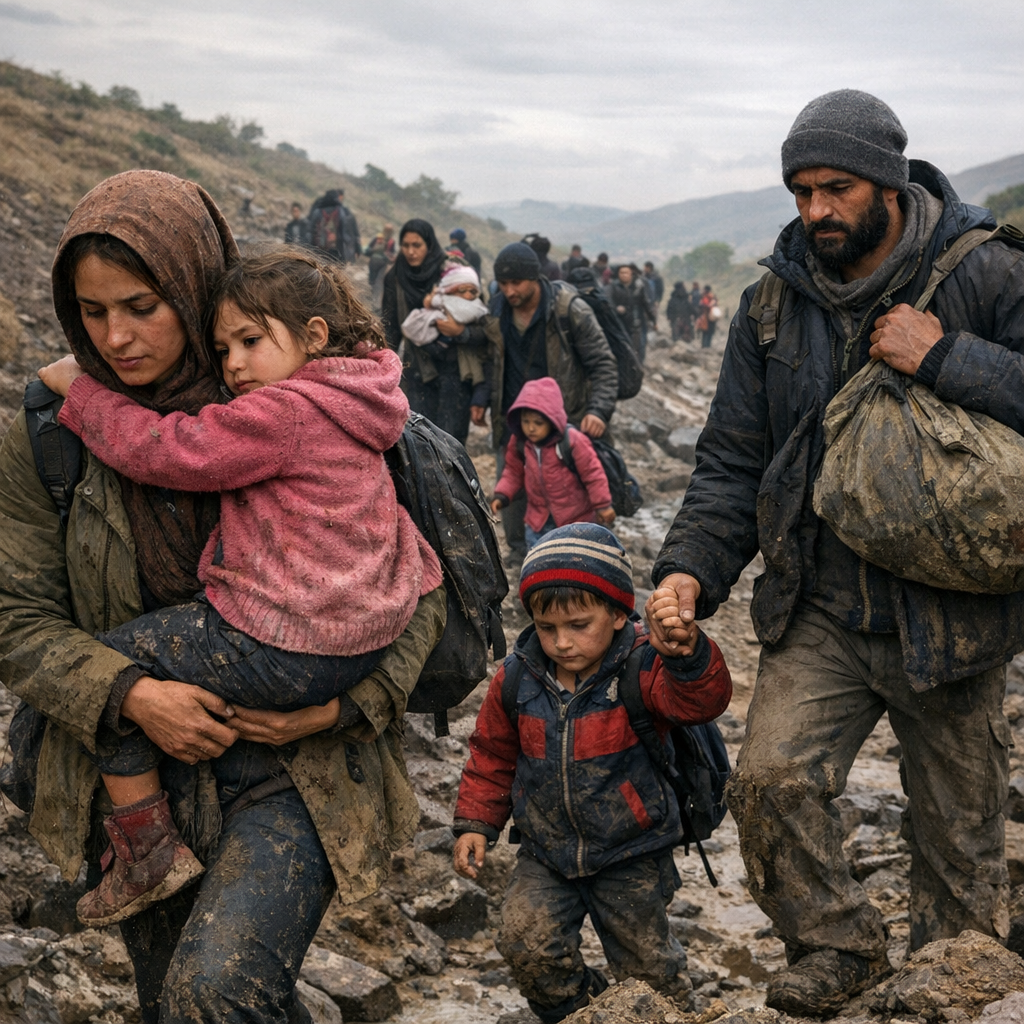
In recent years, global forced displacement has surged to record highs. As people flee war, persecution, and climate disasters, many find safety far from their homes—but most remain in or near their region. What follows is a broad look at the drivers, patterns, and impact of forced displacement worldwide.
How many people are displaced—and why
At the end of 2025, there were approximately 117.8 million forcibly displaced individuals globally. This includes refugees, internally displaced people (IDPs), asylum-seekers, and stateless persons.
Some of the most common causes include ongoing armed conflicts (such as in Sudan, the Democratic Republic of Congo, Myanmar, Syria, and Ukraine), political persecution, environmental degradation, and climate disasters.
Patterns of displacement
Most forced displacement today occurs within countries or in nearby regions. Refugees under the UN mandate typically remain in neighboring nations rather than reaching far-off destinations. Low- and middle-income countries host the majority of displaced people, often putting pressure on resources and infrastructure.
Another trend: climate events are increasingly entangled with social and political factors in pushing people from home. Sudden disasters like floods or storms and slow events like droughts or sea-level rise both contribute.
Challenges and impacts
Displacement is rarely temporary: many people are displaced for years, even decades. Rebuilding home and security is difficult amid damaged infrastructure, weak institutions, and ongoing instability.
Host communities often struggle to meet the needs of large displaced populations—health care, schooling, shelter, and employment become urgent concerns. Financial resources are stretched thin, especially when crises are protracted.
What can be done
International support—both in funding and policy—is essential. Strengthening legal protections for refugees, increasing resilience and adaptation in vulnerable regions, and helping displaced people access basic rights are key priorities. Many organizations urge a shift from emergency aid toward sustainable solutions.
Another critical component: addressing root causes of displacement, including climate change, political instability, and violations of human rights. Prevention and adaptation are often more cost-effective than crisis response.
As communities around the world navigate these challenges, the voices of displaced people themselves—and those in host regions—are central. Their stories are not just statistics. They reflect resilience, loss, hope, and the universal desire for home.