

By Sophia Anderson
A More Balanced Market Emerges
Nashville’s housing market is slowly shifting from the breakneck pace that defined previous years. Though home sales are down, inventory is up, giving buyers more breathing room. In recently reported data, active listings rose sharply across the region—even though transactions dropped by about 7%. This shift isn’t a crash, but it does relax some of the intense competition buyers have faced.
For single-family homes, median prices in Nashville have increased modestly—about 1.2% year-over-year—while median prices for townhomes and condos have seen declines of over 5%, in many cases. Homes are also taking longer to sell, hovering around 50-to-60 days on market in many neighborhoods.
What This Means for Buyers and Sellers
For Buyers:
- You have more options now. With more homes listed, buyers can afford to shop more carefully, weigh pros and cons, and be more selective.
- Bargaining power is increasing—more price cuts are appearing, particularly in the condo and townhome sectors.
- Crowding into the suburbs continues. Areas like Murfreesboro, Mount Juliet, Gallatin and Lebanon are seeing stronger buyer interest due to space and more affordable housing relative to central Nashville.
For Sellers:
- Accurate pricing and strong presentation matter more than ever to stand out in a more saturated market.
- Sellers who priced high may now see bigger markdowns—especially for condos or townhomes.
- Investing in curb appeal and doing basic renovations can help offset longer market times and increased competition.
Local Development & Affordability Efforts Gain Ground
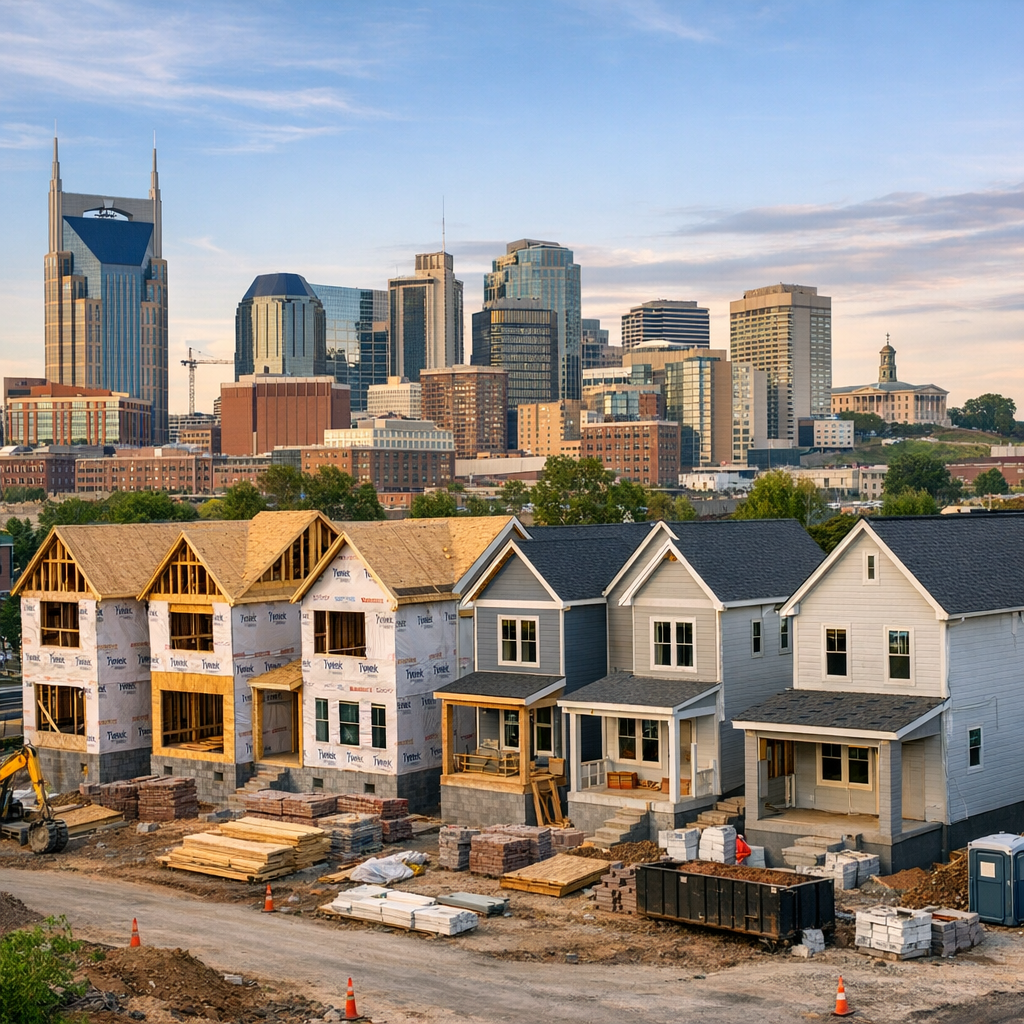
Big new projects are underway as part of Nashville’s push to deliver more housing options and mixed-use spaces. One example is the newly started NOVEL Richland Creek in West Nashville—277 apartment homes plus retail space situated along the Richland Creek Greenway. It’s designed to tap into both outdoor amenities and proximity to employment centers.
Meanwhile, Metro has stepped up investments in housing affordability. Fiscal Year 2027 brings the largest local investment yet into programs like the Barnes Housing Trust Fund, homelessness prevention, eviction support, and anti-displacement initiatives. Another example is the Eastpoint Flats development on the East Bank: a fully affordable mixed-use project with child care on the ground floor.
What to Watch Going Forward
- How interest rates evolve. Financing costs will continue to shape buyer decisions—especially for first-time buyers.
- The pace and mix of development. If new housing is mostly luxury, affordability concerns will deepen. The balance of density, mixed use, and affordability will be key.
- Regulatory pressures around land use—like data center zoning and moratoriums—could shift where and how future projects are built.
For both buyers and sellers navigating today’s Nashville market, flexibility, information, and timing matter. With more inventory, rising affordability efforts, and shifting demand, there’s room to make thoughtful moves—if you know what to watch.