

By Sophia Anderson
Home Prices Ease and Buyers’ Power Rises
Across Nashville, typical home values are moderating. Recent data shows a 3% drop year-over-year in the Zillow Home Value Index, with the median home value around $434,068. Homes are spending an estimated 30 days in “pending” status, reflecting a less frenzied market than seen during the boom. Sellers are finding themselves in a stronger position when pricing smart and keeping homes move-in ready.
Nashville is now one of the strongest buyer’s markets in the U.S.—estimates suggest there are more than two home sellers for every active buyer. That means more options and more room for negotiation on price and terms for buyers. For many, newly built homes are especially attractive, with incentives from builders increasingly common.
Rental Market Cooling After Strong Gains
Rents in Nashville are holding near $2,200 on average, staying just under last year’s mark. That’s partly because an increased supply of rental units—especially luxury and mixed-use buildings—has eased some pressure on prices. While rents aren’t dropping sharply, the pace of growth has clearly slowed.
Affordable Housing Moves to Forefront
The city has pushed forward several major projects aimed at preserving or increasing affordability. One example: Eastpoint Flats, the first fully affordable development inside the East Bank’s Eastpoint district, will include 323 affordable homes, ground-floor retail, and childcare, secured by a 99-year ground lease to lock in affordability long-term. Another sign: Metro Nashville’s Planning Department continues efforts to update zoning codes through its Housing & Infrastructure Study, seeking ways to lower barriers to smaller-scale affordable housing and ensure infrastructure can keep pace with growth.
Development Pipeline & Neighborhood Options
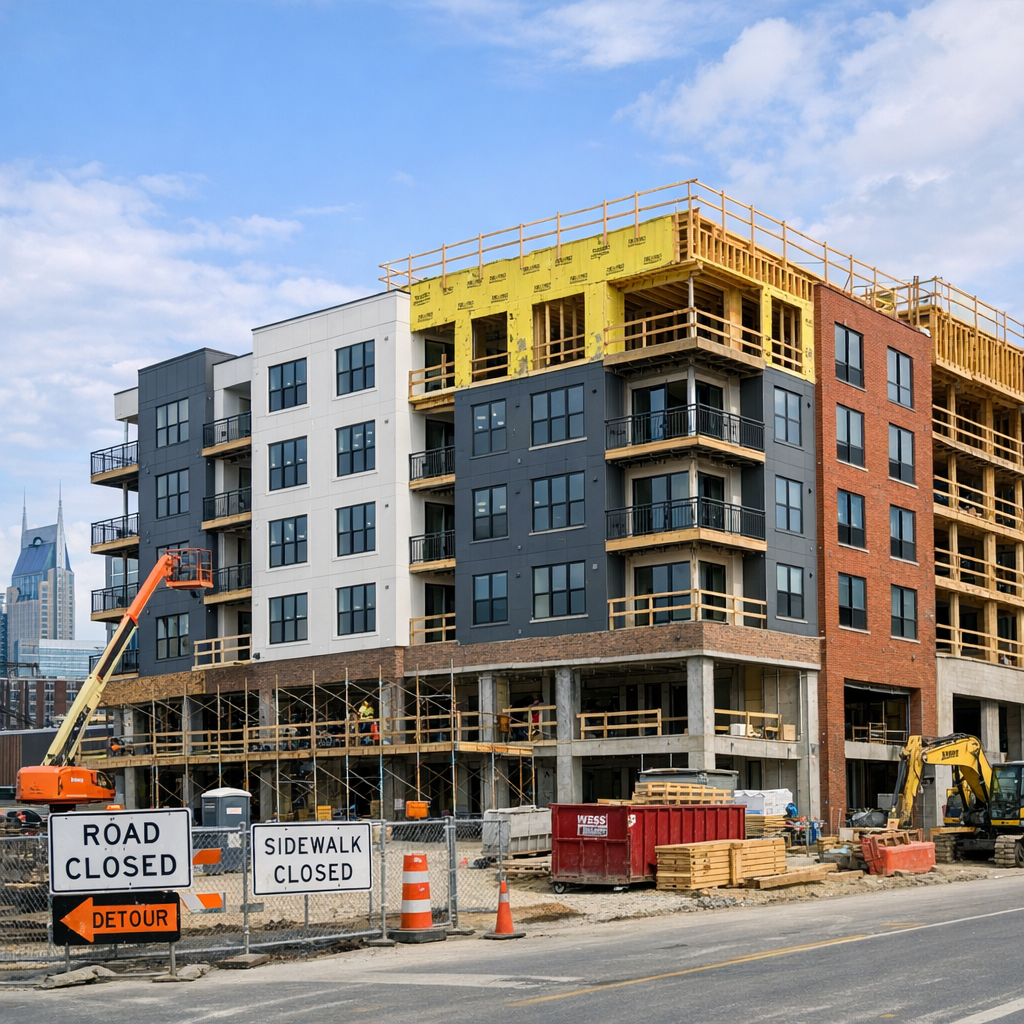
Development remains active. Approximately 29 new mixed-use, residential, and commercial projects are in the pipeline—including over 12,000 new units expected within the next few years across Downtown, Belle Meade, The Gulch, East Bank, and Wedgewood-Houston. Many of these aim to offer mixed-income or mixed-use layouts, combining residential with retail or community amenities.
What Buyers, Renters & Developers Should Consider
- Buyers: This may be a more favorable time to shop. With more inventory, more negotiating power, and competitive mortgage rates (depending on credit), buyers who are patient and prepared may get better value.
- Renters: Opportunities are improving. If your budget stretches, you may get more space or amenities for similar price as neighborhoods see increasing rental supply.
- Developers & Advocates: Focus on affordable and mixed-income builds, streamlined zoning, and infrastructure capacity will be essential to address long-term needs. Projects secured with long-term affordability protections (like 99-year leases) are particularly meaningful.
Nashville’s real estate market is settling into a new rhythm—one where balance between growth and affordability, choice and quality, is coming to the front. Whether buying, renting, or building, understanding these shifts gives you a clearer map of opportunities and trade-offs.