

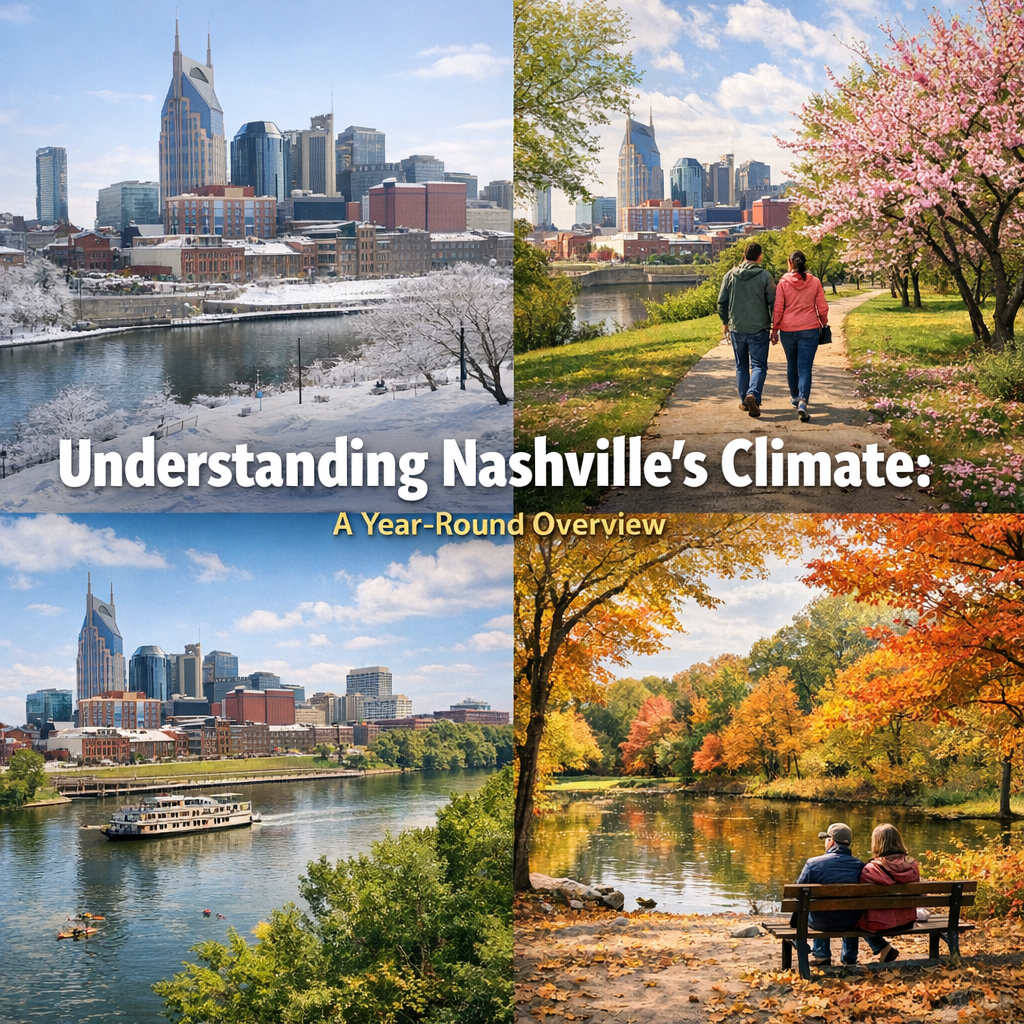
Nashville, Tennessee, experiences a humid subtropical climate, characterized by hot, humid summers and mild to cool winters. This diverse weather pattern influences various aspects of daily life, from wardrobe choices to outdoor activities.
Seasonal Breakdown
Summer
Summers in Nashville are notably hot and humid, with average high temperatures peaking around 89°F (31.8°C) in July. The city often experiences muggy conditions from mid-May through September, making it essential for residents and visitors to stay hydrated and seek shade during peak heat hours.
Winter
Winters are generally mild, with average low temperatures in January around 28.3°F (-2.1°C). Snowfall is occasional, averaging about 2 inches per year, primarily between December and February. While severe winter storms are rare, they can occur and may lead to disruptions.
Spring and Fall
Spring and fall offer the most comfortable weather conditions. Spring temperatures gradually rise from March through May, while fall sees a gradual cooling from September through November. These seasons are ideal for outdoor activities and festivals.
Environmental Considerations
Nashville’s rapid urbanization has led to the development of urban heat islands—areas with higher temperatures due to infrastructure like buildings and roads and fewer green spaces. Approximately 71% of residents live in these heat-prone neighborhoods, which can exacerbate the effects of extreme heat, particularly for vulnerable populations.
To combat these challenges, the city has implemented initiatives such as reflective pavement coatings and increased tree planting to enhance urban greenery. These efforts aim to mitigate the heat island effect and improve overall climate resilience.
Climate Resilience Efforts
Recognizing the impacts of climate change, Nashville has developed a Climate Adaptation and Resilience Plan. This plan focuses on preparing the city for climate-related challenges, including extreme heat, severe storms, and flash flooding. Strategies include enhancing infrastructure, promoting sustainable practices, and engaging the community in resilience-building activities.
Understanding Nashville’s climate patterns and the city’s proactive measures can help residents and visitors make informed decisions and contribute to a more sustainable and resilient community.