

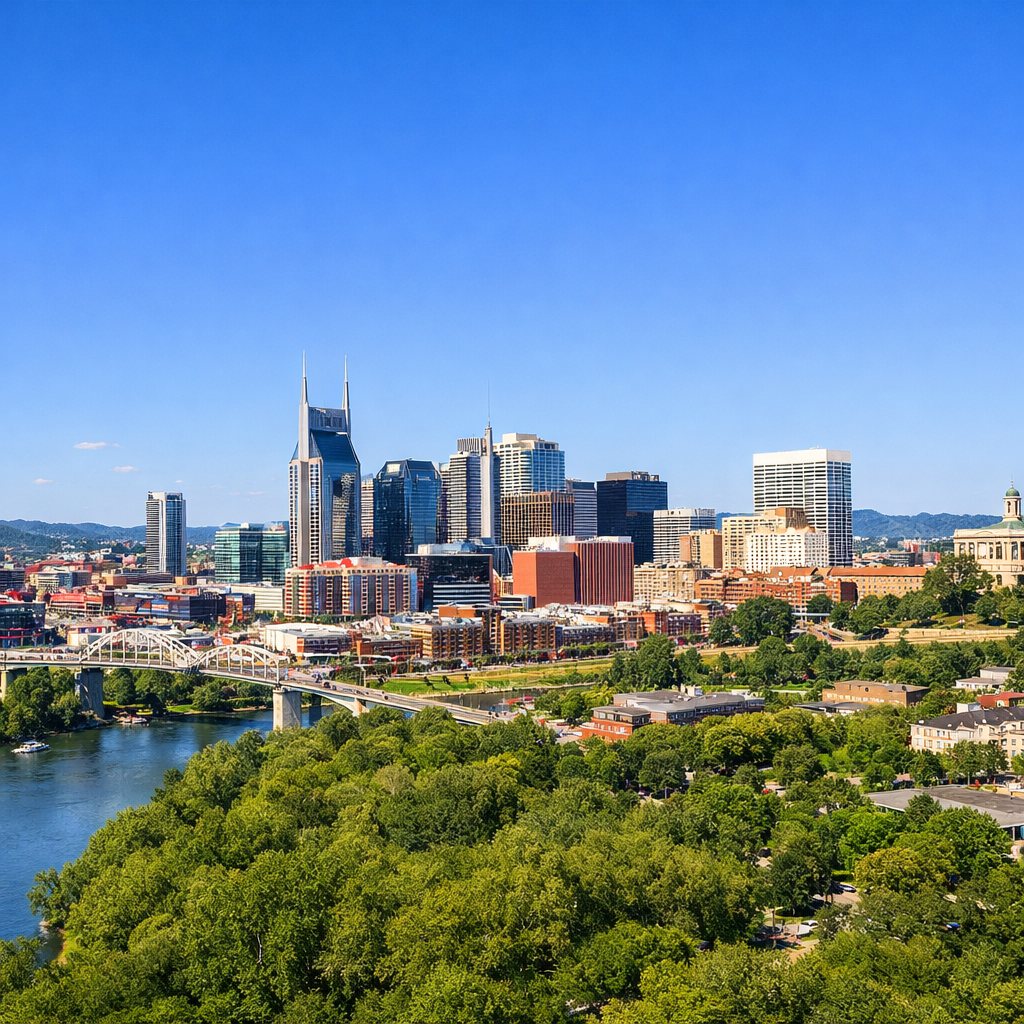
Nashville, Tennessee, experiences a humid subtropical climate characterized by hot, humid summers and mild to cool winters. This diverse weather pattern influences daily life, outdoor activities, and even the local economy.
Seasonal Breakdown
Summer
Summers in Nashville are notably hot and humid, with average high temperatures reaching around 88.3°F (31.3°C) in July. The city often experiences heat waves, with temperatures occasionally soaring into the mid-90s°F (35°C). High humidity levels can make it feel even warmer, emphasizing the importance of staying hydrated and limiting outdoor activities during peak heat hours.
Winter
Winters are generally mild compared to northern regions, but temperatures can dip below freezing. January is typically the coldest month, with average lows around 30.6°F (-0.8°C). Snowfall is infrequent and usually light, averaging about 1.7 inches in January. However, occasional cold snaps can bring more significant snowfall and icy conditions.
Spring and Fall
Spring and fall are transitional seasons offering moderate temperatures and lower humidity. Springtime brings blooming flora and is often accompanied by increased rainfall, while fall is marked by crisp air and vibrant foliage, making it a favorite season for many residents and visitors.
Precipitation and Storms
Nashville receives an average annual precipitation of approximately 50.5 inches. May is typically the wettest month, averaging over 5 inches of rainfall. Thunderstorms are common from March through September, occasionally bringing heavy rain, strong winds, and even tornadoes. Residents are advised to stay informed about weather alerts during these months.
Environmental Considerations
Urban development has led to the formation of heat islands—urban areas that experience higher temperatures due to infrastructure like roads and buildings absorbing heat. Approximately 71% of Nashville residents live in neighborhoods considered heat islands. This phenomenon can exacerbate the effects of heat waves, particularly in areas with limited green spaces.
Efforts are underway to mitigate these effects, including initiatives to increase the city’s tree canopy, which was reported at 56% in 2021. Enhancing green spaces can help reduce urban temperatures and improve overall air quality.
Staying Prepared
Understanding Nashville’s climate patterns is essential for residents and visitors alike. Staying informed about seasonal weather trends and taking appropriate precautions—such as staying hydrated during summer heat waves or being aware of potential flooding during heavy rains—can help ensure safety and comfort throughout the year.