

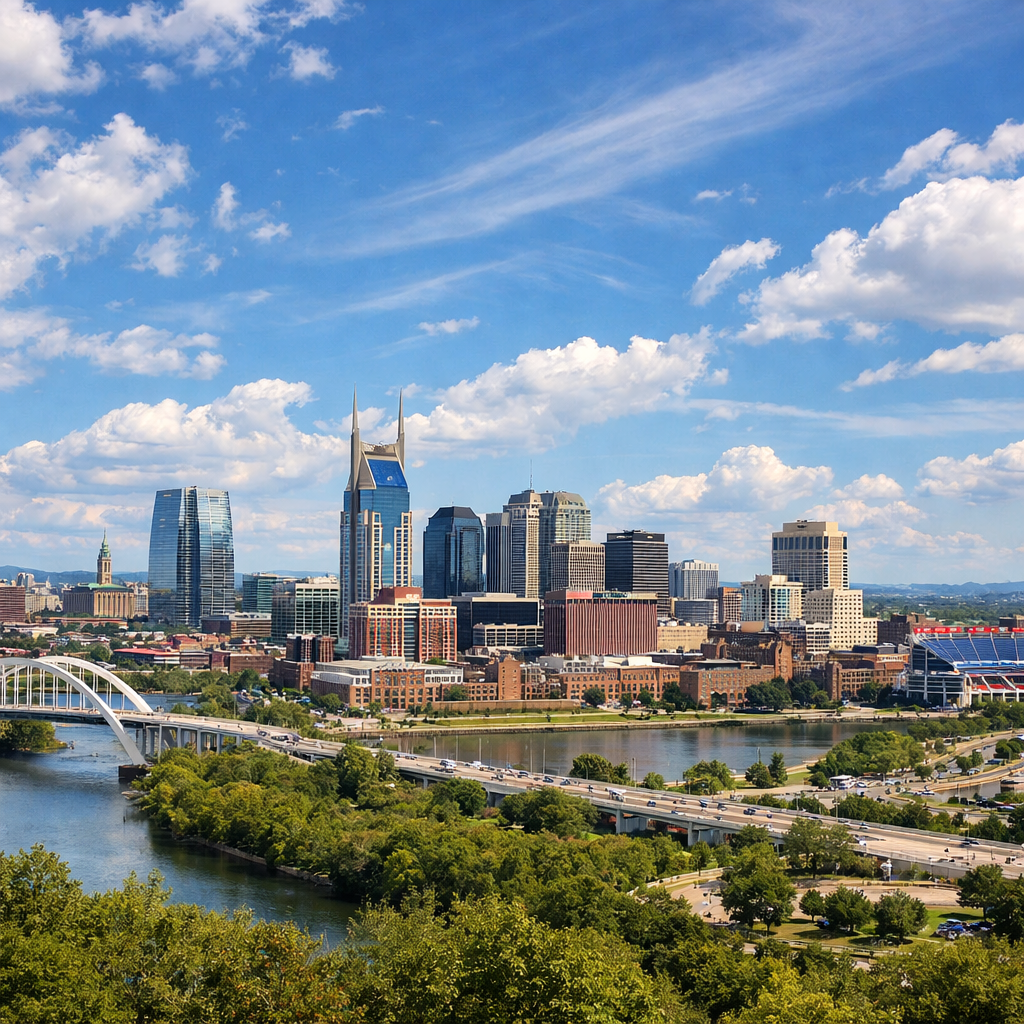
Nashville, Tennessee, experiences a humid subtropical climate characterized by hot, humid summers and mild to cool winters. This climate brings a variety of weather patterns and environmental challenges that residents should be aware of.
Seasonal Weather Patterns
Summer
Summers in Nashville are typically hot and humid, with average high temperatures in July reaching around 88.3°F (31.3°C). The city often experiences high humidity levels, making the heat feel more intense. Thunderstorms are common during this season, contributing to the overall precipitation.
Winter
Winters are generally mild, with average low temperatures in January around 30.6°F (-0.8°C). Snowfall is infrequent and usually light, but occasional winter storms can bring more significant accumulations.
Spring and Fall
Spring and fall are transitional seasons with moderate temperatures and varying precipitation. These periods are often considered the most pleasant times of the year in Nashville.
Environmental Challenges
Urban Heat Islands
Urban development has led to the creation of urban heat islands in Nashville, where built-up areas experience higher temperatures than surrounding rural regions. Approximately 71% of Nashville residents live in neighborhoods considered heat islands. This phenomenon is exacerbated by the reduction of green spaces and the increase in infrastructure like roads and buildings.
Increased Rainfall Intensity
Studies have shown that hourly rainfall intensity in Nashville increased by 12% between 1970 and 2024. This trend is attributed to human-driven climate change, leading to more intense precipitation events that can cause flash flooding and other hazards.
Air Quality Concerns
Nashville’s air quality is influenced by various factors, including vehicle emissions, industrial activities, and seasonal weather patterns. During summer months, high temperatures and stagnant air can lead to elevated ozone levels, while winter months may see increased particulate matter due to wood burning and other sources.
Staying Informed and Prepared
Understanding Nashville’s climate and environmental challenges is essential for residents to stay informed and prepared. Keeping track of weather forecasts, being aware of air quality indices, and supporting local initiatives aimed at mitigating environmental impacts can contribute to a healthier and more resilient community.