

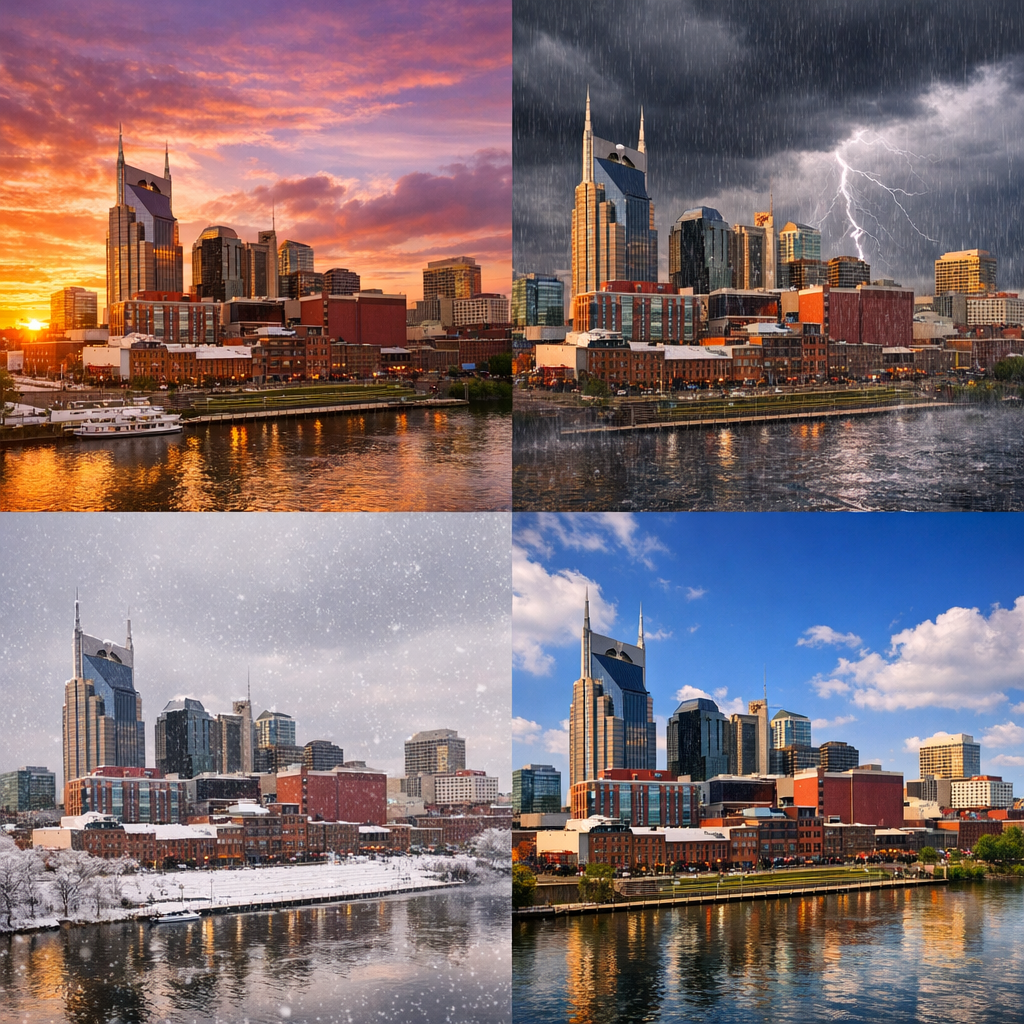
Nashville, Tennessee, experiences a humid subtropical climate characterized by hot, humid summers and mild to cool winters. Understanding the city’s weather patterns and environmental challenges is essential for residents and visitors alike.
Seasonal Weather Patterns
Summer
Summers in Nashville are typically hot and humid, with average high temperatures reaching around 89°F (32°C) in July. The city often experiences muggy conditions from mid-May through September, making it important to stay hydrated and take precautions against heat-related illnesses.
Winter
Winters are generally mild, with average low temperatures around 30°F (-1°C) in January. Snowfall is infrequent, averaging about 1.7 inches in January during the snowy period from late December to late February.
Spring and Fall
Spring and fall offer the most comfortable weather, with moderate temperatures and lower humidity. These seasons are ideal for outdoor activities and enjoying the city’s numerous festivals and events.
Environmental Challenges
Urban Heat Islands
A significant portion of Nashville’s population resides in urban heat islands—areas with higher temperatures due to infrastructure like buildings and roads and fewer green spaces. This phenomenon exacerbates the effects of extreme heat, particularly in historically lower-income neighborhoods where access to air conditioning may be limited. Efforts are underway to mitigate these effects, including increasing tree canopy coverage and implementing reflective pavement coatings.
Increased Rainfall Intensity
Studies indicate that hourly rainfall intensity in Nashville increased by 12% between 1970 and 2024. This trend is attributed to warmer air holding more moisture, leading to more intense precipitation events. Such heavy rainfall can result in flash flooding, posing risks to infrastructure and public safety.
Severe Storms and Tornadoes
Located in “Dixie Alley,” Nashville is susceptible to severe storms and tornadoes. Notably, the March 2020 tornado outbreak caused significant damage across the region. Residents are encouraged to stay informed about weather alerts and have emergency plans in place.
Air Quality
Air pollution in Nashville stems from various sources, including vehicle emissions, industrial activities, and construction dust. Seasonal factors, such as summer heat, can exacerbate air quality issues. The Tennessee Valley Authority’s commitment to phasing out coal power by 2035 aims to reduce air pollution exposure for residents.
Understanding Nashville’s climate and environmental challenges is crucial for preparedness and resilience. Staying informed and supporting local initiatives can help mitigate the impacts of these challenges on the community.