

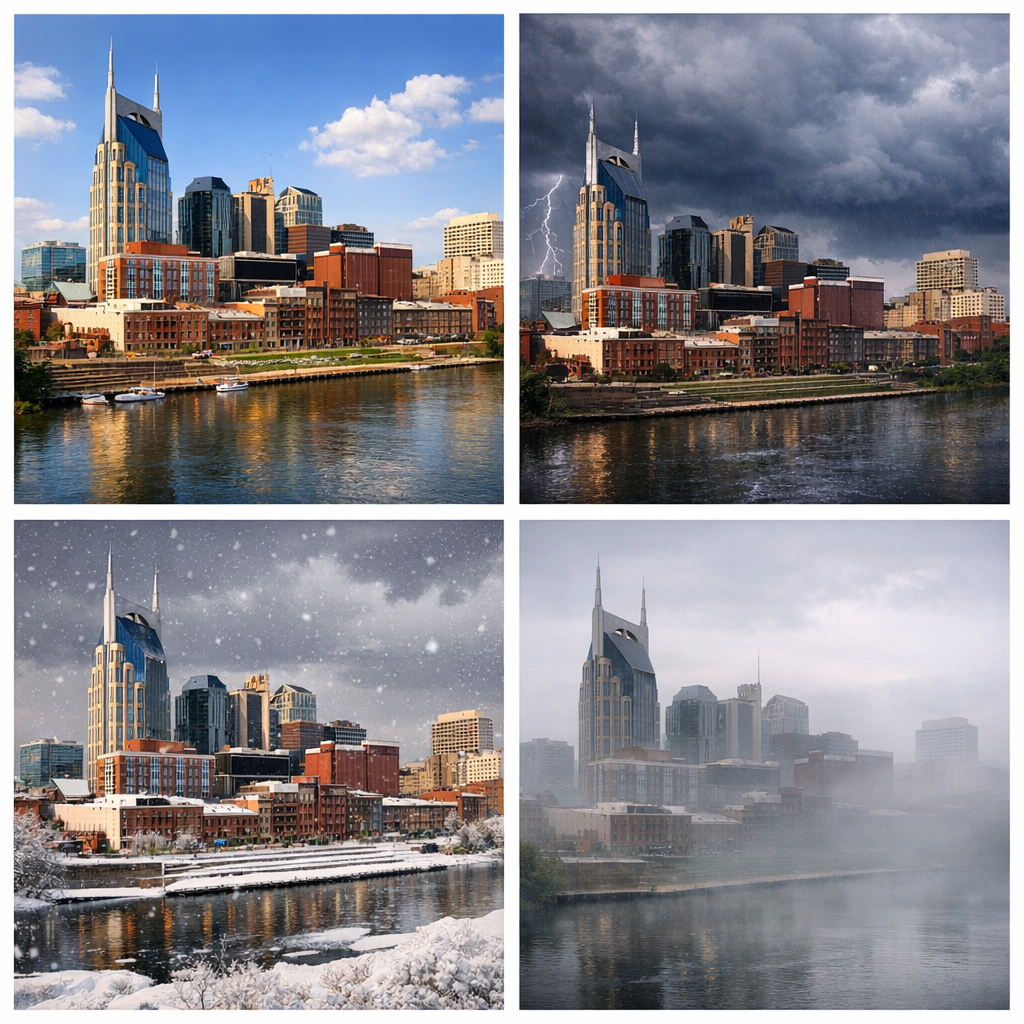
Nashville, Tennessee, experiences a humid subtropical climate characterized by hot, humid summers and mild to cool winters. This climate brings a variety of weather patterns and environmental challenges that residents should be aware of.
Seasonal Weather Patterns
Summer: From late May to mid-September, Nashville experiences its warmest temperatures, with average highs reaching around 88°F (31°C) in July. High humidity levels during this period can make temperatures feel even hotter, leading to muggy conditions. Thunderstorms are also common in the summer months, contributing to the city’s annual rainfall.
Winter: Spanning from late November to late February, winters in Nashville are generally mild, with average highs around 52°F (11°C) in December. Snowfall is infrequent, averaging about 4.7 inches annually, and when it does occur, it often melts quickly.
Spring and Fall: These transitional seasons offer moderate temperatures and are often considered the most comfortable times of the year. Spring brings blooming flora, while fall is marked by vibrant foliage.
Environmental Challenges
Extreme Heat: In recent years, Nashville has experienced an increase in extreme heat events. For instance, in June 2025, the city faced a significant heat wave, with temperatures peaking over several days. Such heat waves pose health risks, particularly to vulnerable populations, and are becoming more frequent due to climate change.
Flooding: Nashville’s location in the Cumberland River basin makes it susceptible to flooding. The city has a history of significant flood events, including the devastating flood in May 2010. More recently, in April 2025, heavy rainfall led to dangerous flooding, rendering several roads impassable and prompting emergency warnings. Climate models project a 20-30% increase in extreme precipitation intensity across Middle Tennessee by 2060, indicating that flooding may become more frequent and severe.
Air Quality: Air pollution in Nashville is influenced by various factors, including vehicle emissions, industrial activities, and seasonal conditions. During summer months, high temperatures and stagnant air can lead to elevated ozone levels, while winter months may see increased particulate matter due to wood burning and temperature inversions. Residents are advised to monitor air quality reports, especially during periods of extreme heat or cold.
Staying Informed and Prepared
Understanding Nashville’s climate and associated environmental challenges is crucial for residents and visitors alike. Staying informed through local weather forecasts and adhering to advisories can help mitigate risks associated with extreme weather events. Additionally, supporting and participating in local sustainability and resilience initiatives can contribute to a healthier and more prepared community.