

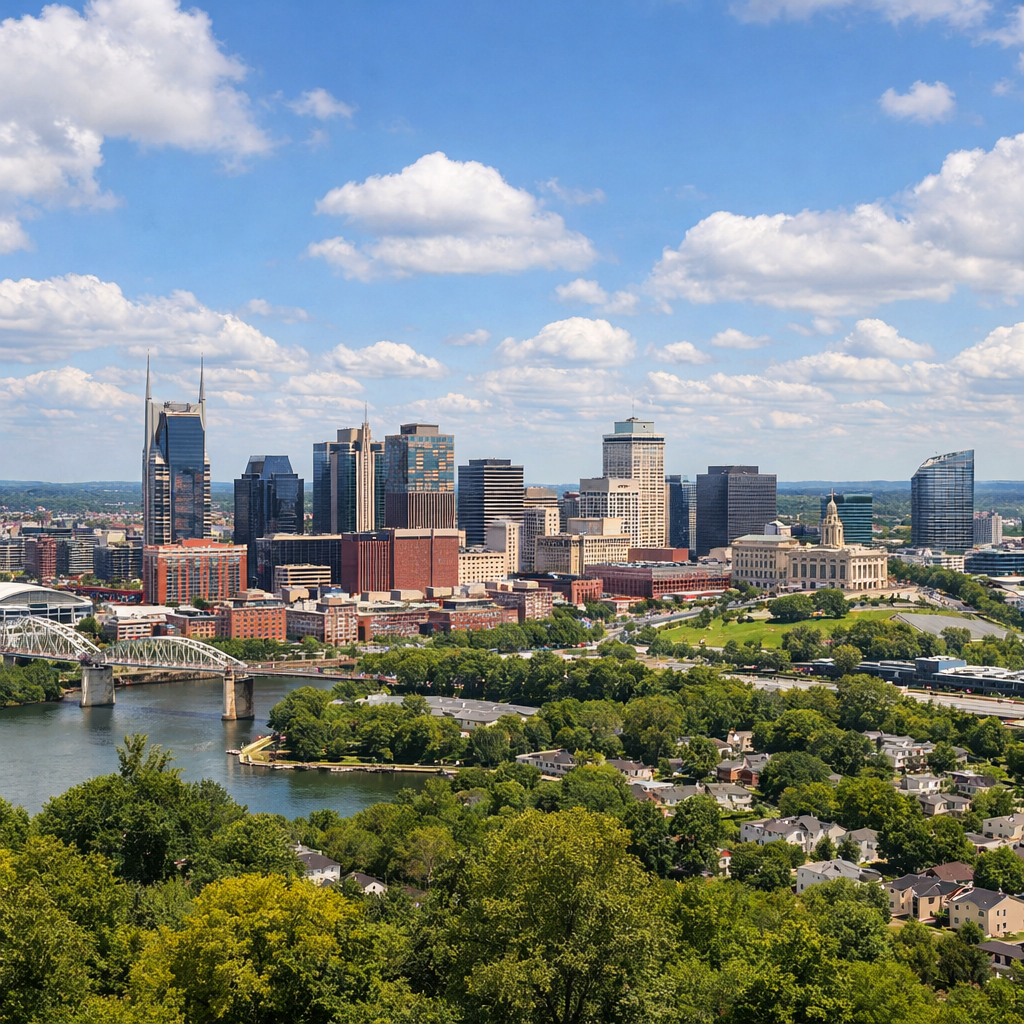
Nashville, Tennessee, experiences a humid subtropical climate characterized by hot, humid summers and mild to cool winters. This diverse climate offers residents and visitors a variety of seasonal experiences, each with its own unique weather patterns.
Seasonal Weather Patterns
Spring (March to May)
Spring in Nashville brings mild temperatures and blooming flora. Average high temperatures range from the mid-60s°F (18°C) in March to the upper 70s°F (25°C) in May. This season also sees increased rainfall, contributing to the lush greenery that defines the region.
Summer (June to August)
Summers are typically hot and humid, with average high temperatures in the upper 80s°F (31°C). July is often the warmest month, with highs around 89°F (32°C). Thunderstorms are common during this period, occasionally leading to heavy downpours and localized flooding.
Autumn (September to November)
Autumn offers cooler temperatures and vibrant fall foliage. Highs decrease from the low 80s°F (27°C) in September to the mid-60s°F (18°C) by November. This season is generally drier, providing pleasant conditions for outdoor activities.
Winter (December to February)
Winters are mild compared to northern regions but can still be chilly. Average highs range from the upper 40s°F (9°C) to low 50s°F (11°C), with lows occasionally dipping below freezing. Snowfall is infrequent but possible, with January averaging about 1.7 inches of snow.
Environmental Challenges
Nashville faces several environmental challenges exacerbated by climate change, including increased heat, intensified rainfall, and urban heat islands.
Extreme Heat
The city has experienced a rise in extreme heat events. Between 1970 and 2024, the intensity of hourly rainfall in Nashville increased by 12%, leading to more frequent and severe flash floods. This trend is attributed to the atmosphere’s increased capacity to hold moisture due to rising temperatures.
Urban Heat Islands
Urban areas with dense infrastructure and limited green spaces tend to be hotter than surrounding regions, a phenomenon known as the urban heat island effect. In Nashville, 71% of residents live in these heat-prone neighborhoods, which can exacerbate health risks during heatwaves.
Flooding
Intensified rainfall has led to more frequent and severe flooding events. The May 2010 flood, for instance, resulted in significant damage and loss of life. The city’s topography and rapid urbanization have further increased vulnerability to such events.
Climate Resilience Efforts
To address these challenges, Nashville has developed the Climate Adaptation and Resilience Plan (CARP). This plan focuses on enhancing the city’s ability to anticipate, adapt to, and recover from climate-driven disruptions. Key strategies include improving infrastructure to manage increased rainfall, expanding green spaces to mitigate heat islands, and implementing community education programs on climate resilience.
Understanding Nashville’s climate and the associated environmental challenges is crucial for residents and policymakers alike. By staying informed and proactive, the community can work together to build a more resilient and sustainable future.