

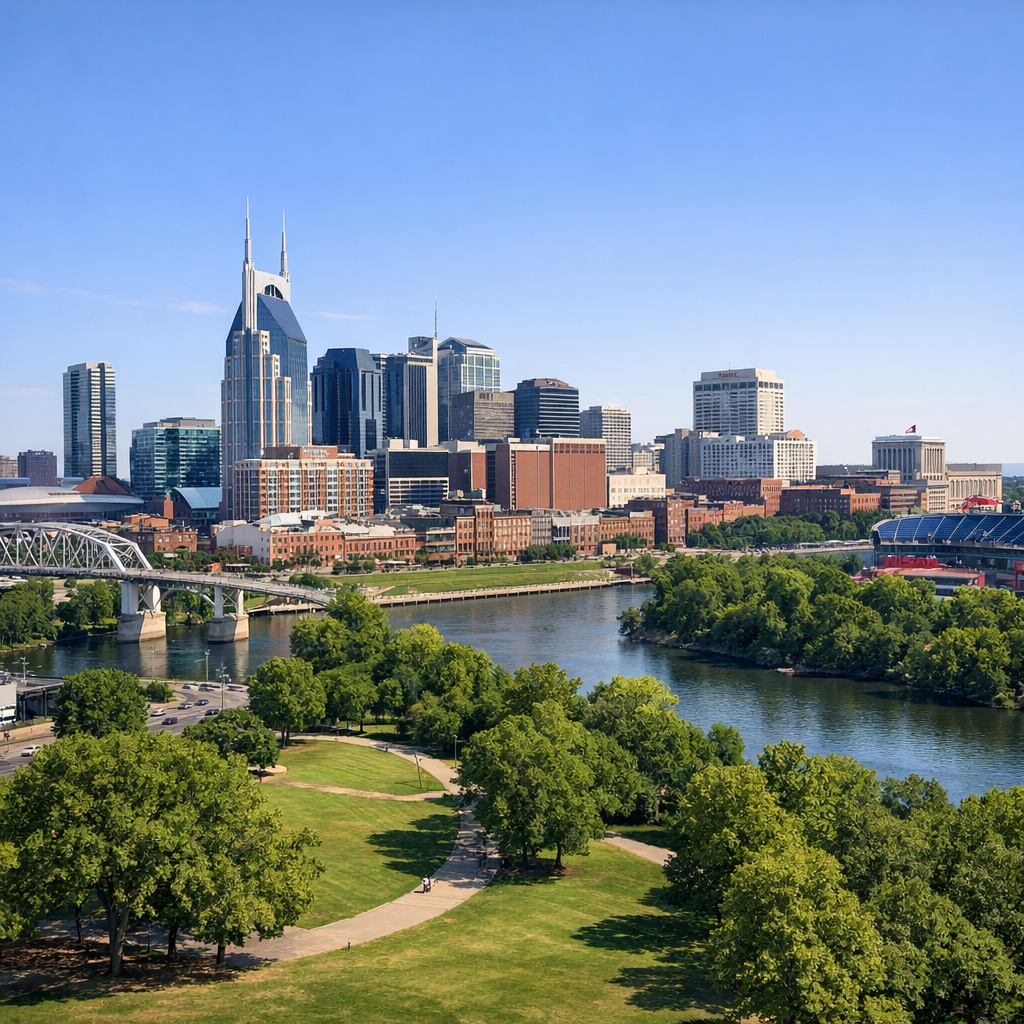
Nashville, Tennessee, experiences a humid subtropical climate characterized by hot, humid summers and mild to cool winters. Understanding these patterns is essential for residents and visitors alike.
Seasonal Overview
Summer
Summers in Nashville are notably hot and humid, with average high temperatures peaking around 89°F (31.7°C) in July. The city often faces heat waves, leading to increased health risks such as heat exhaustion and heatstroke. It’s crucial to stay hydrated and limit outdoor activities during extreme heat.
Winter
Winters are generally mild, with average lows around 30.6°F (-0.8°C) in January. However, occasional cold snaps can bring freezing temperatures and ice storms, impacting transportation and daily activities.
Spring and Fall
These transitional seasons offer moderate temperatures and are often considered the most pleasant times of the year. Spring brings blooming flora, while fall showcases vibrant foliage.
Environmental Challenges
Urban Heat Island Effect
Nashville’s urbanization has led to the Urban Heat Island effect, where city areas become significantly warmer than surrounding rural regions. This phenomenon is due to extensive concrete and asphalt surfaces absorbing heat. Efforts to increase green spaces and tree cover are ongoing to mitigate this effect.
Increased Precipitation
Recent studies indicate a 12% increase in hourly rainfall intensity in Nashville since 1970. This rise contributes to a higher risk of flash floods, posing challenges to infrastructure and public safety.
Climate Resilience Initiatives
In response to these challenges, Nashville has developed a Climate Adaptation and Resilience Plan. This plan focuses on preparing the city for climate-related disruptions, emphasizing the importance of community engagement and sustainable practices.
Staying Informed
To stay updated on weather conditions and environmental initiatives, residents are encouraged to follow local news outlets and official city communications. Being informed enables individuals to take proactive measures in response to Nashville’s dynamic climate.