

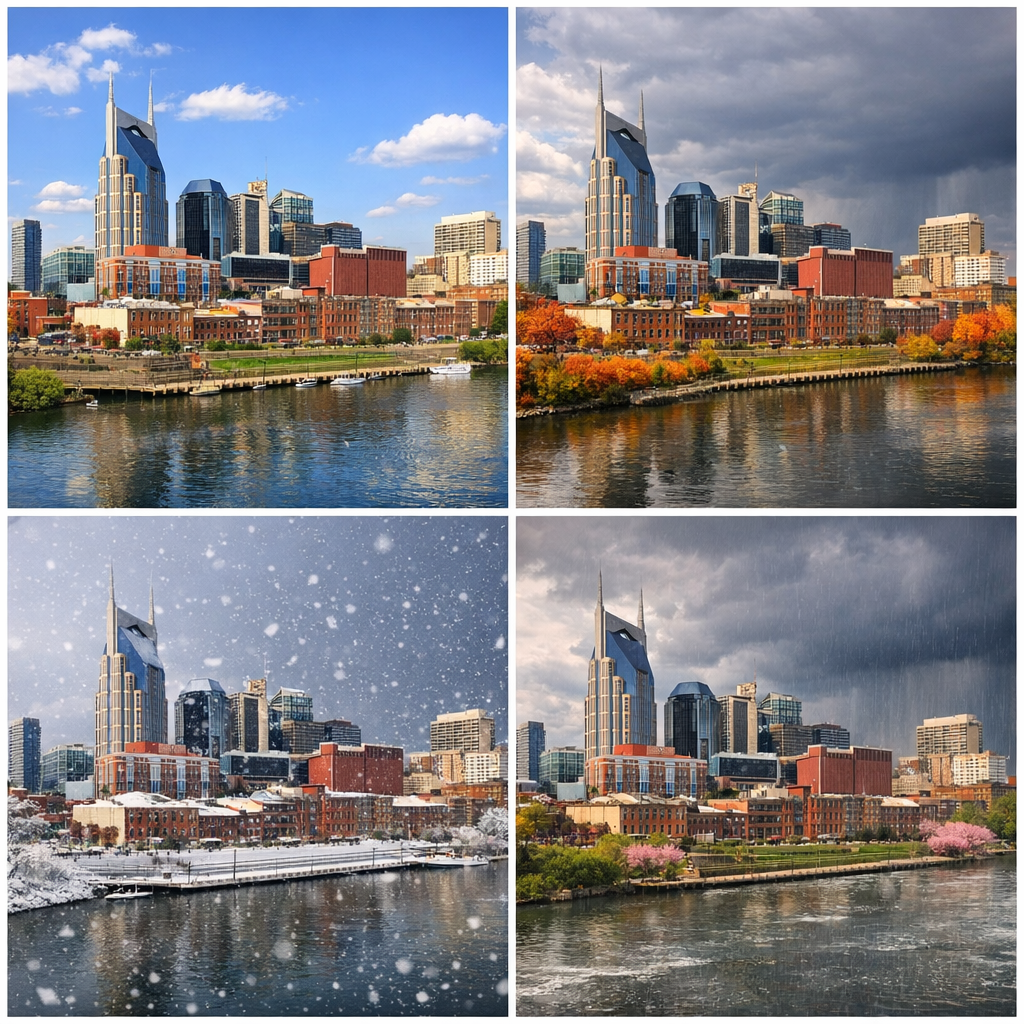
Nashville, Tennessee, experiences four distinct seasons, each bringing its own unique weather patterns and environmental considerations. Understanding these seasonal changes is essential for residents and visitors alike.
Spring (March–May)
Spring in Nashville arrives swiftly, with temperatures transitioning from the 50s in early March to the high 70s by May. This season is characterized by frequent thunderstorms and a heightened risk of tornadoes, particularly in early spring. May stands out as the wettest month, averaging 5.7 inches of rainfall over approximately 12 rainy days. The abundant rainfall contributes to the city’s lush greenery during this period.
Summer (June–August)
Summers in Nashville are hot and humid, with average high temperatures around 89°F in July. The city often experiences heat waves, sometimes reaching triple-digit temperatures. The urban heat island effect exacerbates these conditions, especially in areas with dense infrastructure and limited green spaces. Notably, 71% of Nashville residents live in neighborhoods considered heat islands, where temperatures can be significantly higher than surrounding areas. This phenomenon poses health risks, particularly for vulnerable populations without adequate access to cooling resources.
Autumn (September–November)
Autumn offers a respite from the summer heat, with temperatures gradually cooling and humidity levels decreasing. This season is marked by comfortable weather, making it ideal for outdoor activities and festivals. However, residents should remain vigilant for occasional severe weather events, including storms and early frosts.
Winter (December–February)
Winters in Nashville are generally mild but can be unpredictable. Average low temperatures hover around 30°F in January, with occasional snowfall averaging 1.7 inches during the snowy period from December 21 to February 28. Ice storms are a notable hazard, capable of causing significant disruptions. For instance, a historic ice storm in January 2026 led to widespread power outages and hazardous road conditions, underscoring the importance of preparedness during winter months.
Environmental Challenges
Climate change is impacting Nashville’s weather patterns, leading to more frequent and intense extreme weather events. Studies indicate that hourly rainfall intensity in Nashville has increased by 12% since 1970, contributing to a higher risk of flash flooding. Additionally, the city is experiencing more days with extreme heat, posing health risks and straining infrastructure. In response, Nashville has developed a Climate Adaptation and Resilience Plan to address these challenges and enhance the city’s preparedness for future climate-related events.
By staying informed about Nashville’s seasonal weather patterns and the broader environmental challenges, residents can better prepare for and adapt to the changing climate, ensuring the safety and well-being of the community.