

By Mason Martinez
Nashville’s climate is not what it used to be. Over recent decades, data continue to show shifts in temperature, precipitation, and risk from severe weather. Understanding these changes—and what we can do to adapt—matters for all of us.
What the Weather Records Reveal
Statistical measurements over the past 50 years indicate warmer summers and milder winters across Middle Tennessee. Growing seasons are lengthening, while frost days—nights dropping below freezing—are becoming less frequent. For example, the average number of frost nights has declined significantly compared to historical norms. These trends reflect broad warming in both daytime highs and overnight lows.
Precipitation patterns are changing too. There is evidence of heavier rain during shorter periods—what meteorologists refer to as increased rainfall intensity. Meanwhile, longer dry spells are becoming more common, stressing waterways and soil moisture across the region. These shifts feed into higher risks of flash flooding when rain does fall hard, and drought when it doesn’t.
Main Risks from a Changing Climate
Extreme Heat
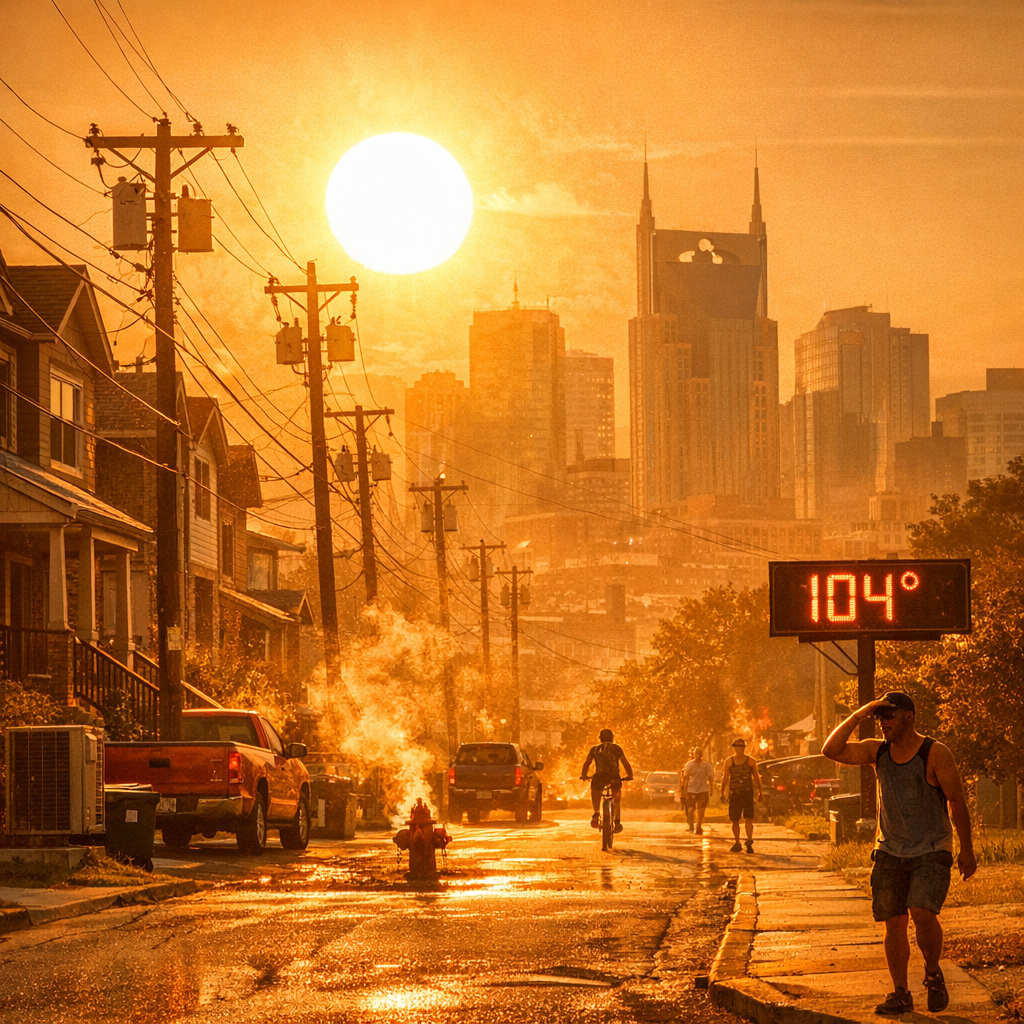
Nashville already faces heat-related threats that affect health, electricity demand, and public spaces. As warming continues, public health departments and urban planners are increasingly concerned about heat islands—neighborhoods where concrete, asphalt, and a lack of trees trap extra heat. Nights above 76 °F are becoming more frequent, making it harder for many residents to find relief.
Severe Storms and Flooding
Storms with torrential rain are now more common. Intense downpours can overwhelm stormwater systems and lead to flash floods, especially in neighborhoods with reduced green space and older infrastructure. Flood resilience has become a priority in Nashville’s recent planning efforts.
Impacts on Wildlife and Ecosystems
Shifts in temperature and rainfall also disrupt habitats. Aquatic creatures, forest species, and native plants face stress from warmer waters, uncertain seasonal cues, and invasive species pressures. Wetlands, bottomlands, and other rich ecosystems around Nashville are particularly vulnerable to changing water cycles and rising temperatures.
How Nashville Is Responding
The city has adopted robust plans to anticipate and adapt to these risks. Key among them is the Climate Adaptation and Resilience Plan (“CARP”), which outlines Metro’s strategy for dealing with five main climate hazards: flooding, tornados, extreme heat, winter storms, and severe storms. The plan emphasizes equity, recognizing that climate harm disproportionately affects communities already facing social and economic stress.
On a policy level, Metro Nashville is making efforts to transition its fleet to zero-emissions vehicles by mid-century, improve energy and water efficiency in public buildings, protect and expand green spaces, and support projects to map heat and identify vulnerable neighborhoods.
What You Can Do in Your Own Neighborhood
- Plant trees or support urban forestry initiatives—shade helps cool neighborhoods and absorb rainfall.
- Use weather alerts and local resources to prepare for heat waves and heavy storms.
- Choose landscaping that stores water well and supports native plants.
- Stay informed about local climate planning events—your voice can help direct where resilience efforts go.
These changes won’t happen overnight, and none of the solutions are simple. But with clear facts and concerted effort—from residents, city agencies, nonprofits, and community leaders—Nashville can become more resilient under shifting skies.