

By Ethan Martinez
From the Supreme Court’s pulsing decisions to inflation’s steady but watchable changes, the national landscape is entering a phase where big structural shifts are quietly remaking how power, policy and household costs interact.
Supreme Court bolsters executive power, but faces public backlash
One of the standout trends is growing deference to presidential authority. In a recent case, the Court overturned the nearly century-old doctrine such that the President who now has greater ability to remove members of key federal agencies. That shift bolsters executive control over bodies once insulated to ensure continuity and nonpartisan decision-making. A separate ruling affirmed that judges can’t issue nationwide injunctions; they’ll be limited to blocking policy effects just for specific litigants.
At the same time, the Court has declined to overturn a jury verdict requiring Donald Trump to pay damages in the E. Jean Carroll case—affirming that verdict while avoiding more expansive legal immunity arguments.
These moves have sparked concern among a growing share of Americans. New polls show declining trust in the Court’s impartiality, with many feeling decisions align more with ideological preferences than legal consistency.
Inflation cools slightly, but pressure remains
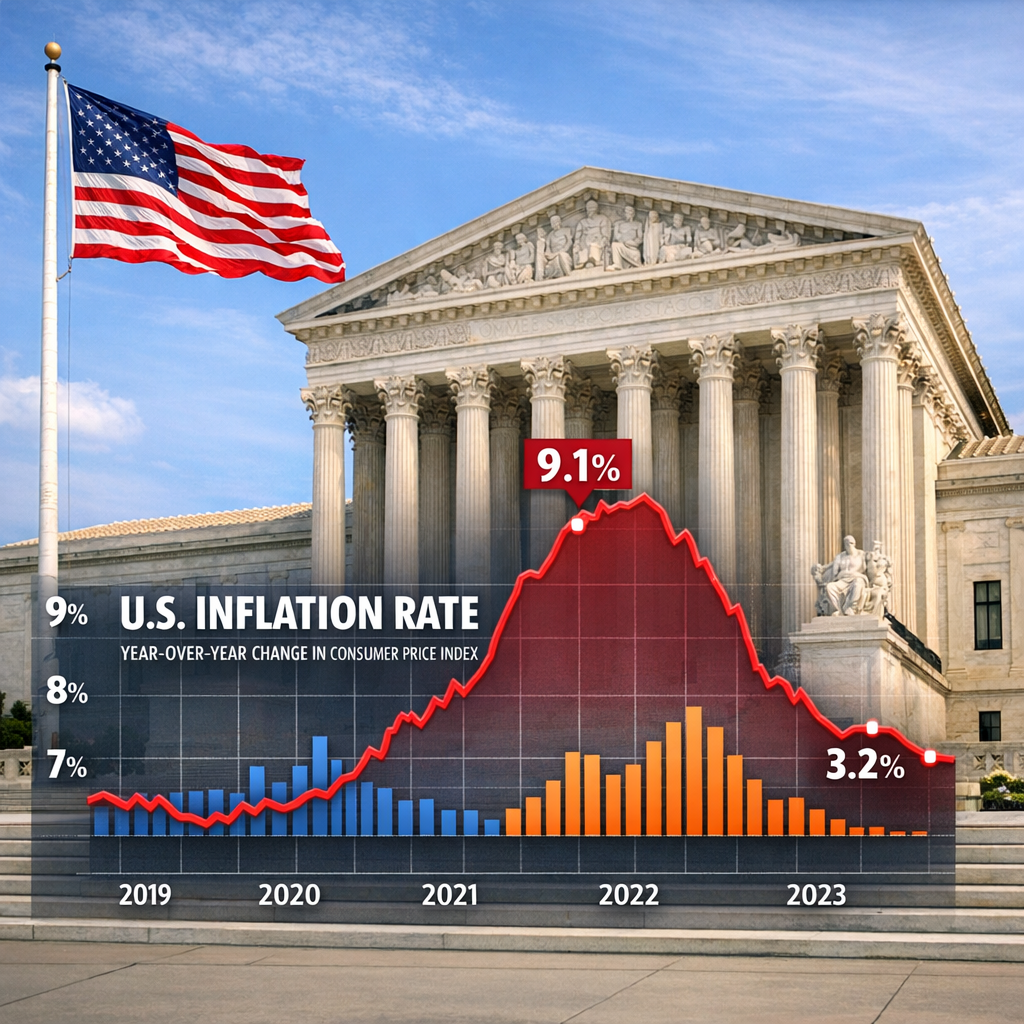
After a sharp drop in June, inflation ticked up slightly in July. The Consumer Price Index (CPI) rose about 3.4% over the past year, pulled down from 3.5% the previous month. Core inflation—excluding volatile food and energy prices—is running around 2.5%. The energy sector, especially fuel, continues to drive the volatility.
Things to watch: how labor costs are responding, especially in sectors like healthcare, education and housing. Trends there will start to show whether inflation has genuinely settled, or if another spike looms.
Why all of this matters for policy and citizens
These legal and economic developments are more than dry policy: together they reshape the balance between branches of government and the economic pressures on everyday life. The Court’s enhanced control over regulatory powers shifts long-term policy levers. Meanwhile, inflation influences everything from grocery bills to homeownership decisions.
Tennessee and other states will need to adjust: agencies may have less independence than in recent years, making political control more sweeping. And for households here in Nashville, watching food, fuel, shelter costs and borrowing rates will matter even if overall inflation looks less dramatic than it has in the past.
As legal precedent and economic data evolve, the interaction of courts, executive power, and the cost of living will be what defines the next stage of U.S. national policy.