

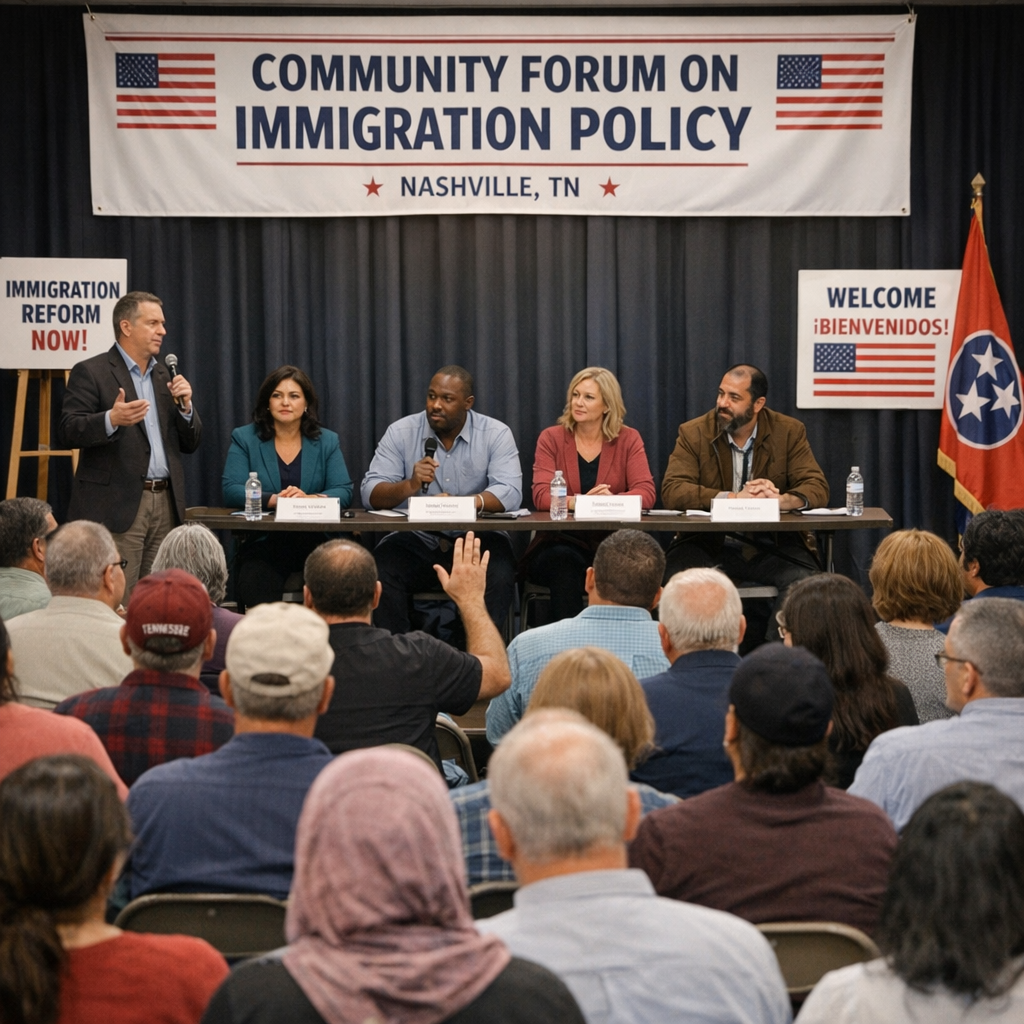
Recent federal immigration enforcement actions have significantly affected Nashville’s immigrant community, leading to increased fear and economic challenges.
Heightened Enforcement and Community Response
In early May, coordinated operations between U.S. Immigration and Customs Enforcement (ICE) and the Tennessee Highway Patrol resulted in nearly 200 arrests in Nashville. These actions have instilled fear among immigrant families, causing many to avoid public spaces and daily routines.
Economic Impact on Local Businesses
Local businesses, particularly in South Nashville, have reported a noticeable decline in sales. For instance, a family-owned restaurant experienced a 40% drop in revenue following the enforcement actions. The owner noted that customers are staying home out of fear, leading to a significant decrease in patronage.
Effects on Education
The raids have also disrupted the education system. Metro Nashville Public Schools observed a sharp increase in absenteeism among immigrant students. Teachers report that students are staying home due to fear, even without confirmed ICE presence at schools or bus stops. This absenteeism affects students’ learning and emotional well-being.
Community and Government Initiatives
In response, local leaders have initiated efforts to support the immigrant community. Metro Council members are advocating for policies to display immigrants’ legal rights in government buildings and are considering additional funding to assist affected families. Mayor Freddie O’Connell has acknowledged the community’s concerns and is working to address the tensions arising from these enforcement actions.
Looking Ahead
The situation underscores the complex interplay between national immigration policies and local community well-being. As Nashville continues to grow and diversify, fostering an environment of trust and support for all residents remains a critical priority.