

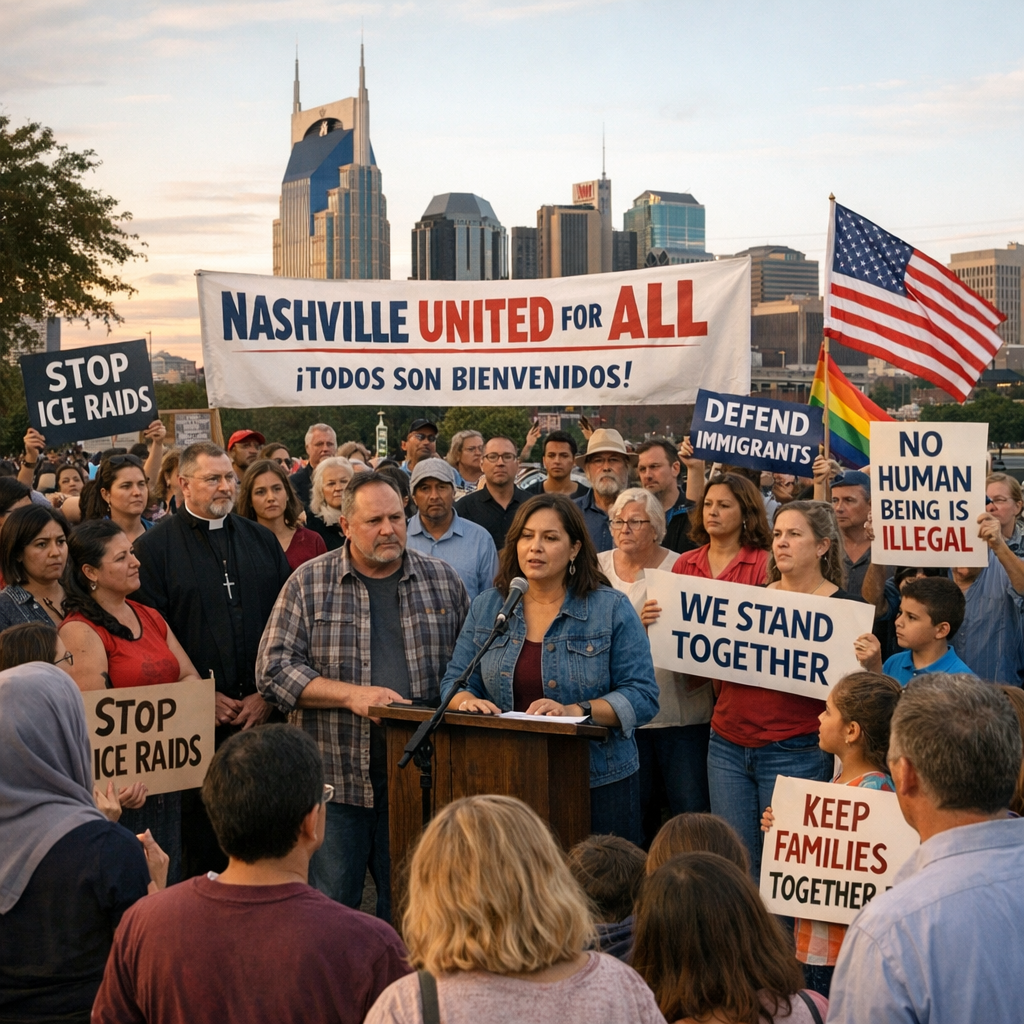
Recent federal immigration enforcement operations have cast a spotlight on Nashville, prompting a multifaceted response from local leaders, businesses, and residents. The collaboration between the Tennessee Highway Patrol and U.S. Immigration and Customs Enforcement (ICE) has led to significant community and economic repercussions.
Economic Impact on Local Businesses
In South Nashville, a hub for diverse communities, businesses have reported a noticeable decline in patronage. Francisco Elias, owner of El Cubilete restaurant, observed a 40% drop in sales following intensified ICE operations. This downturn is attributed to heightened fears among residents, leading many to avoid public spaces and local establishments.
Community Concerns and Fear
The operations have instilled a sense of apprehension within the immigrant community. Scarlet Gomez, manager of a family-owned restaurant, noted that many clients are staying home, with some expressing fear even at the sound of a knock on the door. This atmosphere of fear not only affects daily life but also disrupts the social fabric of the community.
Local Government’s Response
In response to these developments, Nashville’s leadership has taken proactive steps. Mayor Freddie O’Connell criticized the operations for causing “deep community harm” and emphasized that the Metro Nashville Police Department was not involved in the traffic stops. To support affected residents, the city established the “Belonging Fund,” aimed at assisting with child care, transportation, housing, and food insecurity.
Policy Initiatives and Advocacy
Metro Council members are advocating for new policies to support immigrants, including displaying signs in government buildings that list immigrants’ legal rights. These initiatives reflect the city’s commitment to fostering an inclusive environment, even as it navigates the complexities of federal and state policies.
Broader Implications
The situation in Nashville underscores the delicate balance between federal enforcement actions and local community well-being. As the city continues to grow and diversify, the interplay between national policies and local realities remains a critical area for ongoing dialogue and action.