

By Sophia Anderson
More Power for Buyers & Stabilizing Prices
Nashville’s housing market has begun to tilt toward balance after several years of rapid growth. Inventory of homes for sale is increasing compared to past years, giving buyers more options and better negotiating leverage. Median list prices have softened slightly in many neighborhoods, dropping just enough to make pricing strategy a critical factor for sellers.
At the same time, single-family home prices continue to climb, though at a more moderate pace. Condominiums are also rising in value, reflecting ongoing demand but with less frenzy. Homes are staying on the market longer—buyers now often benefit from more time to evaluate and negotiate. While affordability remains a major concern, these trends suggest the market may be moving toward a healthier, more sustainable balance.
Rental Market: Cooling Heat and Emerging Stability
After several years of price increases and tight supply, rent growth in Nashville has begun to slow. Average rent across all unit types is now just above $2,100/month, down slightly from last year. Vacancy rates, especially in multi-family housing, have eased off their peaks and are showing signs of contraction—indicating some recovering demand. In many cases, landlords are once again offering concessions, like discounted fees or free rent, especially in newly completed buildings still filling up.
What Renters Should Watch
- Define what “deal” means in your search: lower rent, amenities, forgiving lease terms—tradeoffs matter.
- Track how long units stay vacant—shorter vacancy often signals that rent drops may be ending.
- Focus on mid-tier and Class B or C properties—those seem to be leading in occupancy gains.
Local Development & Affordable Housing Efforts
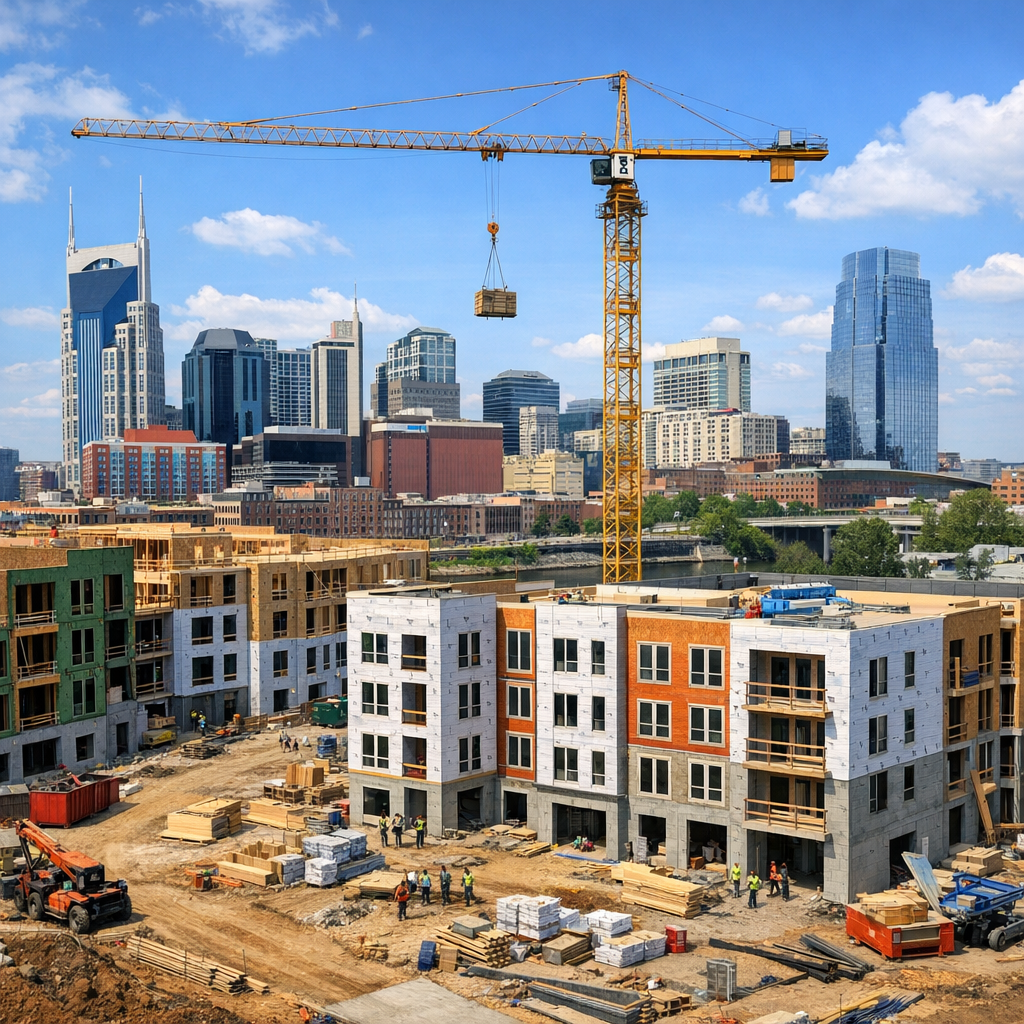
Nashville’s public and private sectors are actively working to deliver more housing that meets a broad spectrum of needs. One notable project is Eastpoint Flats, part of the East Bank’s ongoing redevelopment. It will be 100% affordable, include neighborhood retail and childcare, and is governed by a 99-year lease that locks in affordability for the long term.
The city’s Housing & Infrastructure Study is also informing updates to zoning and planning. Its Phase 2 proposals include more housing type variety and zoning policies that aim to ease barriers for smaller scale development. Meanwhile, Metro’s consolidated planning efforts map out priorities for public funds targeted at affordable housing, community services, and infrastructure in areas with the greatest need.
What This Means Going Forward
For prospective homebuyers, affordability pressures persist—but there are more paths to ownership than just competing for headline-grabbing homes. Those willing to consider smaller homes, condos, or infill development may find better opportunities.
Renters are benefitting from somewhat softer conditions: more options, more time to evaluate, and more realistic pricing. Still, for many, affordability is tight. Watching changes in vacancy, concessions, and local zoning decisions are key indicators of what comes next.
For everyone: paying attention to planning policy, infrastructure investments, and development pipelines will be essential. Nashville is still growing fast—but how and where it grows will shape the city for decades.