

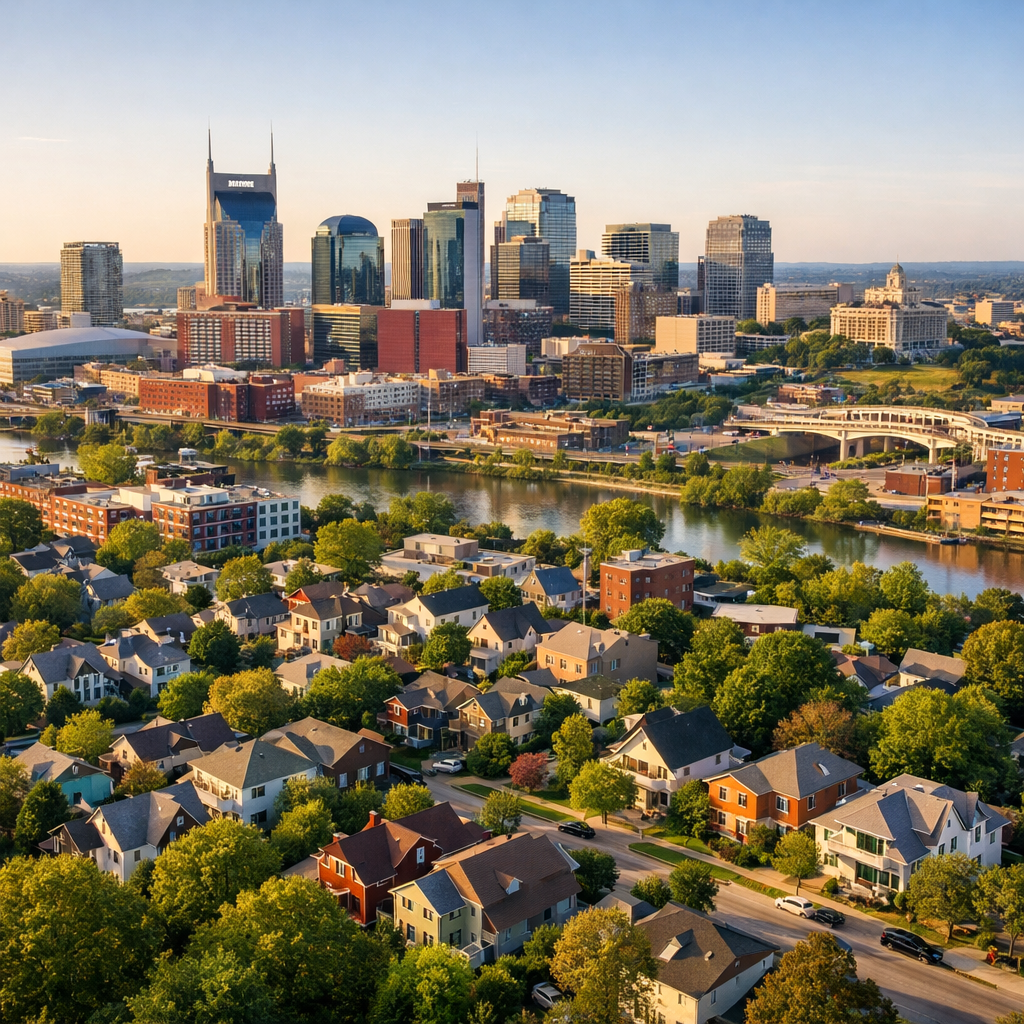
Nashville’s real estate market is experiencing notable shifts, offering both challenges and opportunities for buyers and sellers alike. Recent data indicates a trend toward a more balanced market, characterized by increased housing inventory and moderated price growth.
Market Trends
As of May 2026, the median sale price of homes in Nashville stands at approximately $475,000, reflecting a modest 0.5% increase from the previous year. Homes are now spending an average of 70 days on the market, up from 58 days last year, suggesting a slight cooling in buyer urgency. Additionally, the number of homes sold in May reached 2,831, marking a 3.7% year-over-year increase. This uptick in inventory provides buyers with more options and negotiating power, while sellers may need to adjust pricing strategies to align with current market conditions.
Development Projects
Several development initiatives are reshaping Nashville’s housing landscape. The Opaline, a 251-unit affordable, mixed-use development located at 3533 Dickerson Pike, aims to address the city’s need for affordable housing. This project includes units for residents at 60% of the Area Median Income, nonprofit services, creative studios, an expanded child care facility, retail spaces, and a future WeGo transit center.
In another significant development, DC Blox is proceeding with plans to construct a 69,000-square-foot data center near the Nashville Zoo. Despite public and environmental opposition, the company emphasizes compliance with all regulations and a commitment to environmental responsibility. This project underscores the ongoing tension between development and community concerns in Nashville.
Neighborhood Highlights
Antioch (ZIP code 37013) continues to lead Nashville’s real estate market, recording 1,121 home sales in 2025. This marks the third consecutive year Antioch has topped the list, highlighting its rapid growth and appeal to buyers seeking affordability and new amenities. The area’s development, including the introduction of Tanger Outlets and an upcoming In-N-Out, contributes to its attractiveness.
Conclusion
Nashville’s real estate market is evolving, with increased inventory and moderated price growth creating a more balanced environment. Buyers have more choices and negotiating power, while sellers must adapt to changing dynamics. Ongoing development projects and neighborhood trends further influence the market, making it essential for all parties to stay informed and responsive to these changes.