

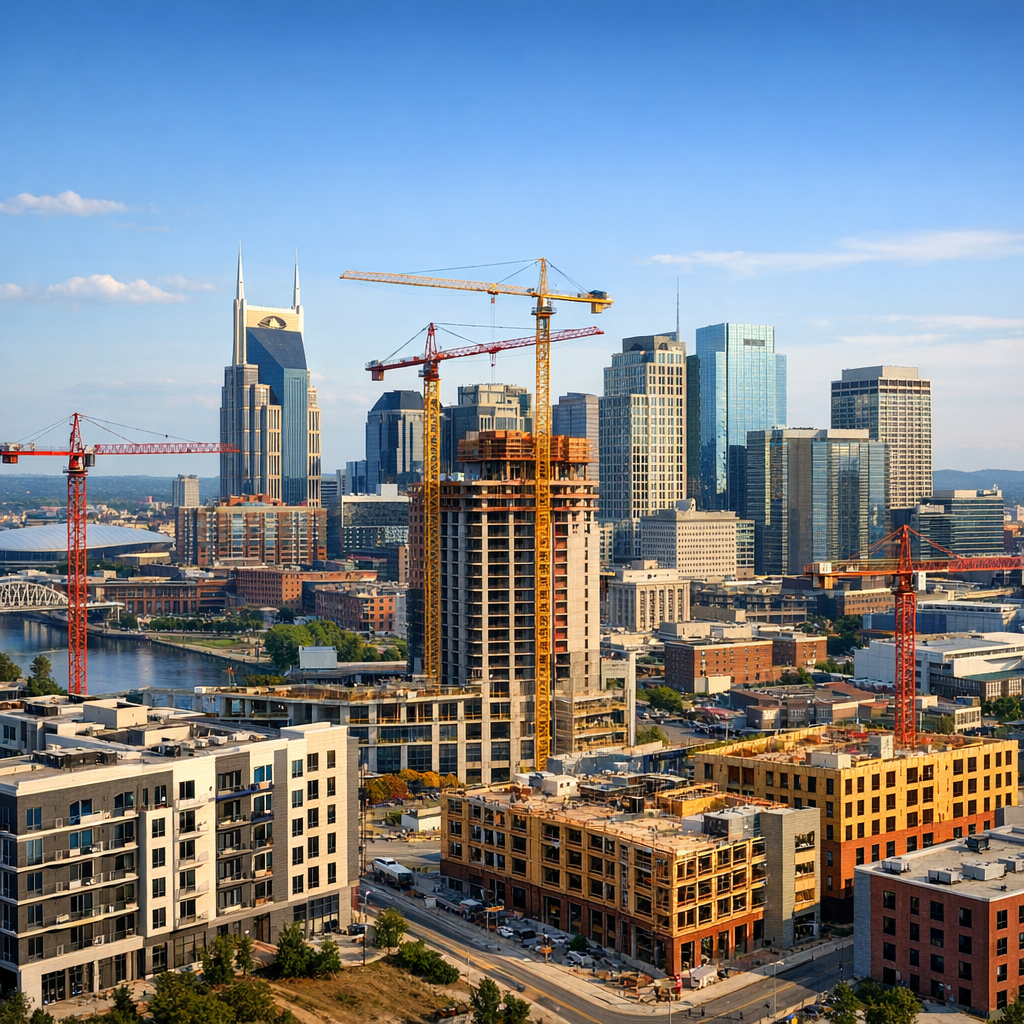
Nashville’s real estate market is undergoing significant changes, presenting both challenges and opportunities for buyers and sellers alike. Recent data indicates a shift toward a more balanced market, with increased inventory and evolving price dynamics.
Market Trends
As of June 2026, the average home value in Nashville stands at $436,603, reflecting a 3.3% decrease over the past year. Homes are typically going under contract in about 25 days, suggesting a more measured pace compared to previous years. This trend offers buyers more options and time to make informed decisions.
Inventory and Pricing
The housing inventory has seen a notable increase. In May 2026, active listings reached 3,378, marking a 12.3% rise from the previous year. This surge in available properties has contributed to a slight dip in median list prices, providing buyers with greater negotiating power. Sellers, in response, are adopting more strategic pricing and offering incentives to attract potential buyers.
Development Projects
Several development initiatives are reshaping Nashville’s urban landscape. The East Bank area is set to benefit from a $300 million allocation, originally designated for the Music City Center. This funding will support infrastructure enhancements, new parks, and utilities, with up to $150 million earmarked for these elements by 2030. Key projects in this area include the new Tennessee Titans stadium, the Tennessee Performing Arts Center headquarters, and a mixed-use development by the Fallon Company.
Affordability Concerns
Despite these developments, affordability remains a pressing issue. A recent poll revealed that 82% of Nashville residents feel they cannot afford to purchase a home in Davidson County. This sentiment underscores the need for continued efforts to increase the supply of affordable housing and address the economic challenges facing many residents.
In summary, Nashville’s real estate market is in a state of transition. While increased inventory and development projects offer new opportunities, affordability concerns persist. Staying informed about these trends is crucial for anyone looking to navigate the city’s evolving housing landscape.