

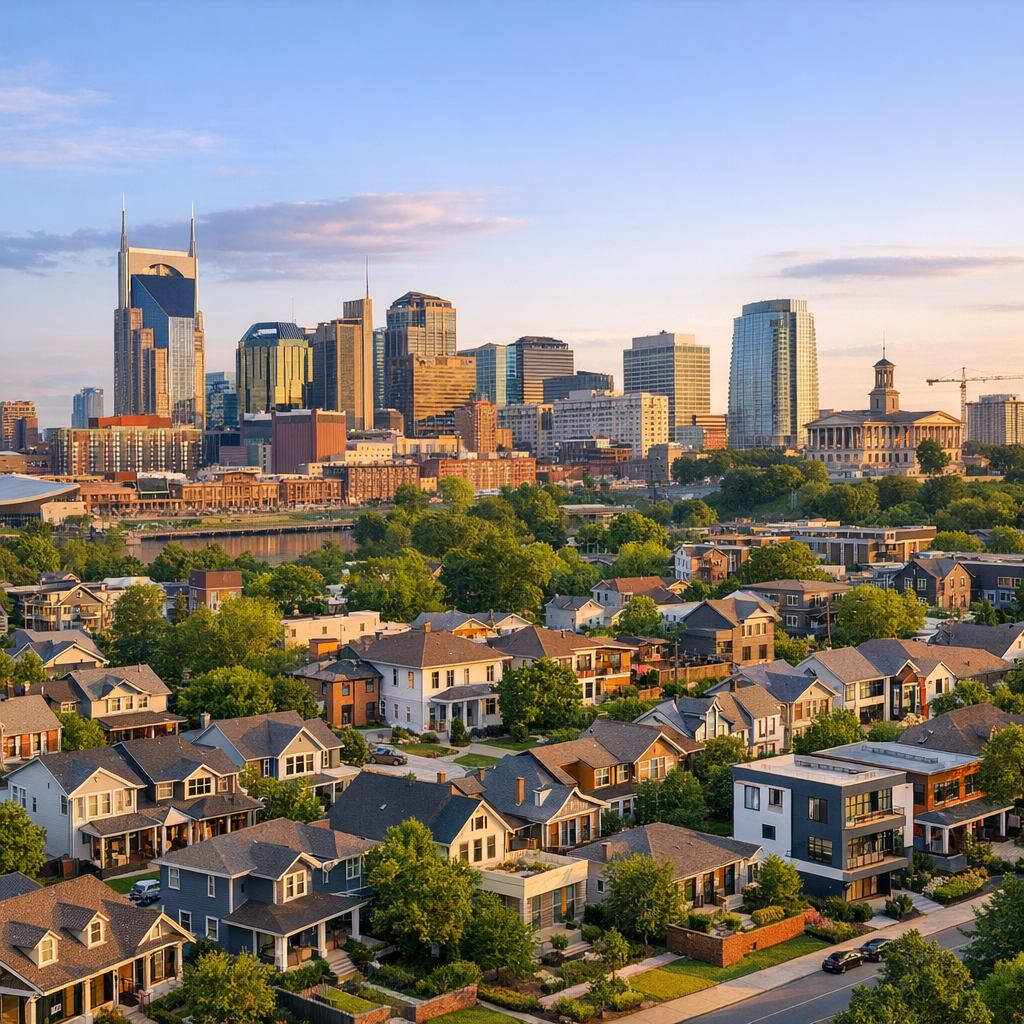
Nashville’s real estate market is experiencing notable shifts, offering both challenges and opportunities for buyers and sellers alike. Understanding these changes is crucial for making informed decisions in this dynamic environment.
Market Trends: A Shift Toward Buyers
Recent data indicates a transition toward a more balanced market. As of March 2026, the Greater Nashville Realtors reported 12,315 properties available for sale, marking a 12% increase from the previous year. This surge in inventory, coupled with slightly lower interest rates, has empowered buyers with greater negotiating power. Consequently, sellers are adopting creative tactics, such as offering incentives, to attract potential buyers. While home prices have seen slight decreases—condo prices fell from $350,000 in February 2025 to $338,500 in February 2026—overall prices remain significantly higher than in past years, continuing to challenge affordability for some buyers.
Neighborhood Spotlight: Antioch’s Continued Growth
Antioch (ZIP code 37013) continues to lead Nashville’s real estate market, recording 1,121 home sales in 2025. This marks the third consecutive year Antioch has topped the list, emphasizing its rapid growth in southeastern Davidson County. The area’s appeal is bolstered by new amenities, including the Tanger Outlets and an upcoming In-N-Out Burger, attracting buyers seeking more affordable options compared to pricier neighborhoods like East Nashville.
Development Projects: Balancing Growth and Community Concerns
Nashville’s development landscape is bustling with activity. A notable project is the luxury residential complex, 1 Iris Lane, at the Belle Meade Plaza site. This development will feature upscale condos starting at $2.5 million, with amenities such as private mahjong rooms and a Pilates studio. The project is part of the larger Belle Meade Village redevelopment, which includes a boutique hotel and public green space along Richland Creek.
However, not all developments are met with enthusiasm. A proposed data center adjacent to the Nashville Zoo has faced significant opposition, with over 350,000 people signing a petition to block the project. Zoo officials express concerns that the facility could disturb or endanger the animals. In response, Metro leaders are working to establish regulations to manage the growing number of data center projects in the area.
Resources for Developers and Homeowners
Metro Nashville offers various resources to support housing development and preservation. The Barnes Housing Trust Fund provides awards to nonprofit housing developers to create new rental and homeownership opportunities. Additionally, the Connecting Housing to Infrastructure Program (CHIP) offers affordable housing developers the chance to connect projects to enhanced infrastructure investments. These initiatives aim to foster sustainable growth and address housing affordability challenges in the city.
As Nashville’s real estate market continues to evolve, staying informed about these trends and developments is essential for anyone looking to buy, sell, or invest in the area. The city’s dynamic landscape offers a range of opportunities, but also requires careful navigation to make the most of what Nashville has to offer.