

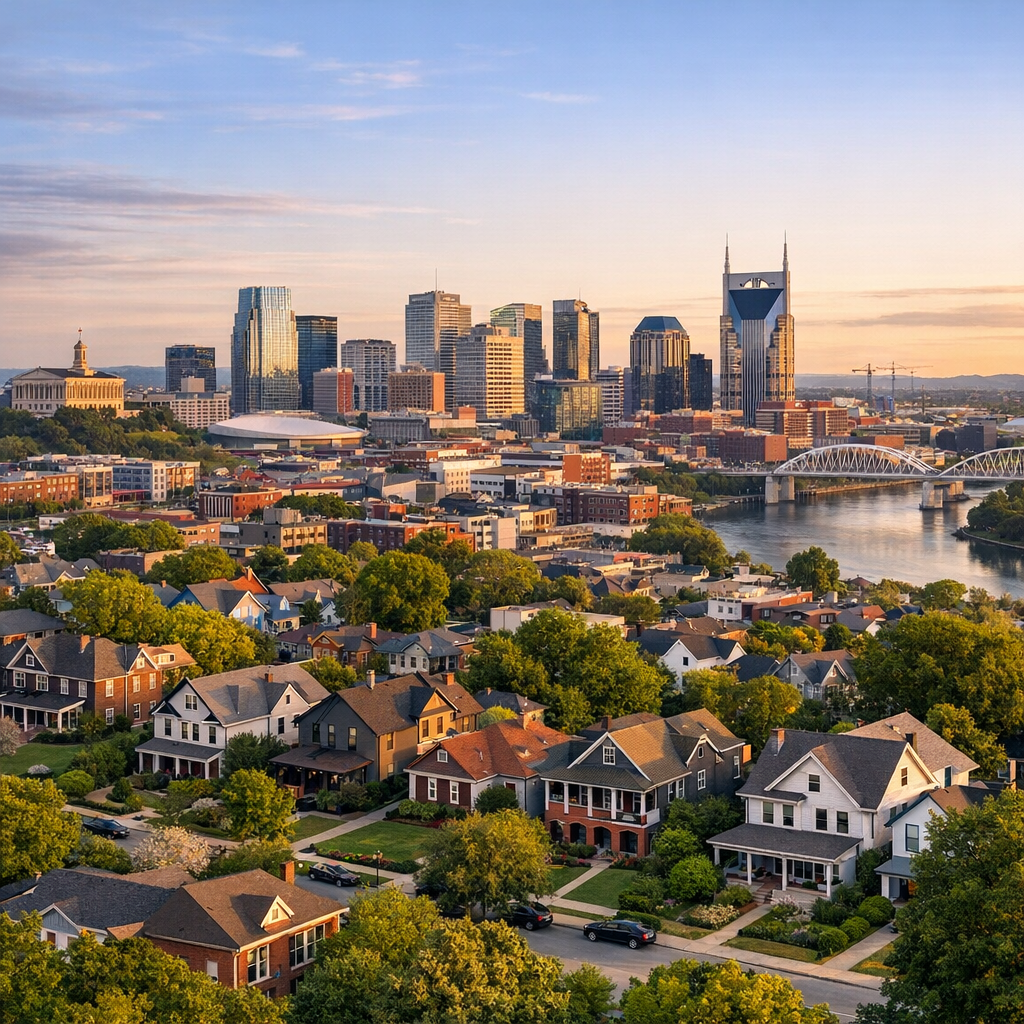
Nashville’s real estate market continues to evolve, presenting both challenges and opportunities for buyers and sellers alike. Recent data indicates a shift towards a more balanced market, with increased inventory and moderated price growth.
Market Trends
As of May 2026, the median sale price for homes in Nashville stands at $475,000, reflecting a modest 0.5% increase from the previous year. Homes are spending an average of 70 days on the market, up from 58 days last year, suggesting a slight cooling in buyer urgency. Additionally, the number of homes sold in May reached 2,831, marking a 3.7% year-over-year increase.
Inventory and Buyer Dynamics
The market has seen a notable rise in active listings, providing buyers with more options and negotiating power. This increase in inventory, coupled with stabilized prices, indicates a shift towards a more balanced market, moving away from the previously dominant seller’s market.
Neighborhood Highlights
Antioch (ZIP code 37013) continues to lead in home sales, recording 1,121 transactions in 2025. This marks the third consecutive year Antioch has topped the list, emphasizing its rapid growth in southeastern Davidson County. The area’s affordability and new amenities, such as the upcoming Tanger Outlets and an In-N-Out location, contribute to its appeal.
In contrast, luxury developments are reshaping other parts of the city. The Belle Meade Plaza redevelopment, for instance, introduces upscale condos starting at $2.5 million, catering to the high-end market segment.
Development Projects
The East Bank redevelopment has made significant strides, with the new Titans stadium under construction and a planned riverfront arts center in collaboration with the Tennessee Performing Arts Center. These projects aim to transform the formerly industrial area into a vibrant, multi-use urban hub.
However, not all developments have been met with enthusiasm. DC Blox’s plan to build a 69,000-square-foot data center near the Nashville Zoo has faced substantial public and environmental opposition, highlighting the complexities of balancing growth with community concerns.
Conclusion
Nashville’s real estate market is experiencing a period of transition, characterized by increased inventory, moderated price growth, and significant development projects. For prospective buyers and sellers, staying informed about these trends and neighborhood dynamics is crucial to making well-informed decisions in this evolving landscape.