

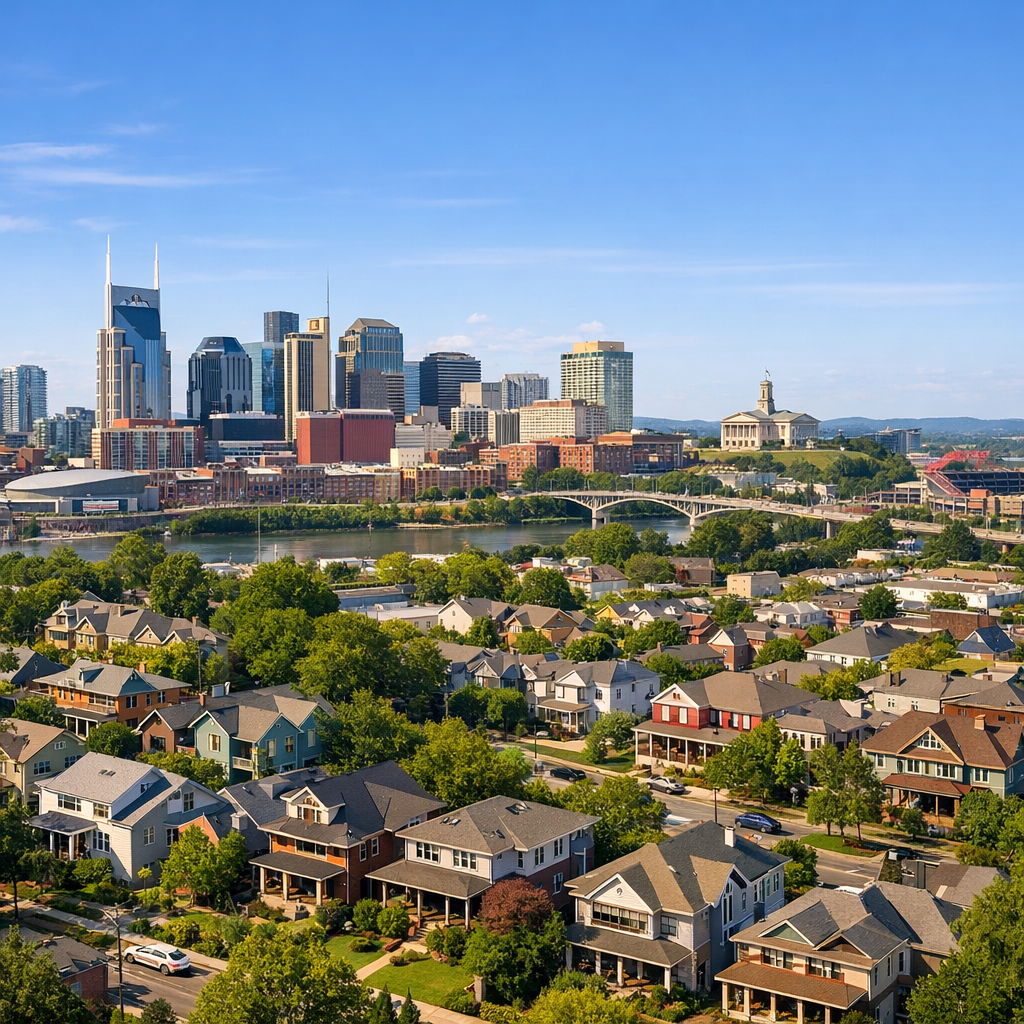
Nashville’s real estate market continues to evolve, presenting both challenges and opportunities for buyers and sellers alike. Recent data indicates a shift towards a more balanced market, with increased inventory and stabilized prices.
Market Trends
As of May 2026, the median sale price of homes in Nashville was $475,000, reflecting a modest 0.5% increase from the previous year. Homes are spending an average of 70 days on the market, up from 58 days last year, suggesting a slight cooling in the market’s pace. Additionally, the average home value stands at $436,519, marking a 3.3% decrease over the past year. This trend indicates a gradual stabilization, offering buyers more negotiating power and sellers the need to price competitively.
Neighborhood Highlights
Antioch (ZIP code 37013) continues to lead in home sales, with 1,121 transactions recorded in 2025. This marks the third consecutive year Antioch has topped the list, emphasizing its rapid growth in southeastern Davidson County. The area’s affordability and new amenities, such as the Tanger Outlets and an upcoming In-N-Out, contribute to its appeal.
In contrast, luxury developments are reshaping other parts of the city. The upcoming 1 Iris Lane project in Belle Meade Plaza will feature upscale condos starting at $2.5 million, catering to the high-end market segment.
Development Projects
Several significant development projects are underway, reflecting Nashville’s growth trajectory. DC Blox is proceeding with plans to build a 69,000-square-foot data center near the Nashville Zoo, despite public and environmental opposition. The company emphasizes compliance with all regulations and a commitment to environmental responsibility.
Meanwhile, a new lawsuit has been filed against the city by residents aiming to halt the construction of a new parking structure at Cheekwood Estate & Gardens. This legal action escalates a longstanding dispute over traffic and land use surrounding the historic botanical garden.
Conclusion
Nashville’s real estate market is experiencing a period of adjustment, with increased inventory and stabilized prices offering new opportunities. Whether you’re considering buying, selling, or investing, staying informed about these trends and developments is crucial in navigating the evolving landscape.