

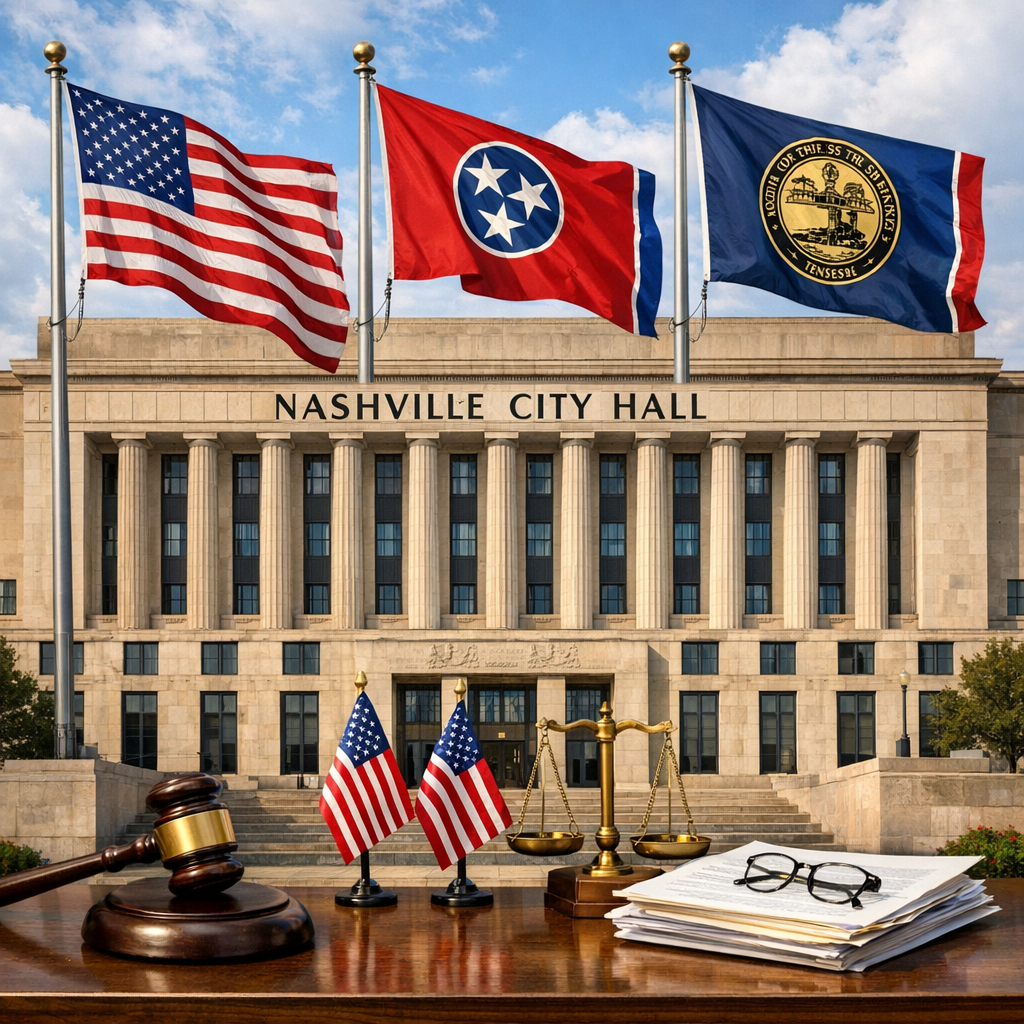
Recent federal immigration enforcement activities in Nashville have ignited a series of legislative actions at both the local and national levels, reflecting the complex interplay between municipal governance and federal authority.
Local Government’s Stance
In May 2025, Nashville Mayor Freddie O’Connell issued Executive Order 030, directing city departments to monitor and report on federal immigration enforcement activities within the city. This move was perceived by some as an effort to resist federal operations, leading to heightened tensions between local and federal authorities.
Federal Legislative Response
In response to Mayor O’Connell’s actions, U.S. Senator Marsha Blackburn introduced the Protecting Law Enforcement from Doxxing Act in June 2025. This proposed legislation aims to make it illegal to publicly disclose personal information of federal law enforcement officers, a practice known as doxxing. Senator Blackburn expressed concerns that such disclosures could endanger officers and their families.
State-Level Measures
At the state level, Tennessee lawmakers have also taken steps to address the situation. In June 2025, State Senator Ken Yager co-sponsored legislation that would establish criminal penalties and removal mechanisms for public officials who release confidential operational information related to law enforcement. This bill seeks to reinforce the protection of law enforcement personnel and uphold the integrity of federal immigration enforcement efforts.
Broader Implications
These legislative initiatives underscore the ongoing debate over the role of local governments in federal immigration enforcement. While some local officials advocate for policies that limit cooperation with federal authorities, citing concerns over community trust and public safety, others argue that such actions undermine the enforcement of federal laws and jeopardize national security.
As these legislative measures progress, they will likely have significant implications for the relationship between Nashville’s local government and federal law enforcement agencies, as well as for the broader discourse on immigration policy and enforcement in the United States.