

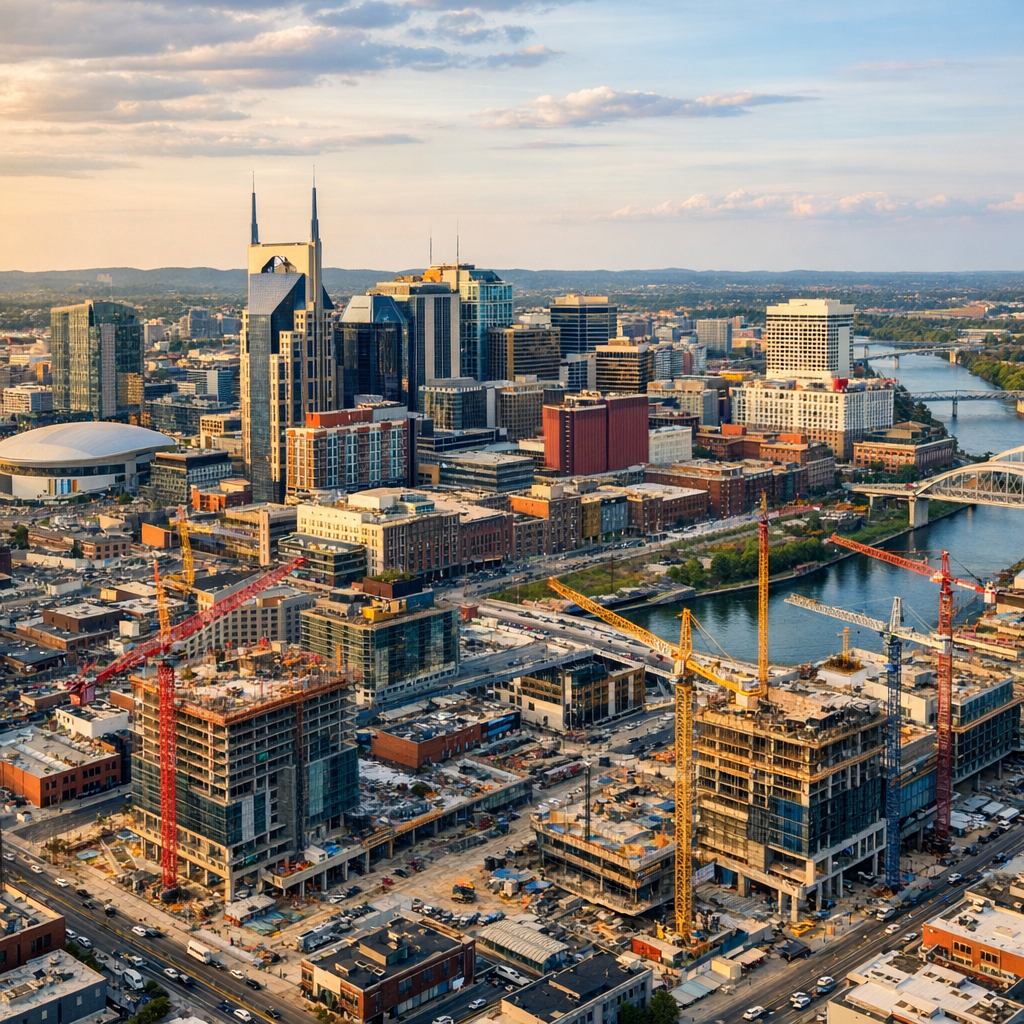
Nashville has experienced significant population growth in recent years, positioning itself as a microcosm of broader national trends. This surge brings with it a mix of challenges and opportunities that are reshaping the city’s landscape.
Population Dynamics
In 2025, Davidson County led Tennessee’s population growth, adding nearly 9,300 residents—the highest increase among the state’s 95 counties. This growth underscores major challenges and opportunities for the city, including rising home prices, increased traffic, higher tax bills, and extensive construction projects. Alongside these issues are opportunities in innovation, new businesses, and high-paying jobs. While Davidson County grew steadily, neighboring suburban counties and more distant areas like Montgomery and Maury also experienced significant growth, as people seek affordable housing and better quality of life in the exurbs. Domestic migration from other U.S. states remains a key contributor to this expansion, while international migration, which peaked in 2024, declined dramatically in 2025 due to national immigration policy changes initiated during President Trump’s term. For instance, Davidson County alone added over 14,000 people via international migration in 2024, but this source of growth essentially stalled in 2025.
Economic Implications
The influx of new residents has had a profound impact on Nashville’s economy. The housing market, for instance, has seen significant changes. Home prices in Nashville and across Tennessee soared due to a mix of historically low borrowing costs and the rise of remote work, which ignited a homebuying boom. This price surge rendered homeownership increasingly unattainable for many residents. Middle Tennessee, in particular, saw some of the sharpest price increases, with anecdotal evidence showing home values in areas like East Nashville increasing by 50% since 2020. At the same time, mortgage interest rates spiked after historic lows in 2021, discouraging potential buyers and prompting many current homeowners to stay put to preserve their favorable rates. As housing became more expensive, prospective buyers began to look farther into the suburbs in search of more affordable options. This shift in buying behavior and price increases reflect larger national real estate trends observed over the past five years.
Infrastructure and Transportation
To address the challenges posed by rapid growth, Nashville has initiated several infrastructure projects. In October 2025, within a year of the referendum passing, Mayor O’Connell announced $104 million in funding for transit projects in the Choose How You Move program. This funding included sidewalk improvement projects, smart signals to be installed at over 100 intersections, improvements to transiting to the airport, street redesigns, and WeGo improvements. WeGo and the mayor’s office also rolled out a free bus fare program for qualifying low-income residents called the “Journey Pass”. By January 2026, WeGo announced that they added 12 new buses to their fleet and that ridership increased 7.3% from the previous year.
Looking Ahead
As Nashville continues to grow, it faces the dual task of managing the challenges associated with rapid expansion while leveraging the opportunities it presents. The city’s experience serves as a case study for other urban areas navigating similar dynamics, highlighting the importance of proactive planning and community engagement in shaping a sustainable future.