

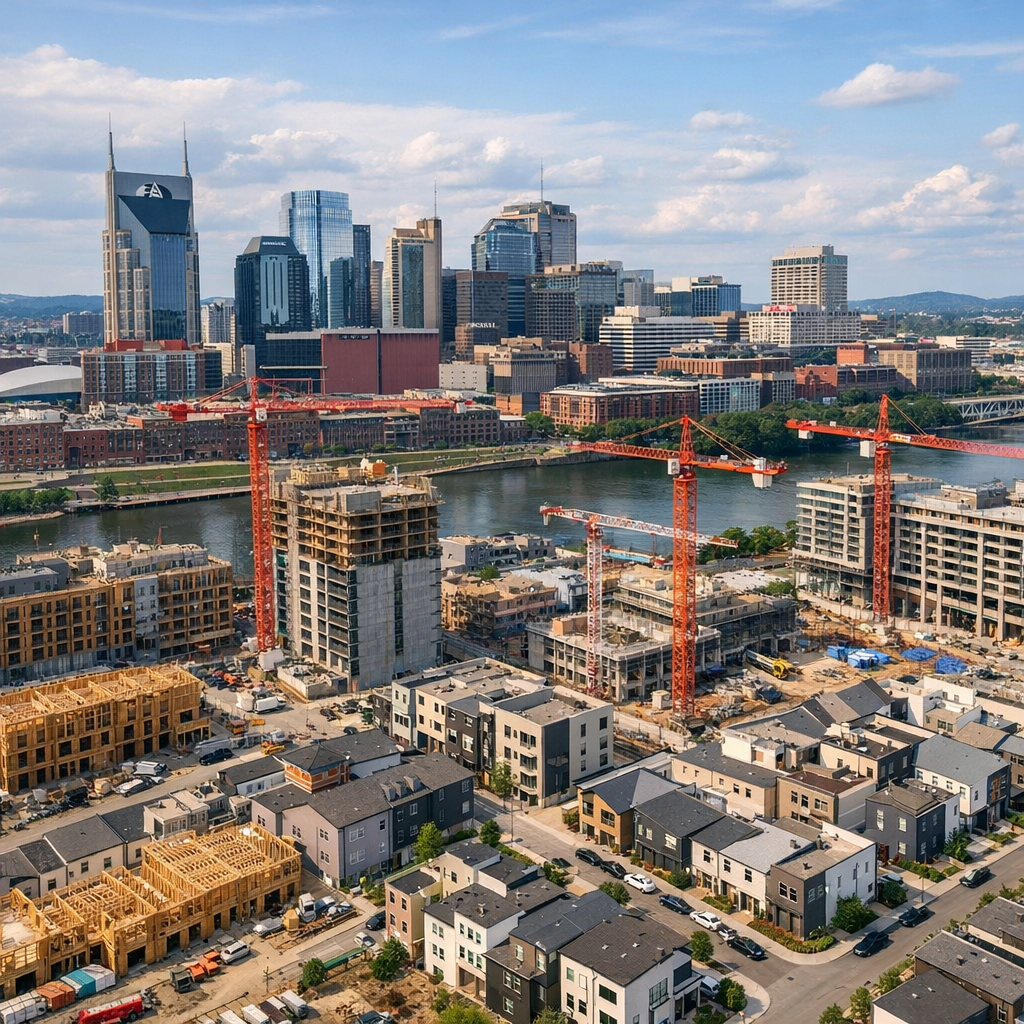
Nashville’s rapid population growth serves as a microcosm of broader national trends, reflecting the challenges and opportunities faced by many American cities. As of 2025, Davidson County led Tennessee’s population increase, adding nearly 9,300 residents—the highest among the state’s 95 counties. This surge underscores significant issues in housing affordability, infrastructure development, and educational attainment.
Housing Market Pressures
The influx of new residents has intensified demand for housing, leading to skyrocketing home prices. Middle Tennessee, particularly areas like East Nashville, has experienced some of the sharpest price increases, with home values rising by approximately 50% since 2020. This trend mirrors national patterns where urban centers grapple with housing shortages and affordability crises.
Infrastructure and Transportation
To address the growing population’s needs, Nashville has initiated substantial investments in infrastructure. In October 2025, Mayor Freddie O’Connell announced $104 million in funding for transit projects under the ‘Choose How You Move’ program. This initiative includes sidewalk improvements, smart traffic signals at over 100 intersections, and enhancements to public transit services. Such efforts reflect a nationwide push to modernize urban infrastructure in response to population growth.
Educational Attainment and Economic Disparities
Education remains a critical factor in economic mobility. Data from 2024 indicates that Nashville residents with a college education consistently out-earned their peers. The median income for adults aged 25 or older without a college degree was $41,393, highlighting the wage gap between high school graduates and those with higher education. This scenario is emblematic of national discussions on the value of higher education and its role in economic disparities.
Conclusion
Nashville’s experiences encapsulate the broader challenges faced by rapidly growing urban areas across the United States. Addressing housing affordability, upgrading infrastructure, and promoting educational attainment are imperative to ensure sustainable growth and equitable opportunities for all residents.