

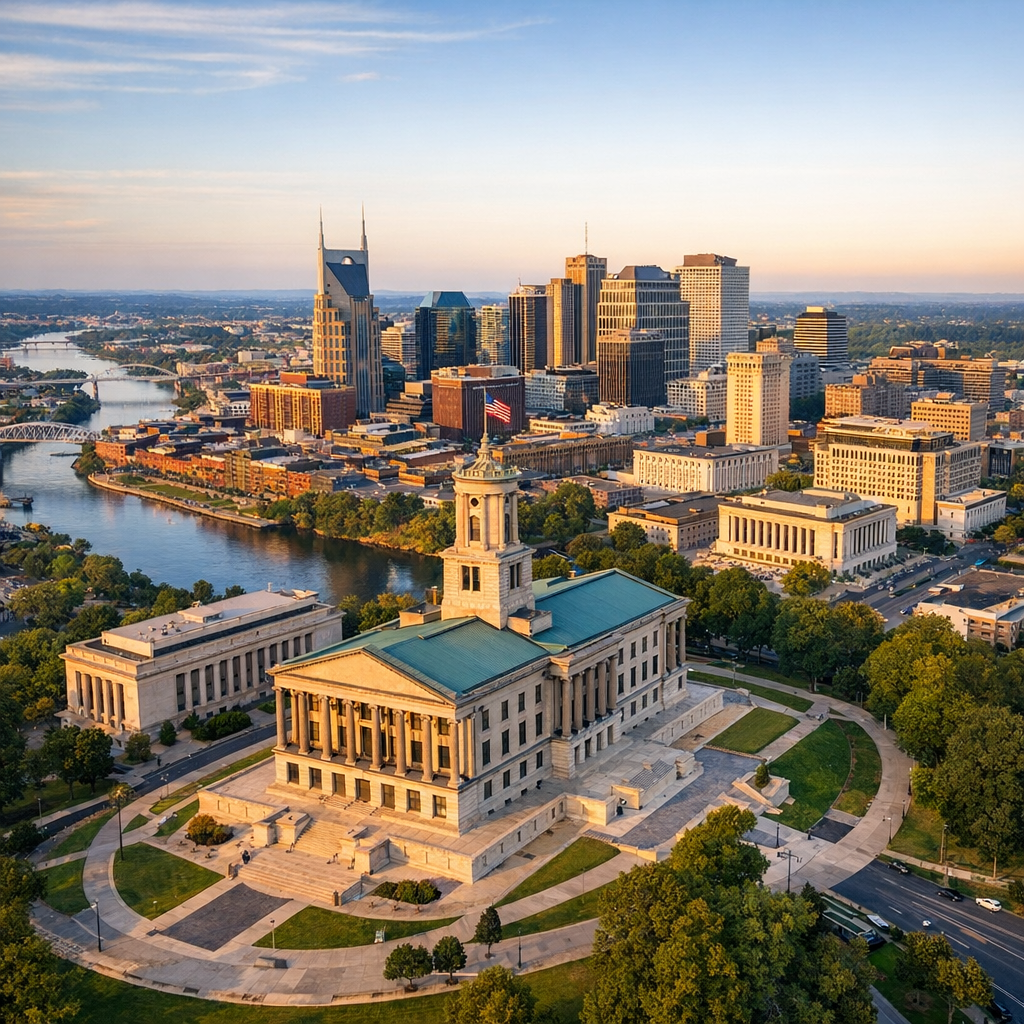
Nashville, Tennessee, stands as a vivid illustration of the political dichotomy present in many parts of the United States. As a predominantly Democratic city nestled within a largely Republican state, Nashville’s political landscape offers insights into the broader national discourse.
Urban-Rural Political Divide
Davidson County, encompassing Nashville, has consistently leaned Democratic in presidential elections. In contrast, surrounding counties and much of Tennessee exhibit strong Republican preferences. This urban-rural divide mirrors national patterns where metropolitan areas tend to favor Democratic candidates, while rural regions lean Republican.
State Preemption and Local Governance
The tension between Nashville’s local governance and the state legislature has been palpable. The Tennessee General Assembly, with its Republican majority, has enacted laws that override local policies in Nashville. Notably, efforts to reduce the size of Nashville’s Metro Council from 40 to 20 members have been a point of contention, reflecting broader debates about local autonomy versus state authority.
Economic Contributions and Political Influence
Vanderbilt University and Vanderbilt University Medical Center significantly bolster Nashville’s economy, contributing over $22 billion annually. This economic influence underscores the city’s importance within the state and highlights the interplay between economic power and political dynamics.
Implications for National Politics
Nashville’s political scenario is emblematic of the challenges faced nationwide, where urban centers with progressive policies often clash with conservative state legislatures. Understanding Nashville’s dynamics provides a lens through which to view and comprehend similar tensions across the country.