

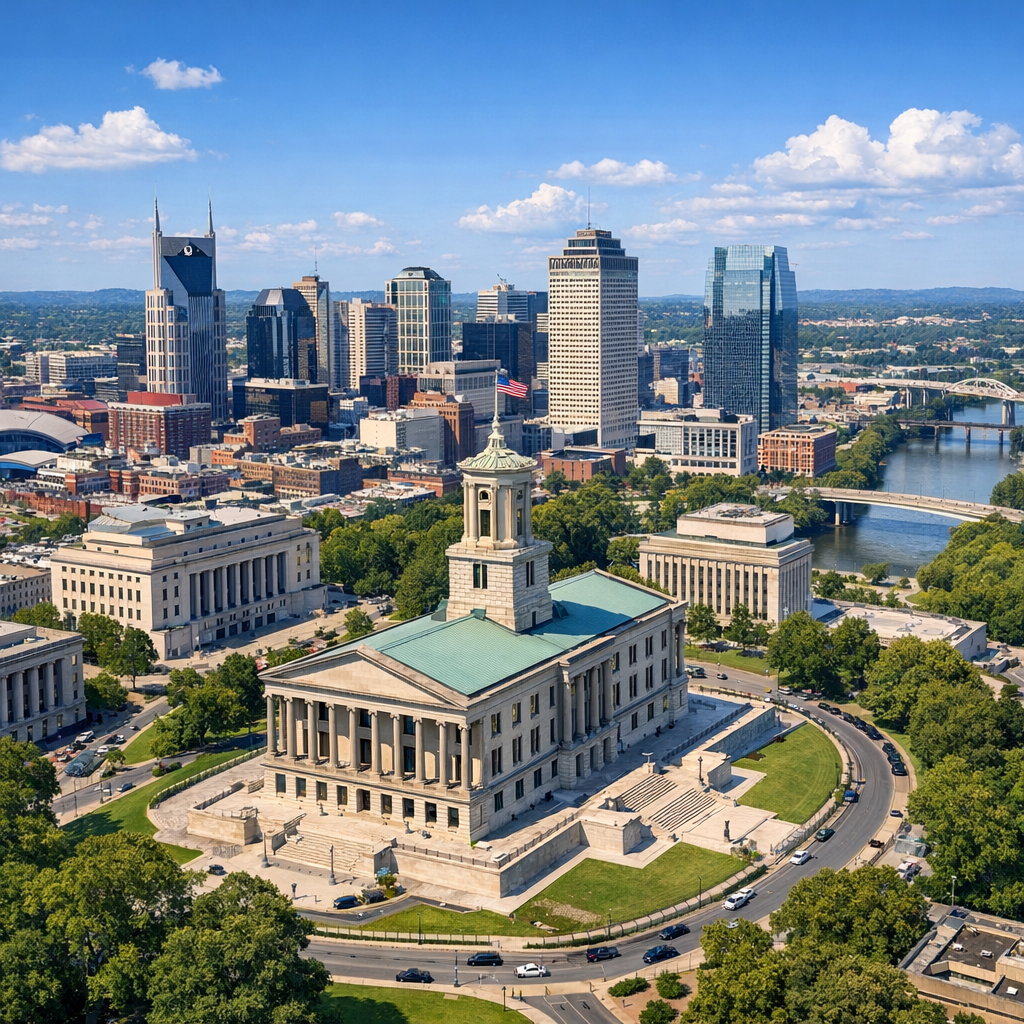
Nashville, Tennessee’s capital, stands out as a Democratic stronghold within a predominantly Republican state. This political divergence shapes the city’s governance and its interactions with state authorities.
Democratic Dominance in Nashville
Davidson County, encompassing Nashville, consistently supports Democratic candidates. In the 2024 presidential election, the Democratic nominee secured nearly 182,000 votes in Davidson County, compared to approximately 102,000 for the Republican candidate. This trend has been evident in every presidential election since at least 2000.
Statewide Republican Control
Contrastingly, Tennessee as a whole leans Republican. The state legislature is dominated by a Republican supermajority, influencing policies that often conflict with Nashville’s Democratic preferences.
City-State Tensions
The political disparity between Nashville and the state government has led to notable tensions. For instance, in 2023, state lawmakers passed legislation to reduce Nashville’s Metro Council from 40 to 20 members, a move perceived by some local officials as political retaliation. Additionally, the state has preempted local policies on issues like gun control, limiting Nashville’s ability to enact regulations reflecting its constituents’ views.
Demographic Influences
Nashville’s political leanings are influenced by its diverse and growing population. The city has experienced significant international migration, contributing to its demographic diversity. Moreover, as a hub for higher education and industries like healthcare and technology, Nashville attracts a younger, more progressive workforce, further solidifying its Democratic orientation.
Conclusion
Nashville’s position as a Democratic enclave within a Republican state creates a complex political environment. The city’s governance is continually shaped by its internal dynamics and its interactions with state authorities, reflecting the broader challenges of urban-rural political divides in the United States.