

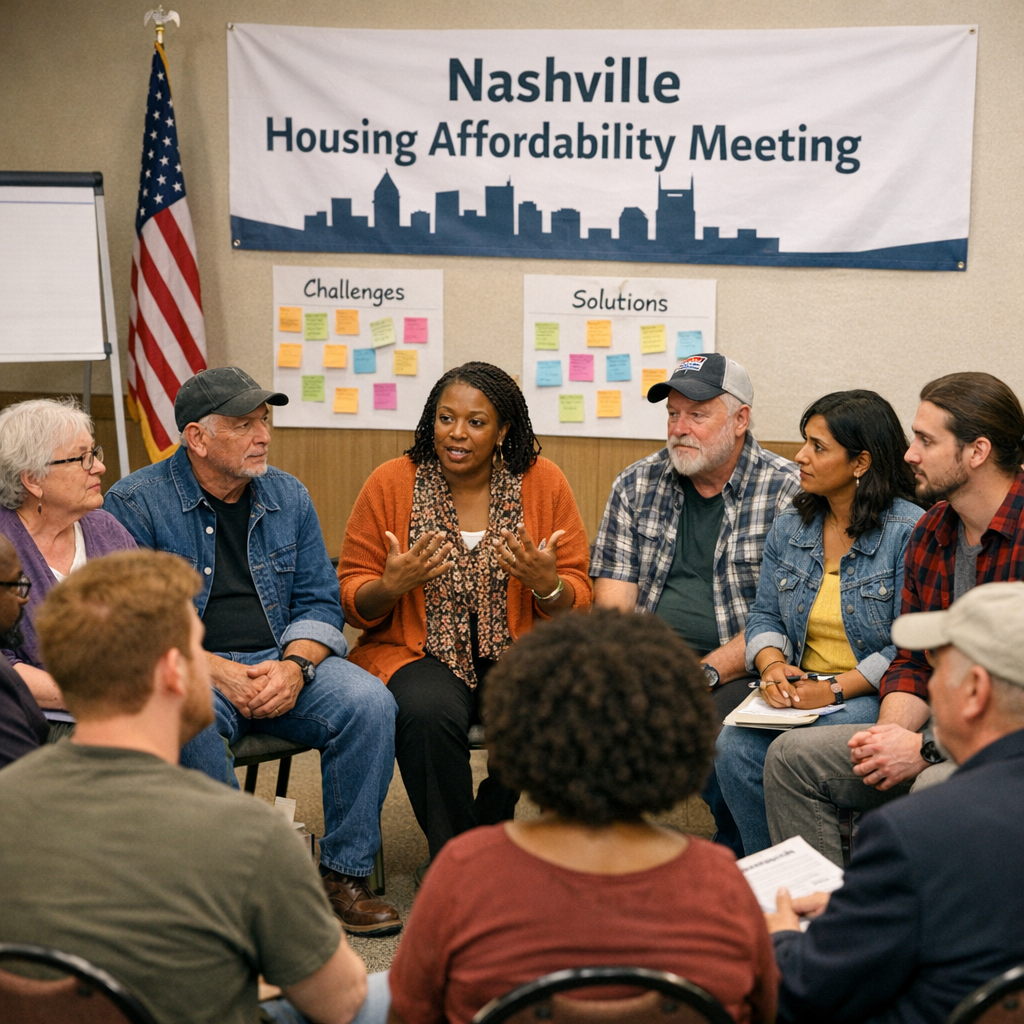
Nashville is grappling with a significant housing affordability crisis. A recent Vanderbilt University poll reveals that 82% of residents feel they cannot afford to purchase a home in Davidson County. This concern is further underscored by the fact that only 36% of respondents plan to buy a house in the area. The rising cost of living and rapid population growth have intensified these challenges, leading to increased economic strains on the community.
In response, local leaders have initiated several measures to address the crisis. Mayor Freddie O’Connell’s administration has emphasized the importance of affordable housing in the city’s budget proposals. The Unified Housing Strategy aims to increase the supply of affordable housing units, with nearly 1,800 units constructed or preserved in the fiscal year 2025. However, despite these efforts, many residents remain uneasy about their economic futures, with a growing emphasis on attracting good jobs to the city.
Community organizations are also stepping up to support residents. Initiatives like FeedBack Nashville aim to address food insecurity, recognizing that housing affordability and access to basic necessities are interconnected issues. By providing resources and support, these programs strive to alleviate some of the burdens faced by Nashville’s most vulnerable populations.
While the city continues to implement strategies to combat the housing affordability crisis, the collective efforts of local government, community organizations, and residents will be crucial in ensuring that Nashville remains a place where all individuals can thrive.