

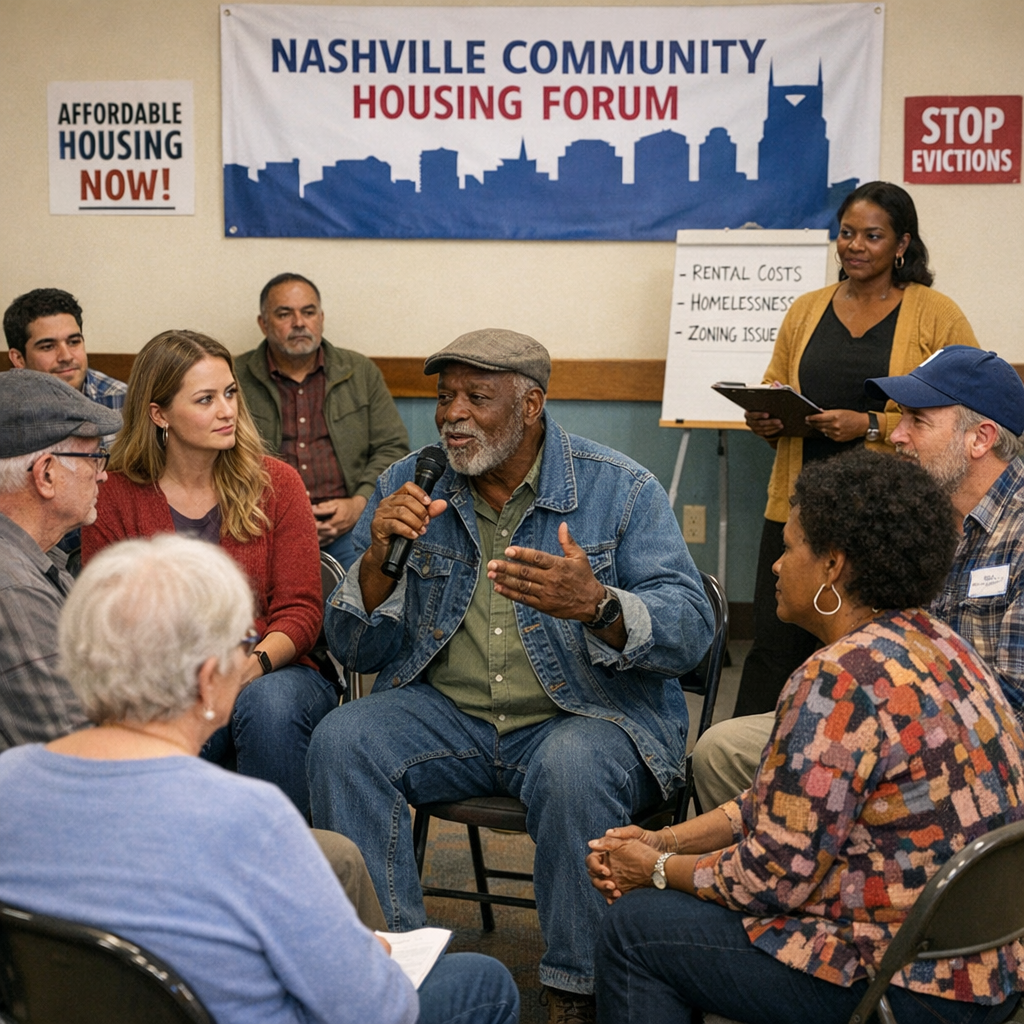
Nashville is grappling with a significant housing affordability crisis. A recent Vanderbilt University poll reveals that 82% of residents feel they cannot afford to purchase a home in Davidson County. This concern is further underscored by the fact that only 36% of respondents plan to buy a house in the area. The rising cost of living and rapid population growth have intensified these challenges, leading to increased economic strains on the community.
The affordability issue is particularly pronounced among African American residents. According to the American Community Survey’s 2024 estimates, the overall poverty rate in Nashville stands at 11.9%. However, for African American residents, this rate rises to 18.0%. Additionally, Black workers face higher unemployment rates and receive lower pay compared to their White counterparts, even when possessing similar educational backgrounds. The unemployment rate for African Americans in Davidson County is 5.5%, nearly three times that of Whites at 2.0%.
In response to these challenges, the city has initiated several measures. The 2026-2028 Community Health Improvement Plan identifies housing as a key priority, aiming to improve equitable health outcomes for vulnerable populations by addressing accessibility, availability, affordability, and adequacy of housing. Furthermore, the Metro Social Services’ annual Community Needs Evaluation report highlights the affordability issues faced by African Americans in Nashville, emphasizing the need for targeted interventions.
Community members are also taking proactive steps to build support networks. Amid national trends of declining neighborhood interaction, Nashville residents are finding creative ways to connect with their neighbors. Simple initiatives like casual gatherings, book clubs, and dog meet-ups have fostered stronger community bonds, countering the effects of social isolation.
While the housing affordability crisis presents significant challenges, the combined efforts of city initiatives and grassroots community actions offer hope for a more inclusive and supportive Nashville.