

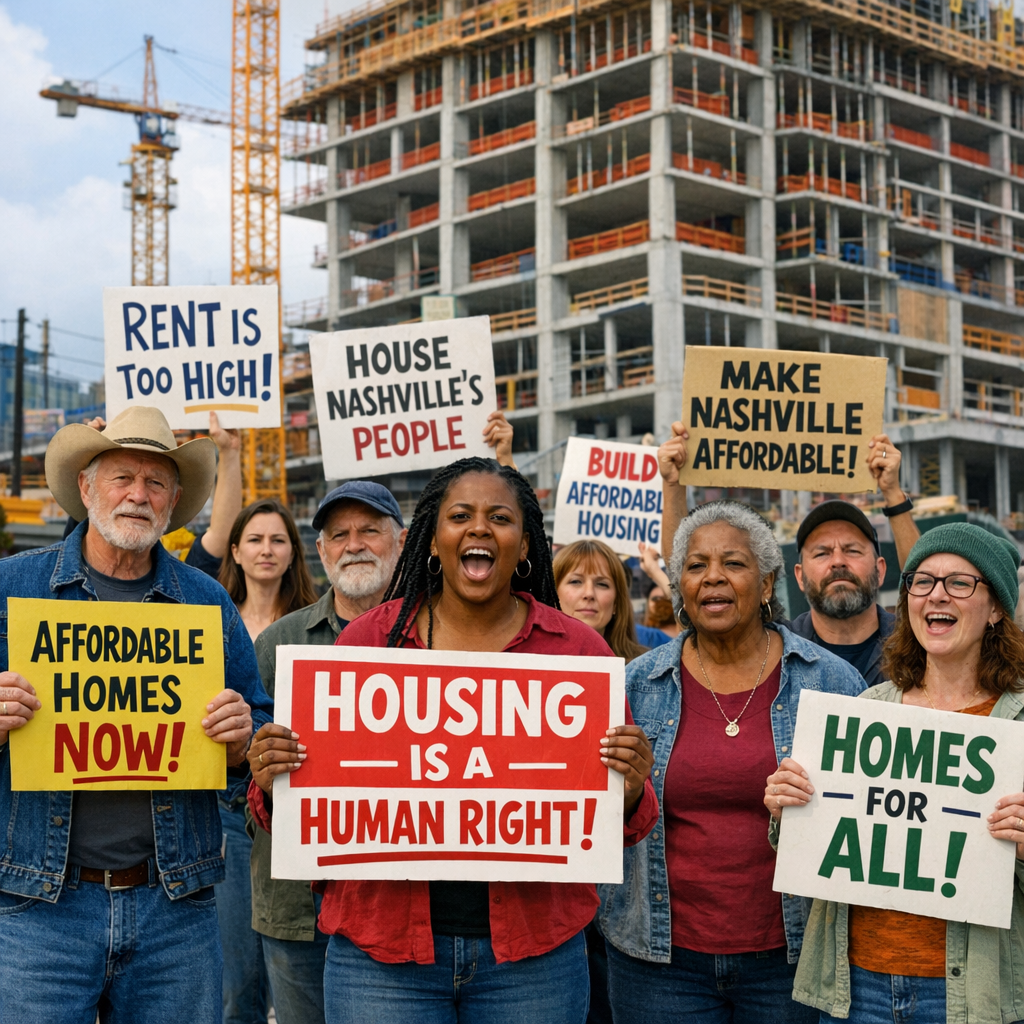
Nashville’s rapid growth has brought prosperity to many, but it has also intensified housing affordability challenges for a significant portion of its residents. Recent studies and surveys paint a concerning picture of the city’s housing landscape.
Widespread Affordability Concerns
A Vanderbilt University poll revealed that 82% of Nashville residents feel they cannot afford to buy a home in Davidson County. This sentiment underscores the city’s escalating housing crisis, as home prices have surged by over 53% in the past five years, outpacing income growth and making homeownership increasingly unattainable for many.
Disproportionate Impact on Black and Hispanic Families
The crisis is particularly acute for Black and Hispanic families. A housing and infrastructure study found that these families can afford median-valued homes in less than 1% of Nashville’s 481 neighborhoods—specifically, just 0.8% for Black families and 0.6% for Hispanic families. This stark disparity highlights the enduring effects of historical discriminatory practices and the urgent need for targeted interventions.
Community and Policy Responses
In response to these challenges, local leaders have initiated efforts to increase affordable housing supply. Mayor Freddie O’Connell’s Unified Housing Strategy aims to address the crisis by supporting the construction and preservation of nearly 1,800 affordable housing units in the fiscal year 2025. However, despite these efforts, public support for multifamily housing, which could improve availability, has waned, making the topic increasingly politically contentious.
Addressing Nashville’s housing affordability crisis requires a multifaceted approach, including policy reforms, community engagement, and sustained investment in affordable housing initiatives. As the city continues to grow, ensuring that all residents have access to safe and affordable housing must remain a top priority.