

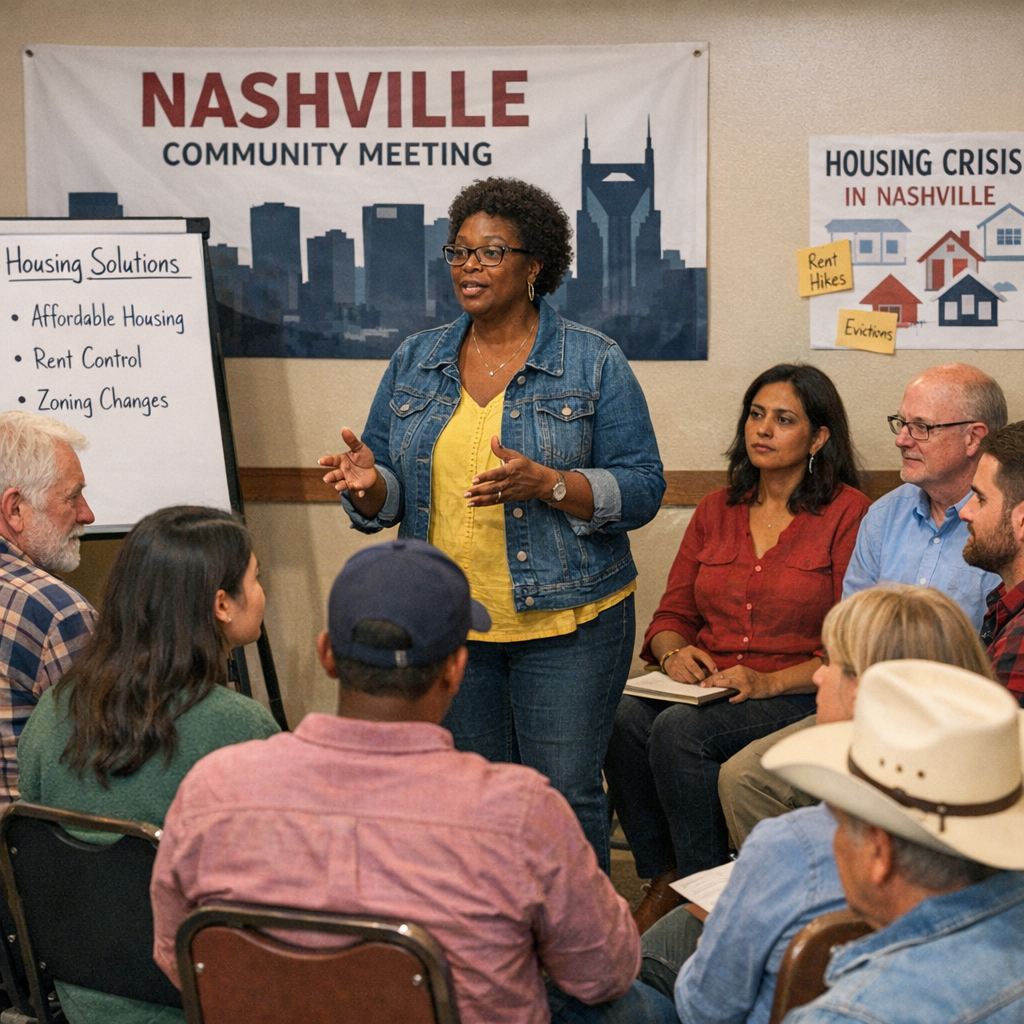
Nashville’s rapid growth has brought prosperity to many, but it has also intensified challenges for a significant portion of its residents. A recent Vanderbilt University poll reveals that 82% of Nashvillians feel they cannot afford to purchase a home in Davidson County, underscoring a deepening housing affordability crisis.
Despite city initiatives, such as the Unified Housing Strategy, which supported the construction and preservation of nearly 1,800 affordable housing units in fiscal year 2025, the demand continues to outpace supply. This shortfall has led to increased economic anxiety among residents, with 43% now prioritizing the attraction of good jobs, up from 18% the previous year.
The crisis disproportionately affects minority communities. A housing and infrastructure study highlighted that Black and Hispanic families can afford median-valued homes in less than 1% of Nashville’s 481 neighborhoods. This stark disparity points to a long history of discriminatory practices and emphasizes the need for targeted interventions.
Community organizations are stepping up to address these challenges. The Nashville People’s Budget Coalition advocates for participatory democracy to build a more inclusive city. Similarly, the Elmahaba Center focuses on building community among Arabic-speaking residents in South Nashville, responding to the unique challenges they face.
As Nashville continues to evolve, it is imperative for both policymakers and community members to collaborate on sustainable solutions that ensure all residents can thrive in the city they call home.