

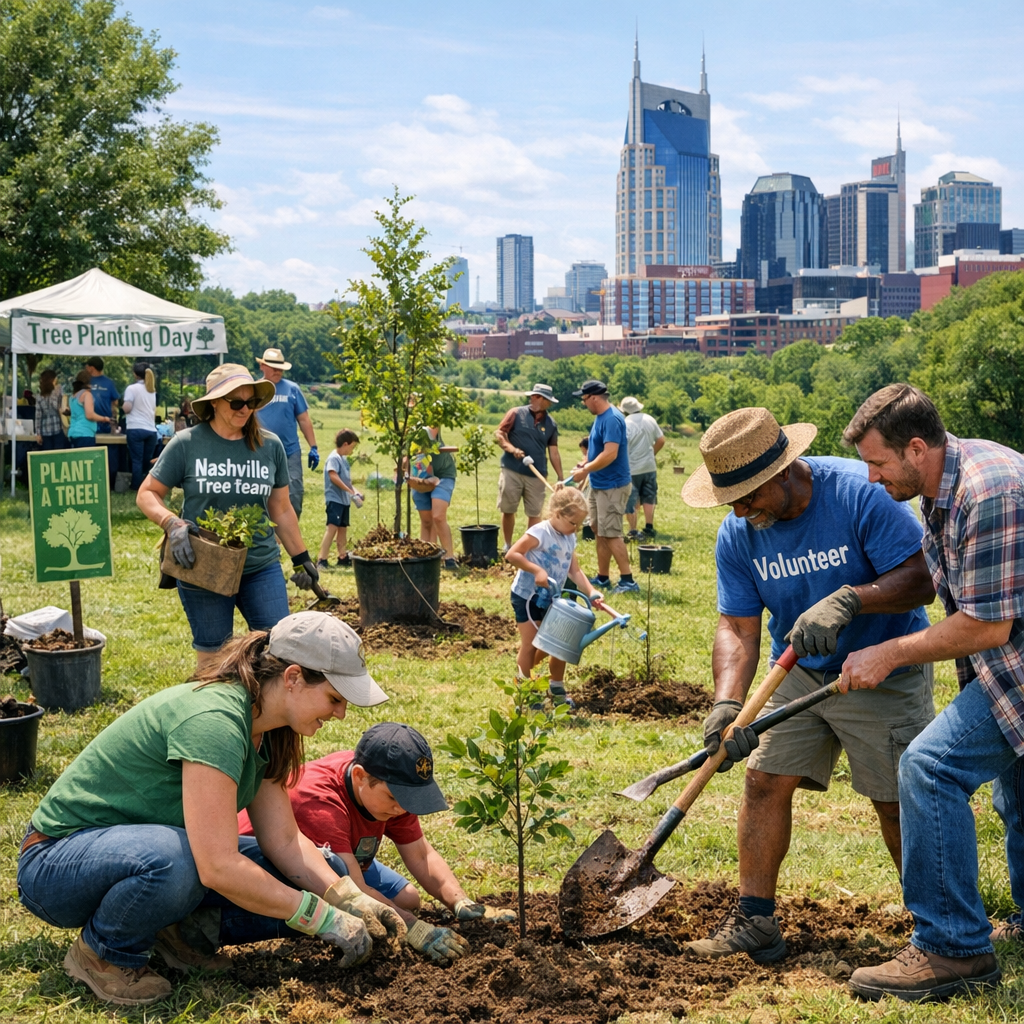
Nashville is making significant strides in environmental sustainability through various community-driven initiatives. These efforts aim to preserve natural resources, promote green spaces, and foster a culture of environmental responsibility among residents.
Enhancing Urban Green Spaces
The city has prioritized expanding and maintaining its urban tree canopy. The Nashville Downtown Arboretum, launched in May 2025, features over 3,000 trees along sidewalks and public areas, contributing to the city’s green infrastructure. This project is a collaborative effort between the Nashville Downtown Partnership and the Nashville Department of Transportation.
Additionally, the ‘Plan to Play’ initiative by Metro Parks outlines funding options to address a deferred maintenance backlog and invest in new park developments. The plan offers tiered funding strategies to stabilize maintenance, accommodate population growth, and achieve broader recreational goals.
Community-Led Sustainability Programs
Nonprofit organizations play a crucial role in Nashville’s environmental efforts. Urban Green Lab educates communities on sustainable living practices, reaching nearly half of Davidson County’s zip codes. Their programs have trained hundreds of educators and served numerous organizations, fostering a culture of sustainability.
Recycle & Reinvest focuses on youth leadership through art-based programs, promoting sustainability and job readiness for justice-impacted youth. Their initiatives include community collaborations to maintain public spaces and provide access to health and wellness resources.
Educational and Government Initiatives
Metro Nashville Public Schools (MNPS) are committed to environmental stewardship. The MNPS Energy Program has achieved a 20% annual reduction in energy consumption over three years, equivalent to reducing 260,000 metric tons of carbon emissions. The program includes energy-efficient building designs, solar energy installations, and geothermal HVAC systems.
The Mayor’s Office has established formal targets for climate action, including transitioning the metro government fleet to 100% zero emissions by 2050 and developing strategic energy management plans for metro-owned buildings.
Challenges and Community Response
Despite these efforts, challenges persist. A proposed data center near the Nashville Zoo has raised concerns about potential noise and light pollution affecting the zoo’s 3,000 animals. The zoo’s leadership and animal rights advocates are opposing the project, emphasizing the need for careful consideration of environmental impacts in urban development.
These initiatives and challenges highlight Nashville’s commitment to environmental sustainability and the importance of community involvement in shaping the city’s future.