

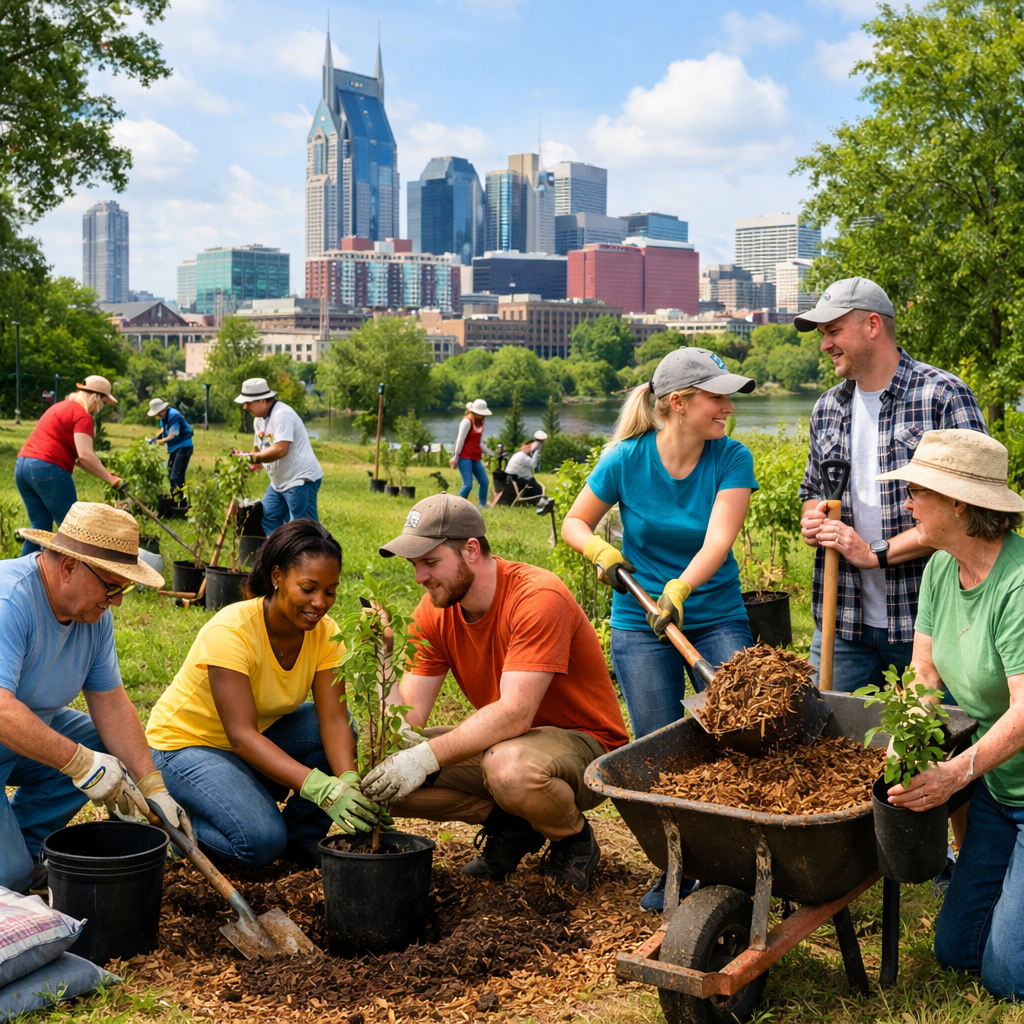
Nashville is witnessing a surge in community-driven environmental initiatives aimed at enhancing the city’s sustainability and resilience. These efforts span various sectors, from urban forestry to waste reduction, reflecting a collective commitment to environmental stewardship.
Urban Forestry and Green Spaces
The Nashville Downtown Arboretum, launched in May 2025, showcases over 3,000 trees along sidewalks and public areas, contributing to the city’s urban canopy. This initiative, managed by the Nashville Downtown Partnership and the Nashville Department of Transportation, underscores the importance of integrating green spaces into urban planning.
Additionally, the Centennial Park Conservancy has been instrumental in supporting local environmental projects. Since 2020, proceeds from the Nashville Earth Day festival have funded initiatives such as planting over 380 trees in various parks and schools, and introducing bee hives to promote pollination and biodiversity.
Waste Reduction and Recycling
Metro Nashville’s Solid Waste Master Plan aims to divert 90% of the city’s waste from landfills through reduction, reuse, recycling, and composting. This ambitious goal addresses the fact that over 80% of Nashville’s waste currently ends up in landfills, a figure that has been on the rise.
Organizations like Recycle & Reinvest are contributing to this effort by collaborating with local schools, businesses, and community groups to promote sustainability and provide job readiness opportunities for justice-impacted youth.
Climate Adaptation and Resilience
In response to the increasing challenges posed by climate change, Metro Nashville developed the Climate Adaptation and Resilience Plan (CARP) in September 2024. This plan outlines strategies to prepare the city for climate-related events such as heat waves, severe storms, and flooding, ensuring the community’s ability to thrive in the face of environmental changes.
Community Engagement and Education
Organizations like Urban Green Lab are at the forefront of sustainability education in Nashville. By training educators and reaching nearly half of Davidson County’s zip codes, they are fostering a culture of environmental awareness and action.
Furthermore, the annual Nashville Earth Day celebration, produced by the Centennial Park Conservancy, brings together over 75 exhibitors and vendors to engage the community in environmental education and sustainable practices.
These collective efforts highlight Nashville’s dedication to environmental stewardship, demonstrating that through community engagement and proactive planning, the city is making significant strides toward a more sustainable and resilient future.