

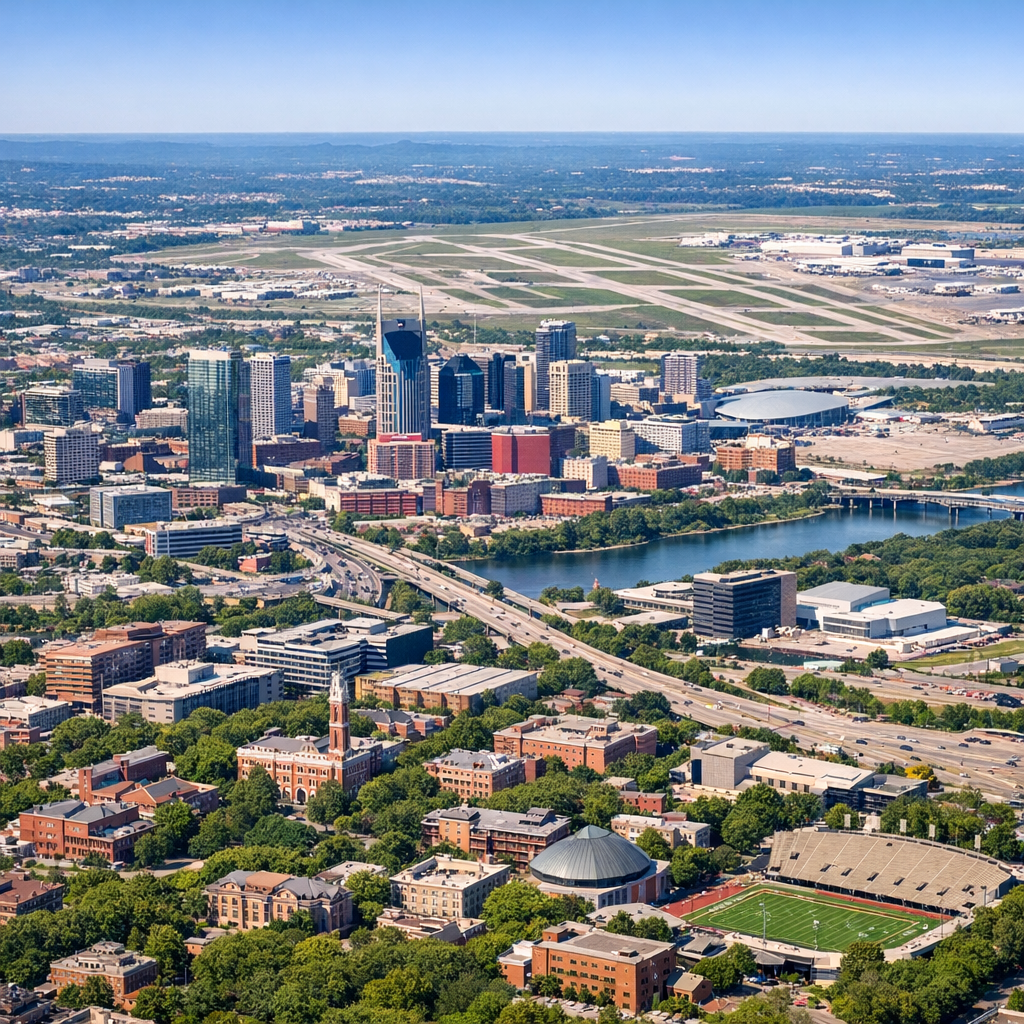
As national policies evolve, cities like Nashville are demonstrating remarkable adaptability, leveraging local initiatives and key industries to sustain economic growth.
Healthcare and Education: Pillars of Economic Stability
Vanderbilt University and Vanderbilt University Medical Center have been instrumental in bolstering Nashville’s economy. Between 2019 and 2024, these institutions contributed $22.13 billion to the city and state economies. This substantial impact stems from spending on payroll, construction, procurement, and the economic activities of students and visitors.
Transportation Infrastructure: A Catalyst for Growth
Nashville International Airport (BNA) plays a crucial role in the region’s economic landscape. A 2025 study highlighted the airport’s significant contributions to job creation, tourism, and tax revenues, underscoring its importance in connecting Nashville to national and international markets.
Local Initiatives: Fostering Business and Community Development
The Mayor’s Office of Economic and Community Development offers incentives to stimulate growth, particularly for small and minority-owned businesses. Programs like the Fast Growing Business Incentive and Property Investment Incentive aim to bridge economic gaps and promote equitable opportunities across the city.
Income Growth: Reflecting Economic Vitality
From 2023 to 2024, personal incomes in Davidson County increased by 6.6%, reaching nearly $72.7 billion. This growth reflects the city’s robust economic health and its ability to adapt to broader national economic trends.
Conclusion
Nashville’s proactive approach to economic development, combined with its strong healthcare and education sectors and strategic infrastructure investments, positions the city to navigate national policy changes effectively. By fostering local initiatives and supporting key industries, Nashville continues to thrive amidst evolving economic landscapes.