

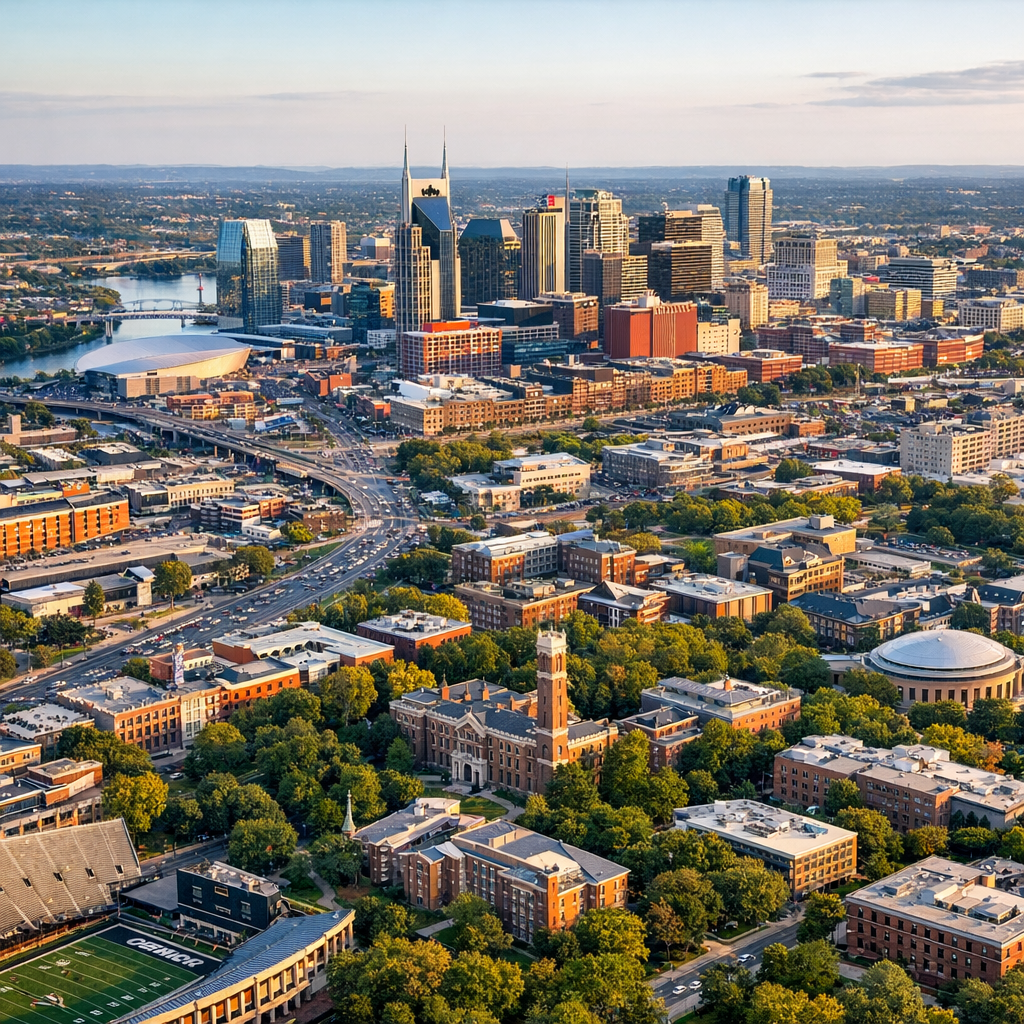
Nashville has experienced significant economic growth in recent years, with personal incomes in Davidson County increasing by 6.6% from 2023 to 2024, reaching nearly $72.7 billion. This trend reflects the city’s resilience and adaptability amid evolving national economic policies.
Contributing to this growth is the surge in the college-educated population. As of 2026, nearly 41% of Nashville-area residents aged 25 or older hold at least a bachelor’s degree. This increase enhances the city’s appeal to companies seeking a highly skilled workforce, further bolstering the local economy.
Major institutions like Vanderbilt University and the Nashville International Airport play pivotal roles in this economic landscape. In 2024, Vanderbilt contributed $22.13 billion to Tennessee’s economy, while the airport generated a $13.8 billion economic impact, supporting 80,000 jobs statewide.
However, challenges persist. Nashville’s rapid growth has led to increased housing costs, making affordability a pressing issue. The city’s Unified Housing Strategy aims to address these concerns, but disparities remain, particularly affecting lower-income families and communities of color.
In the political arena, state-level decisions have direct implications for Nashville. Proposals to shift local elections to even-numbered years could extend current terms and alter voter engagement dynamics. Additionally, debates over public safety measures, such as calls for National Guard deployment, highlight the complex interplay between local governance and national politics.
As Nashville continues to navigate these economic and political landscapes, the city’s ability to adapt and respond to national policy shifts will be crucial in sustaining its growth and ensuring equitable opportunities for all residents.