

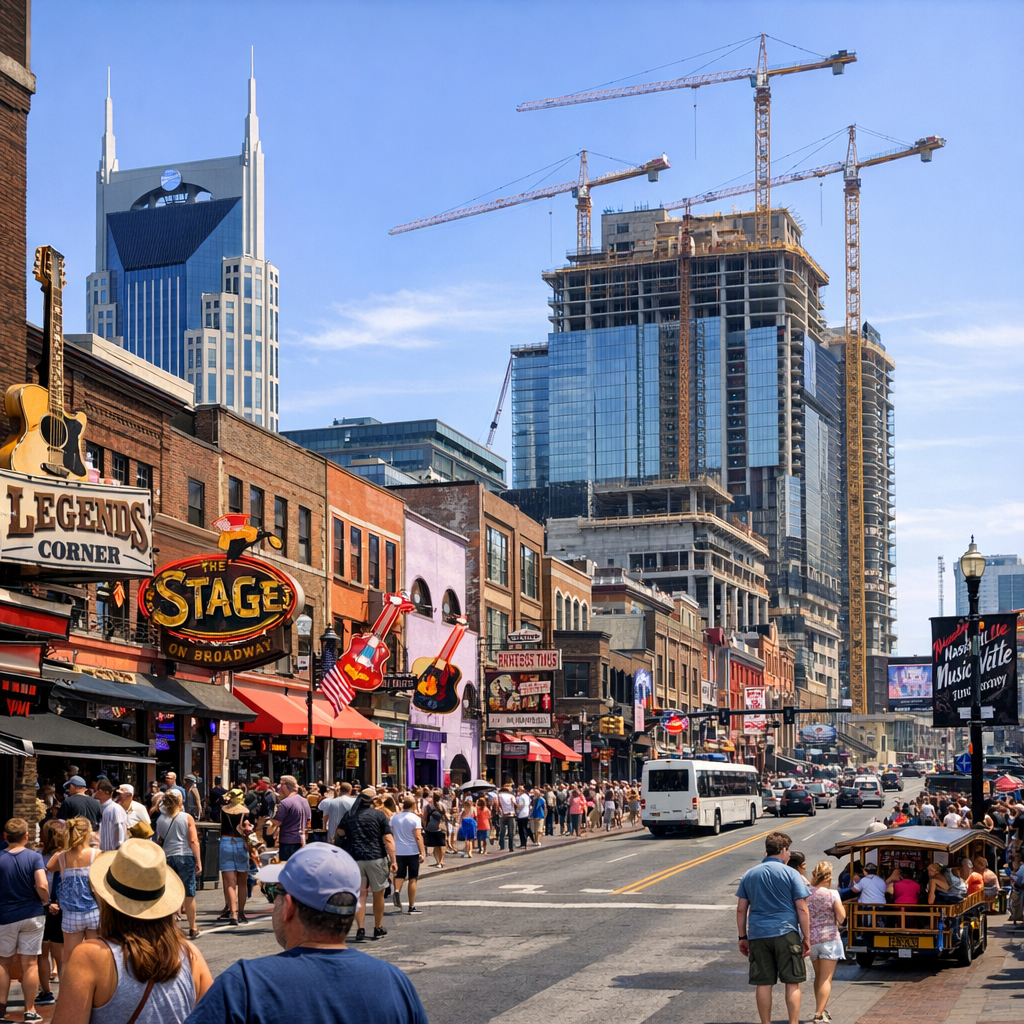
Nashville has experienced significant economic growth in recent years, even as national policies have introduced new challenges. The city’s resilience is evident in its booming tourism industry and steady population increase.
Tourism: A Cornerstone of Economic Expansion
In 2025, Tennessee’s tourism industry set a new record with $32.5 billion in visitor spending, marking a 40% increase since 2018. This surge has had significant economic implications, as sales tax is the state’s largest revenue source, directly funding critical infrastructure such as schools and roads. Key attractions like Dollywood, the Grand Ole Opry, and Graceland, along with the state’s food and hospitality sectors, fueled most of the spending. However, individual tourist budgets remained relatively flat due to inflationary pressures. The report was revealed at the Great Smoky Mountains National Park, emphasizing the role of public policy in tourism. Notably, international visitors declined by 8.8%, aligning with a nationwide downturn in foreign travel during the Trump administration. Overall, Tennessee continues to outperform national tourism trends.
Population Growth: Fueling the Local Economy
In 2025, Nashville, particularly Davidson County, was the driving force behind Tennessee’s population growth, adding nearly 9,300 residents—the highest increase among the state’s 95 counties. This growth underscores major challenges and opportunities for the city, including rising home prices, increased traffic, higher tax bills, and extensive construction projects. Alongside these issues are opportunities in innovation, new businesses, and high-paying jobs. While Davidson County grew steadily, neighboring suburban counties and more distant areas like Montgomery and Maury also experienced significant growth, as people seek affordable housing and better quality of life in the exurbs. Domestic migration from other U.S. states remains a key contributor to this expansion, while international migration, which peaked in 2024, declined dramatically in 2025 due to national immigration policy changes initiated during President Trump’s term. For instance, Davidson County alone added over 14,000 people via international migration in 2024, but this source of growth essentially stalled in 2025.
Challenges and Opportunities
Despite these positive trends, Nashville faces challenges such as rising home prices and increased traffic congestion. However, the city’s economic expansion presents opportunities for innovation, new business ventures, and the creation of high-paying jobs. The local government’s proactive measures, including infrastructure improvements and support for the tourism sector, aim to sustain this growth trajectory.
In conclusion, Nashville’s ability to adapt to national policy changes and leverage its strengths in tourism and population growth underscores its resilience and potential for continued economic prosperity.