

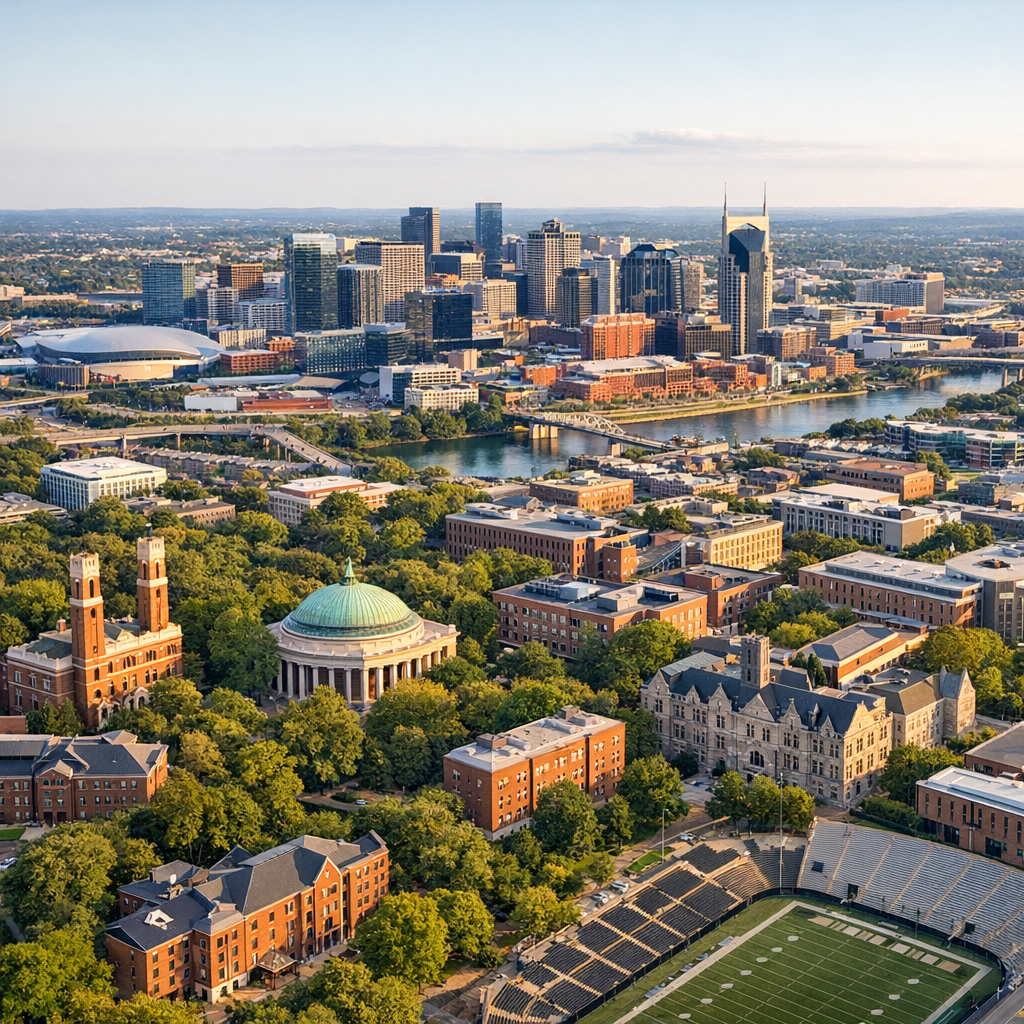
Nashville’s economy has demonstrated remarkable resilience and growth, even as national policies have introduced new challenges. This dynamic is evident in several key areas:
Vanderbilt University’s Economic Impact
Vanderbilt University and Vanderbilt University Medical Center have been pivotal in bolstering the local economy. Between 2019 and 2024, these institutions contributed a staggering $22.13 billion to Nashville and Tennessee’s economies. As the largest private employer in the Nashville area and the second-largest in the state, Vanderbilt’s influence extends beyond education and healthcare, shaping the region’s economic landscape.
Population Growth and Housing Market Dynamics
In 2025, Nashville, particularly Davidson County, led Tennessee’s population growth by adding nearly 9,300 residents—the highest increase among the state’s 95 counties. This surge has presented both challenges and opportunities, including rising home prices, increased traffic, and extensive construction projects. The housing market, in particular, has experienced significant transformations, with home values in areas like East Nashville increasing by 50% since 2020. These changes reflect broader national real estate trends and underscore the city’s appeal.
Impact of National Immigration Policies
National immigration policy changes have had a tangible effect on Nashville’s demographic landscape. International migration, which peaked in 2024, declined dramatically in 2025 due to policy shifts initiated during President Trump’s term. For instance, Davidson County added over 14,000 people via international migration in 2024, but this source of growth essentially stalled in 2025. This decline has implications for the city’s labor market and cultural diversity.
Education and Income Correlation
Recent analyses highlight the strong correlation between higher education and income levels in Nashville. Adults aged 25 or older without a college education earned a median income of $41,393, underscoring the wage gap between high school graduates and those with higher education. Initiatives like Tennessee Reconnect aim to bridge this gap by offering tuition-free community or technical college education to residents aged 25 and older, thereby enhancing economic mobility.
Climate Challenges and Infrastructure
Nashville has also faced environmental challenges, including extreme heat waves and dangerous flooding. In June 2025, the city experienced a significant heat wave, part of a broader trend affecting cities nationwide. Additionally, severe storms in April 2025 led to dangerous flooding, rendering several roads impassable. These events underscore the need for resilient infrastructure and proactive climate adaptation strategies.
In summary, Nashville’s economic growth and resilience are evident across various sectors. While national policies and environmental challenges pose certain hurdles, the city’s proactive initiatives and robust institutions continue to drive its prosperity.