

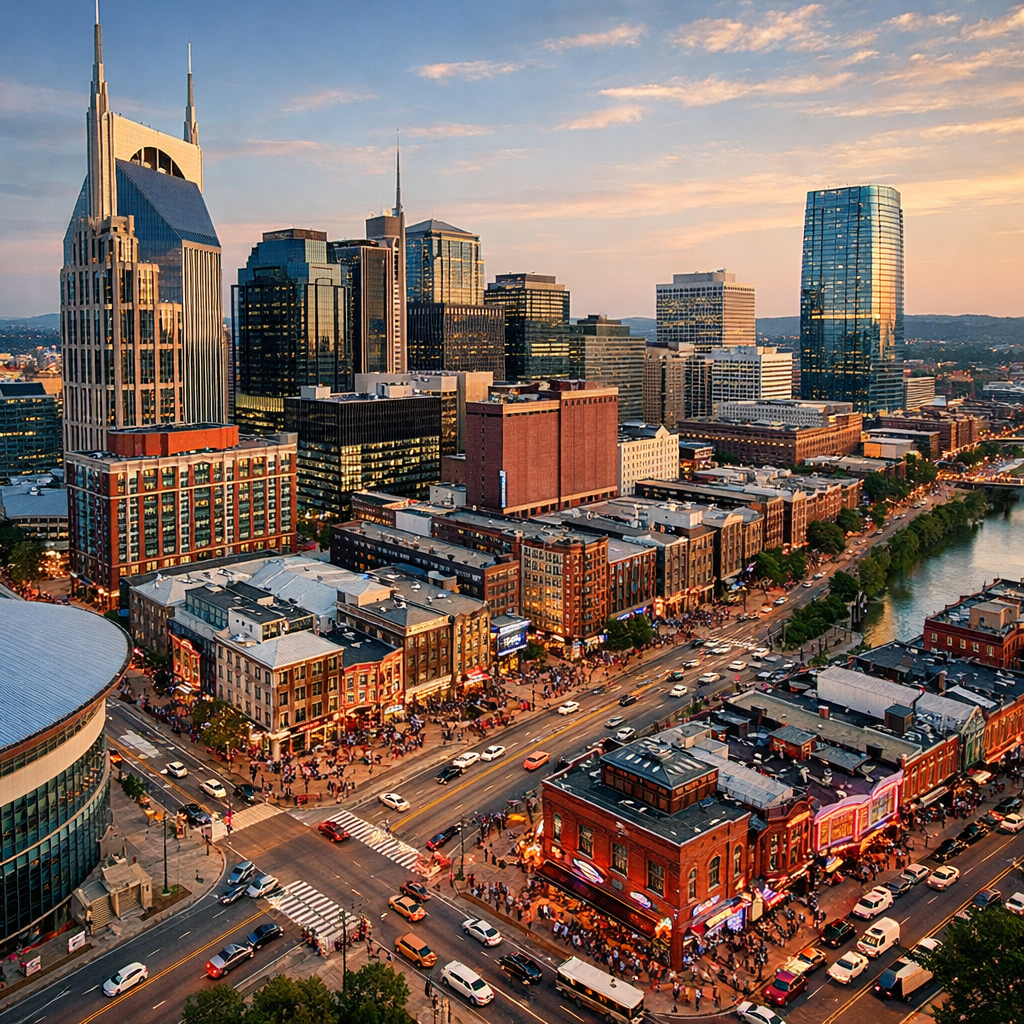
Nashville’s economic landscape has experienced significant growth in recent years, reflecting broader national trends and underscoring the city’s integral role in the U.S. economy.
Population Growth and Economic Impact
Between 2019 and 2024, Vanderbilt University and Vanderbilt University Medical Center contributed a combined $22.13 billion to Tennessee’s economy. As the largest private employer in the Nashville area and the second-largest in the state, Vanderbilt’s influence extends beyond its campus, shaping the region’s economic vitality and future growth.
Housing Market Dynamics
The COVID-19 pandemic reshaped Nashville’s housing market, leading to soaring home prices driven by low borrowing costs and the rise of remote work. This surge has made homeownership increasingly unattainable for many residents, mirroring national real estate trends observed over the past five years.
Transportation Initiatives
In response to the city’s growth, Nashville voters approved the ‘Choose How You Move’ referendum in November 2024, establishing dedicated funding for transportation and infrastructure projects. By October 2025, Mayor Freddie O’Connell announced $104 million in funding for transit projects, including sidewalk improvements, smart signals, and enhancements to public transit services.
Immigration and Community Support
Following a significant immigration enforcement operation in May 2025, Nashville leaders, led by Mayor O’Connell, established the ‘Belonging Fund’ to support affected immigrant communities. This initiative aims to assist with childcare, transportation, housing, and food insecurity, reflecting the city’s commitment to inclusivity amid national immigration policy changes.
Nashville’s economic trajectory offers a microcosm of national patterns, highlighting the interconnectedness of local and national developments. As the city continues to evolve, it remains a focal point for understanding broader economic and social trends in the United States.