

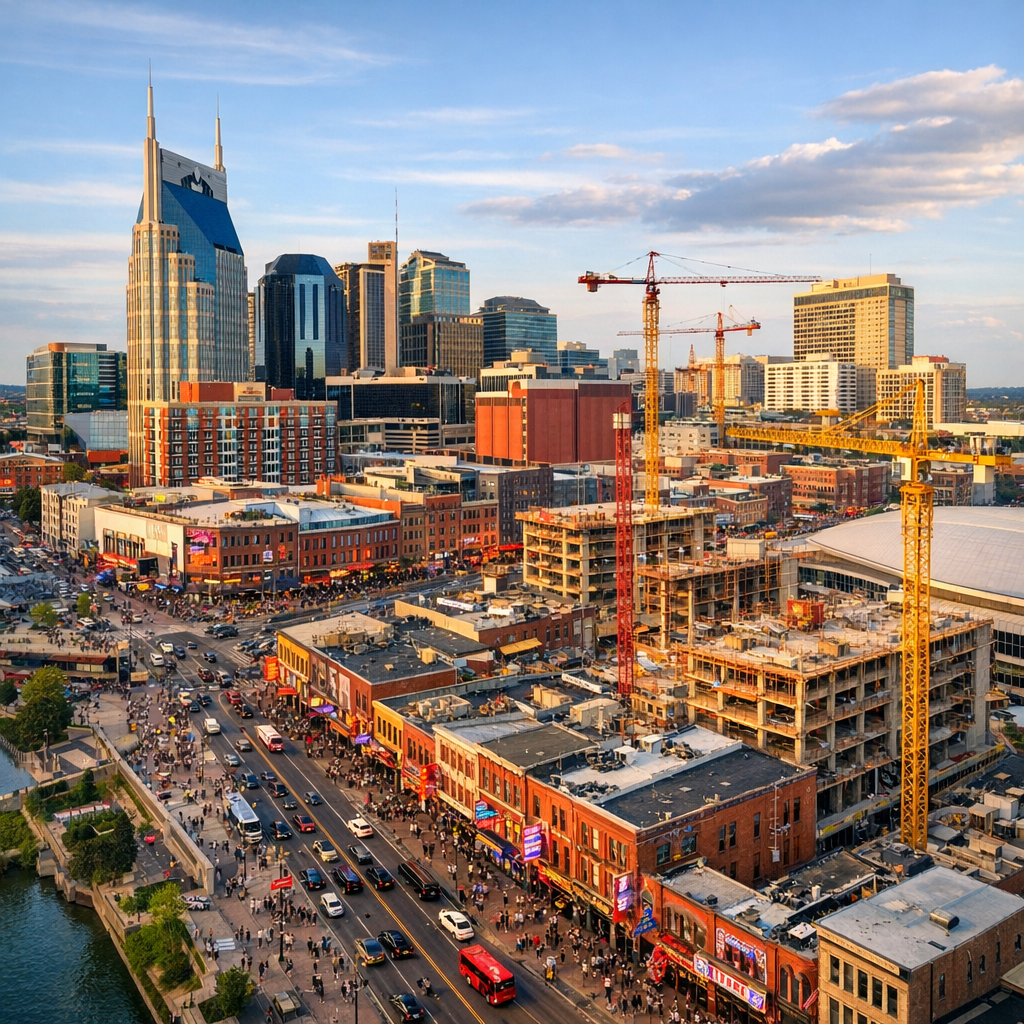
Nashville’s rapid economic expansion in recent years serves as a microcosm of broader national trends, reflecting both the challenges and opportunities inherent in urban development across the United States.
Population Growth and Housing Market Dynamics
In 2025, Davidson County led Tennessee’s population growth, adding nearly 9,300 residents—the highest increase among the state’s 95 counties. This surge has intensified housing demand, leading to skyrocketing home prices and increased traffic congestion. Similar patterns are observed in other rapidly growing U.S. cities, where urban sprawl and rising living costs pose significant challenges to sustainable development.
Educational Attainment and Income Disparities
Data from 2024 indicates that Nashville residents with college degrees consistently out-earned their peers. The median income for adults aged 25 or older without a college education was $41,393, underscoring the wage gap between high school graduates and those with higher education. This trend aligns with national data, highlighting the critical role of higher education in economic mobility and the persistent income disparities based on educational attainment.
Infrastructure Investments and Economic Impact
Vanderbilt University and Vanderbilt University Medical Center have significantly contributed to Nashville’s economy, with a combined economic impact of $22.13 billion between 2019 and 2024. As the largest private employer in the Nashville area, Vanderbilt’s investments in construction, payroll, and procurement have bolstered local economic growth. This mirrors national trends where major educational and medical institutions serve as economic anchors in their respective regions.
Climate Events and Urban Resilience
Recent extreme weather events, including severe storms and dangerous flooding, have tested Nashville’s infrastructure and emergency response systems. These incidents reflect a broader national pattern of increasing climate-related challenges faced by urban centers, emphasizing the need for resilient infrastructure and proactive climate adaptation strategies.
Looking Ahead
As Nashville continues to navigate its rapid growth, the city exemplifies the complex interplay of factors shaping urban development nationwide. Addressing housing affordability, income disparities, infrastructure demands, and climate resilience will require coordinated efforts from policymakers, businesses, and the community to ensure sustainable and inclusive growth.