

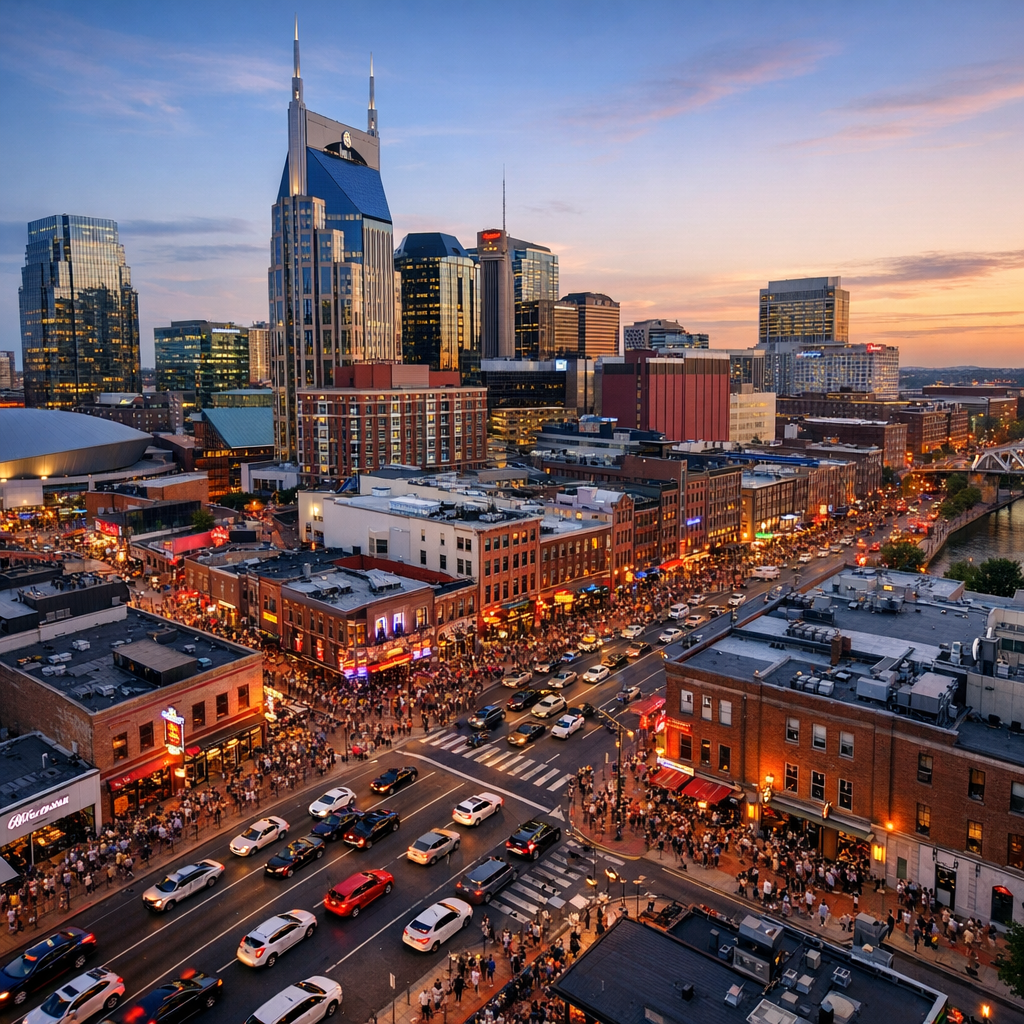
Nashville’s economic landscape has undergone significant transformation in recent years, reflecting broader national trends in urban development, education, and tourism.
Population Growth and Housing Market
In 2025, Davidson County led Tennessee’s population growth, adding nearly 9,300 residents. This surge has intensified challenges such as rising home prices and increased traffic, while also presenting opportunities in innovation and job creation. The housing market, in particular, has seen substantial changes, with home values in areas like East Nashville increasing by 50% since 2020. This mirrors national real estate trends observed over the past five years.
Education and Income
Data from 2024 indicates a strong correlation between higher education and income levels in Nashville. Adults without a college degree earned a median income of $41,393, underscoring the wage gap between high school graduates and those with higher education. To address this, Tennessee introduced initiatives like Tennessee Reconnect, offering tuition-free community or technical college education to residents aged 25 and older, aiming to improve economic outcomes for adult learners.
Tourism and Major Events
Tourism remains a vital component of Nashville’s economy. Alan Jackson’s final concert at Nissan Stadium in June 2026 drew 78,433 hotel room bookings, surpassing major annual events like CMA Fest and the Fourth of July. Looking ahead, Nashville is set to host Super Bowl LXIV in 2030, with projections estimating $386 million in direct spending and a total economic impact of $706 million. This aligns with national patterns where cities leverage major events to boost local economies.
Institutional Impact
Vanderbilt University and Vanderbilt University Medical Center have significantly contributed to the local and state economy, with a combined annual economic impact of $22.13 billion as of 2024. Employing approximately 50,000 individuals, these institutions play a central role in Nashville’s financial health, reflecting the broader national trend of educational and medical institutions serving as economic anchors in their communities.
In summary, Nashville’s economic developments serve as a microcosm of national trends, highlighting the interconnectedness of local and national economic dynamics.