

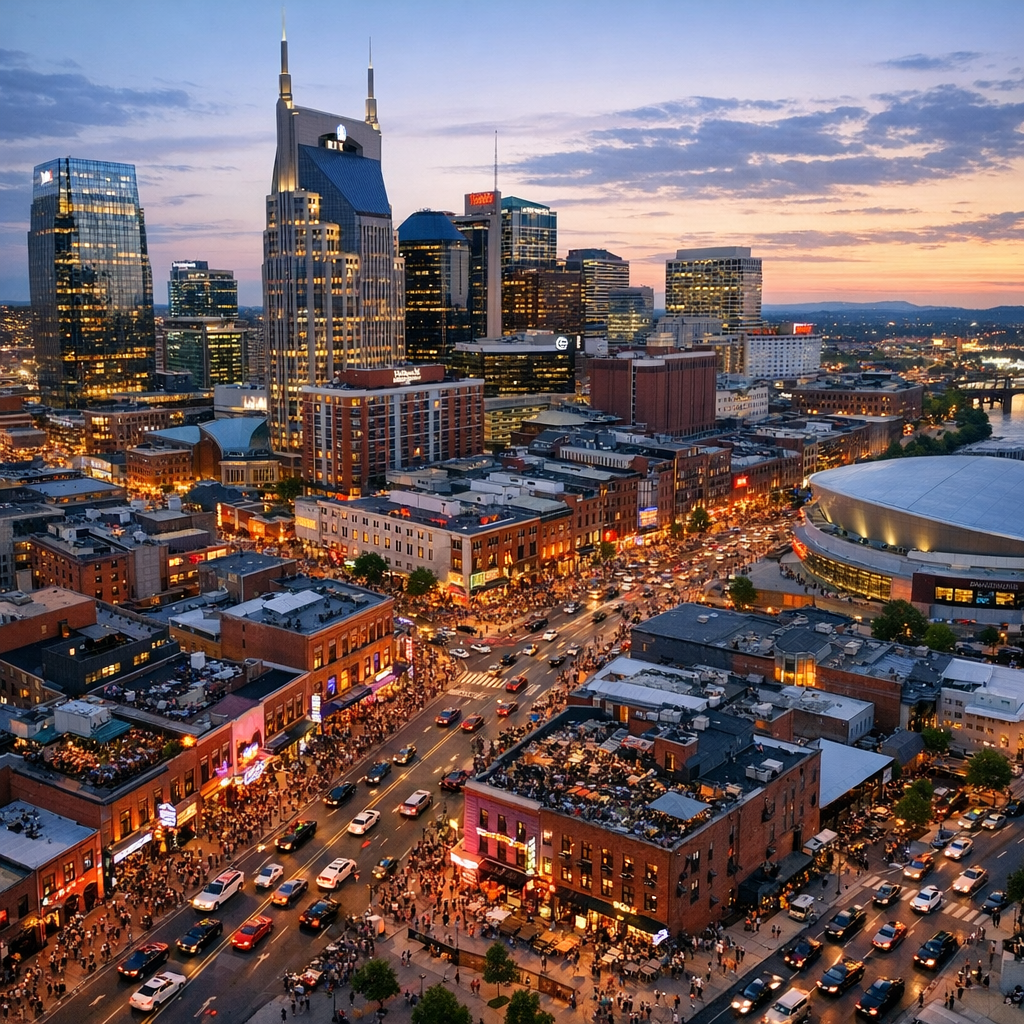
Nashville’s economic landscape has experienced remarkable growth, reflecting broader national trends. This expansion is driven by key sectors and institutions that have significantly contributed to the city’s prosperity.
Population Growth and Housing Market
In recent years, Nashville has been at the forefront of Tennessee’s population increase. Davidson County, in particular, added nearly 9,300 residents in a single year, underscoring the city’s appeal. This surge has led to challenges such as rising home prices and increased traffic, but also opportunities in innovation and job creation.
Educational Impact on Income
Education continues to play a pivotal role in Nashville’s economic dynamics. Data indicates that adults aged 25 or older without a college education earn a median income of $41,393, highlighting the wage gap between high school graduates and those with higher education. Initiatives like Tennessee Reconnect aim to bridge this gap by offering tuition-free community or technical college education to residents aged 25 and older.
Vanderbilt University’s Economic Contribution
Vanderbilt University and Vanderbilt University Medical Center have been instrumental in Nashville’s economic development. Between 2019 and 2024, these institutions contributed $22.13 billion to the local and state economies. Employing approximately 50,000 individuals, they generated around 120,000 jobs in Nashville, accounting for over 10% of the area’s employment.
Upcoming Super Bowl and Economic Prospects
Looking ahead, Nashville is set to host Super Bowl LXIV in 2030. The city plans to invest $60 million into the event, anticipating a substantial return on investment. Projections estimate $386 million in direct spending for Tennessee and a total economic impact of $706 million. While some economists caution that such projections may not always materialize fully, the event is expected to significantly boost the local economy and enhance Nashville’s international profile.
In summary, Nashville’s economic trajectory aligns with national patterns, driven by population growth, educational initiatives, institutional contributions, and strategic event planning. These factors collectively position the city as a dynamic and evolving economic hub.